A Satellite One Million Miles Away Is Now Watching the Sun Around the Clock
NOAA says its new SOLAR-1 spacecraft has entered operational service, giving forecasters a dedicated tool for monitoring solar activity that can affect technology on Earth.
Save Article
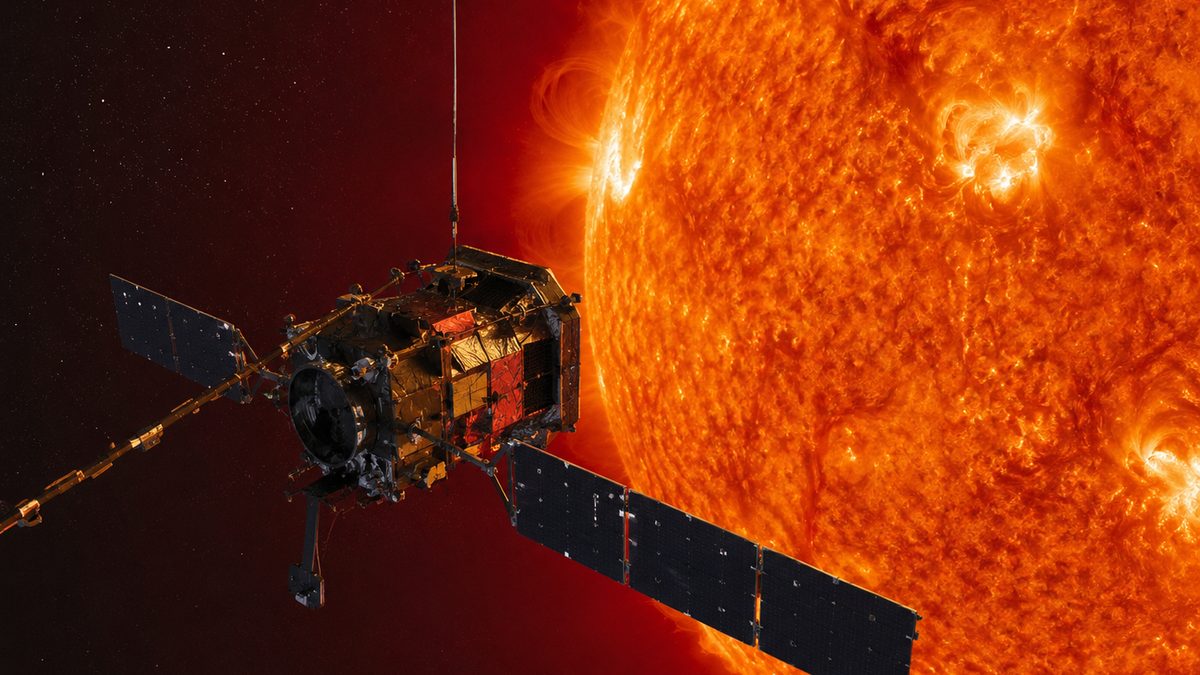
Space weather monitoring helps forecasters watch solar activity that can affect technology on Earth. Editorial illustration by TheDailyGlobe.
Key Facts
- NOAA announced that SOLAR-1 has entered operational service.
- The agency describes it as the first U.S. satellite dedicated solely to continuous operational space-weather observations.
- The Space Weather Prediction Center says SOLAR-1 data is now available for forecasting use.
- The spacecraft monitors solar activity from a position about one million miles from Earth.
- The mission is designed to improve observation and warning capabilities, not prevent solar storms.
About one million miles from Earth, a spacecraft is staring at the Sun so scientists can better understand what is heading toward our planet. Most people never think about solar storms during their daily routine, but activity on the Sun can affect satellites, navigation systems, communications networks, and other technology that modern life depends on.
NOAA announced this week that its SOLAR-1 spacecraft has officially entered operational service. According to the agency, it is the first U.S. satellite designed exclusively for continuous operational space-weather observations, marking a new chapter in how forecasters monitor conditions in space.
Why Scientists Watch the Sun So Closely
Space weather refers to conditions created by activity on the Sun. Powerful eruptions can send charged particles and magnetic disturbances into space. When those disturbances reach Earth, they can interact with the planet's magnetic field and affect technology both in orbit and on the ground.
Most solar events pass without major public attention. However, larger disturbances have the potential to interfere with satellite operations, radio communications, navigation systems, and some power infrastructure. That makes early detection valuable for organizations that depend on accurate forecasts.
The goal of satellites such as SOLAR-1 is not to stop these events but to help scientists see them coming and better understand their potential effects.
How SOLAR-1 Does Its Job
SOLAR-1 operates near a location known as Lagrange Point 1, often called L1. This region sits between Earth and the Sun and provides an ideal vantage point for observing solar activity before it reaches our planet.
From that position, instruments can monitor the solar wind, the constant stream of charged particles flowing away from the Sun. The spacecraft also helps scientists observe structures and eruptions that may influence space-weather forecasts.
Because the satellite watches conditions upstream from Earth, forecasters gain additional time to evaluate incoming solar activity and share information with organizations that rely on space-weather alerts.
What Changes for Forecasters
NOAA and the Space Weather Prediction Center say SOLAR-1's observations are now available for operational forecasting. That means the spacecraft is no longer simply being tested or commissioned. Its data is becoming part of the routine tools used to monitor solar conditions.
For most people, the change will be invisible. There will not be a new app notification or a noticeable shift in everyday life. Instead, the value lies in strengthening the infrastructure that supports forecasting and situational awareness during periods of elevated solar activity.
The satellite joins a broader network of monitoring systems that scientists use to track events unfolding between the Sun and Earth.
What the New Satellite Does Not Prove
The launch into operational service does not automatically mean forecasts will become perfect. It also does not guarantee protection from solar storms or eliminate the possibility of disruptions during particularly strong events.
NOAA's announcement confirms that the satellite is operating and providing data. The long-term value of that information will become clearer as forecasters use it across different solar conditions and future space-weather events.
The Next Real Test
One unanswered question is how SOLAR-1 will perform during major solar disturbances. Routine monitoring provides valuable information, but unusually strong solar events often reveal the strengths and limitations of forecasting systems.
Researchers and forecasters will continue evaluating the spacecraft's performance as more data becomes available. Future solar storms will provide opportunities to compare SOLAR-1's observations with older monitoring systems and assess how much it improves operational forecasting.
For now, the milestone is straightforward: a dedicated spacecraft is now watching the Sun full time from deep space, giving scientists another tool to understand a force that remains nearly 93 million miles away yet still has the ability to affect technology here on Earth.
Reporting note: Reporting draws on NOAA announcements, Space Weather Prediction Center materials, operational satellite updates, and reviewed background materials. This article was produced with AI-assisted research and reviewed by an editor before publication.