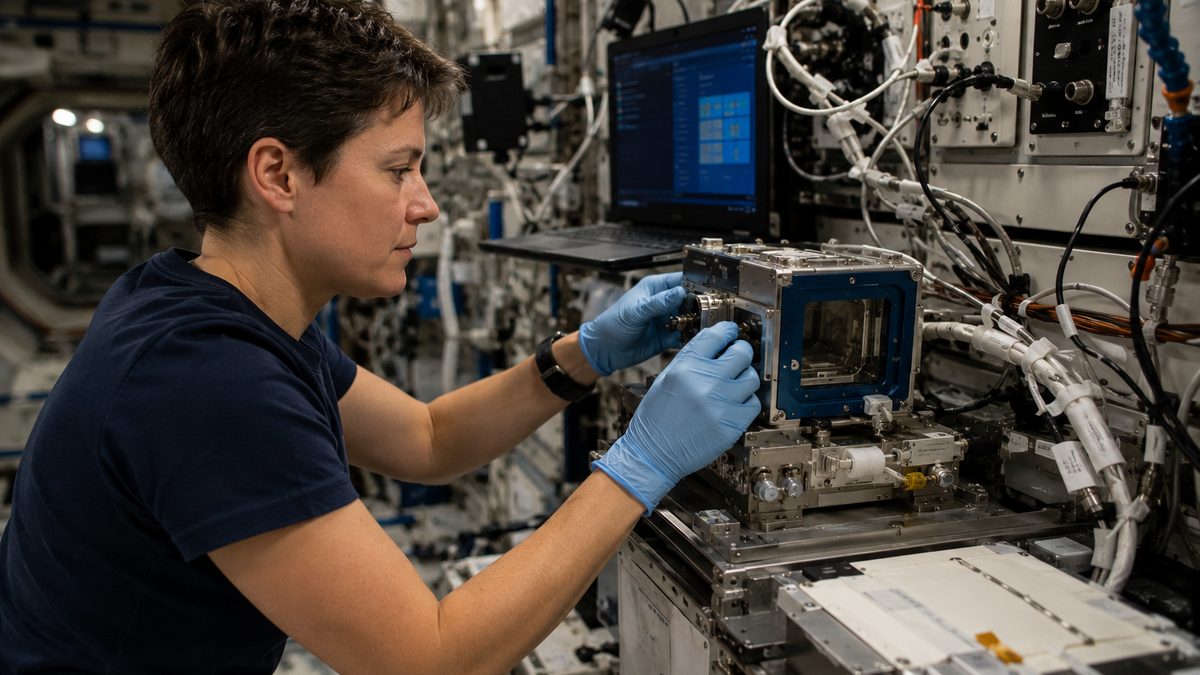
Scientists Found a New Clue for Breaking Down Forever Chemicals
Researchers studying PFAS pollution identified a chemical process involving hydrogen radicals that may help explain how some treatment methods can break down the stubborn compounds rather than simply capture them.
Save Article
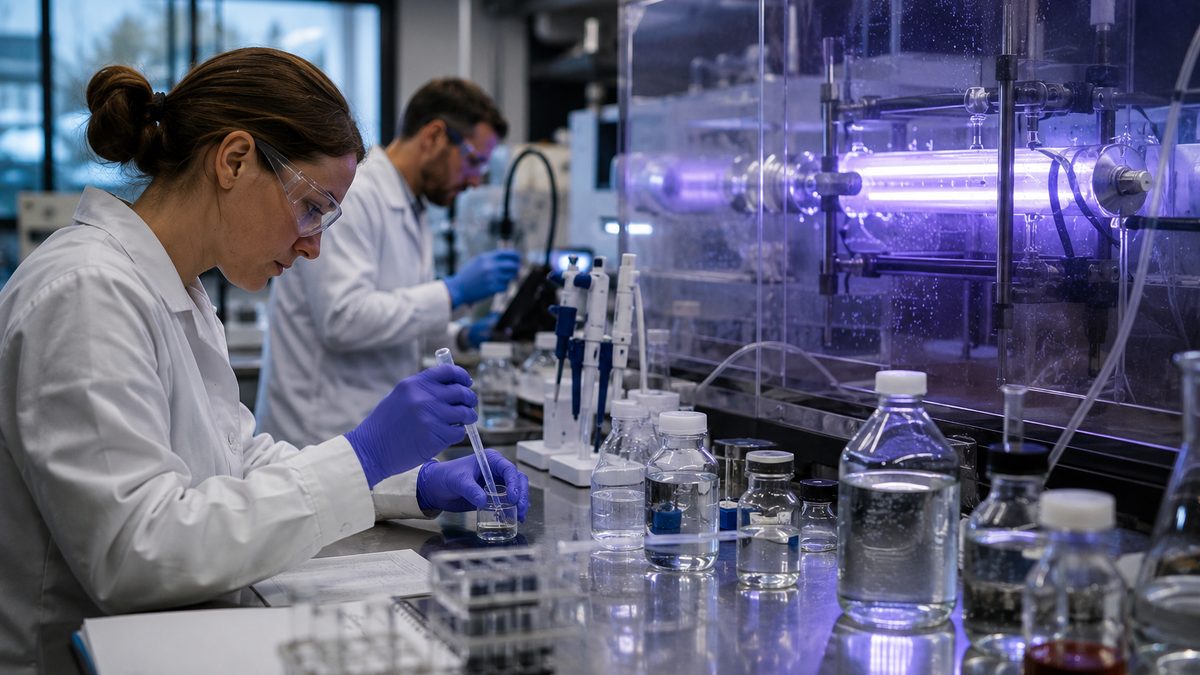
Scientists are studying ways to destroy PFAS chemicals rather than simply remove them from water. Editorial illustration by TheDailyGlobe.
Key Facts
- Researchers identified evidence that hydrogen radicals may help break down PFAS compounds under certain conditions.
- The radicals were produced during experiments involving intense ultraviolet light.
- PFAS chemicals are often called forever chemicals because they are highly resistant to natural breakdown.
- The study focused on understanding a chemical mechanism rather than creating a ready-to-use treatment system.
- Researchers say additional work is needed before the findings can be translated into large-scale cleanup technologies.
Communities across the United States and around the world continue to grapple with PFAS contamination, a group of synthetic chemicals often called 'forever chemicals' because they can persist in the environment for extremely long periods. One of the biggest challenges is not finding the chemicals, but figuring out how to destroy them.
New research has identified an important piece of that puzzle. Scientists reported evidence that hydrogen radicals produced under intense ultraviolet light may play a key role in breaking apart PFAS compounds. The finding does not create a new consumer water filter or an immediate cleanup solution, but it could help researchers better understand how some future treatment technologies might permanently eliminate these pollutants.
For people concerned about contaminated drinking water, the study matters because it focuses on destruction rather than removal. Many existing approaches capture PFAS and move them elsewhere. The larger challenge is finding practical ways to break the chemicals apart.
Why PFAS Are So Difficult to Remove
PFAS, short for per- and polyfluoroalkyl substances, have been used for decades in a variety of industrial and consumer products. Their popularity comes from their ability to resist heat, water, grease, and chemical reactions.
Those same properties create problems once the chemicals enter the environment. The carbon-fluorine bonds found in many PFAS compounds are among the strongest bonds in chemistry. As a result, the substances can remain in soil, groundwater, rivers, and lakes long after their original use.
Traditional treatment systems often focus on filtering PFAS out of water. While that can reduce exposure, it does not necessarily solve the underlying problem because the chemicals still exist and must be managed somewhere else.
The Role of Hydrogen Radicals
The new research centers on hydrogen radicals, highly reactive chemical species that exist only briefly before reacting with other molecules. In chemistry, radicals contain unpaired electrons, making them especially reactive.
Scientists believe these hydrogen radicals may attack portions of PFAS molecules and help initiate a chain of reactions that weakens and ultimately breaks apart the compounds. Understanding exactly which chemical reactions are doing the work is important because it allows researchers to design treatment methods more effectively.
In this study, the radicals were generated under intense ultraviolet light. Researchers observed evidence suggesting that the radicals played a larger role in PFAS destruction than previously understood.
What the Study Does and Does Not Show
One reason scientists value mechanism studies is that they reveal how a process works. That understanding can guide future engineering decisions. However, mechanism discoveries are not the same thing as finished technologies.
The research does not demonstrate that municipalities can immediately install a new treatment system. It does not show that household water filters can suddenly destroy PFAS. It also does not establish that ultraviolet treatment alone will solve contamination problems across different environments.
Instead, the findings help explain a chemical pathway that may contribute to PFAS destruction under controlled conditions. That distinction matters because environmental cleanup often requires years of testing, optimization, and validation before laboratory findings become practical tools.
Why Researchers Care About Destruction
Environmental scientists increasingly focus on methods that destroy PFAS because removal alone can create additional challenges. Captured chemicals may need to be transported, stored, or treated elsewhere.
A treatment process capable of breaking PFAS into less persistent components could reduce the need for long-term management of concentrated waste streams. That goal has driven growing interest in advanced chemical, thermal, and ultraviolet-based treatment approaches.
The new findings contribute to that broader effort by helping researchers understand which reactions are actually responsible for breaking the chemicals apart.
What Comes Next
The next phase of research will likely focus on testing how the mechanism performs across different PFAS compounds and treatment conditions. Scientists will also examine whether the process can be scaled efficiently and economically for larger applications.
Many questions remain. Researchers still need to determine how well the approach works outside laboratory settings, what energy requirements it may involve, and whether it can be integrated into practical treatment systems.
For now, the study offers something valuable even without an immediate consumer application: a clearer understanding of how some PFAS destruction processes may work. In environmental science, that kind of knowledge often becomes the foundation for future technologies. The finding does not solve the forever-chemical problem, but it gives researchers another clue about where solutions may eventually come from.
Reporting note: Reporting draws on scientific research findings, chemistry studies, environmental science reporting, and reviewed background materials. This article was produced with AI-assisted research and reviewed by an editor before publication.