Ocean Acidification Shows How Climate Change Reaches the Food Chain
NOAA explains how carbon dioxide changes seawater chemistry, why shell-building species matter, and where the effects can reach coastal food systems.
Save Article
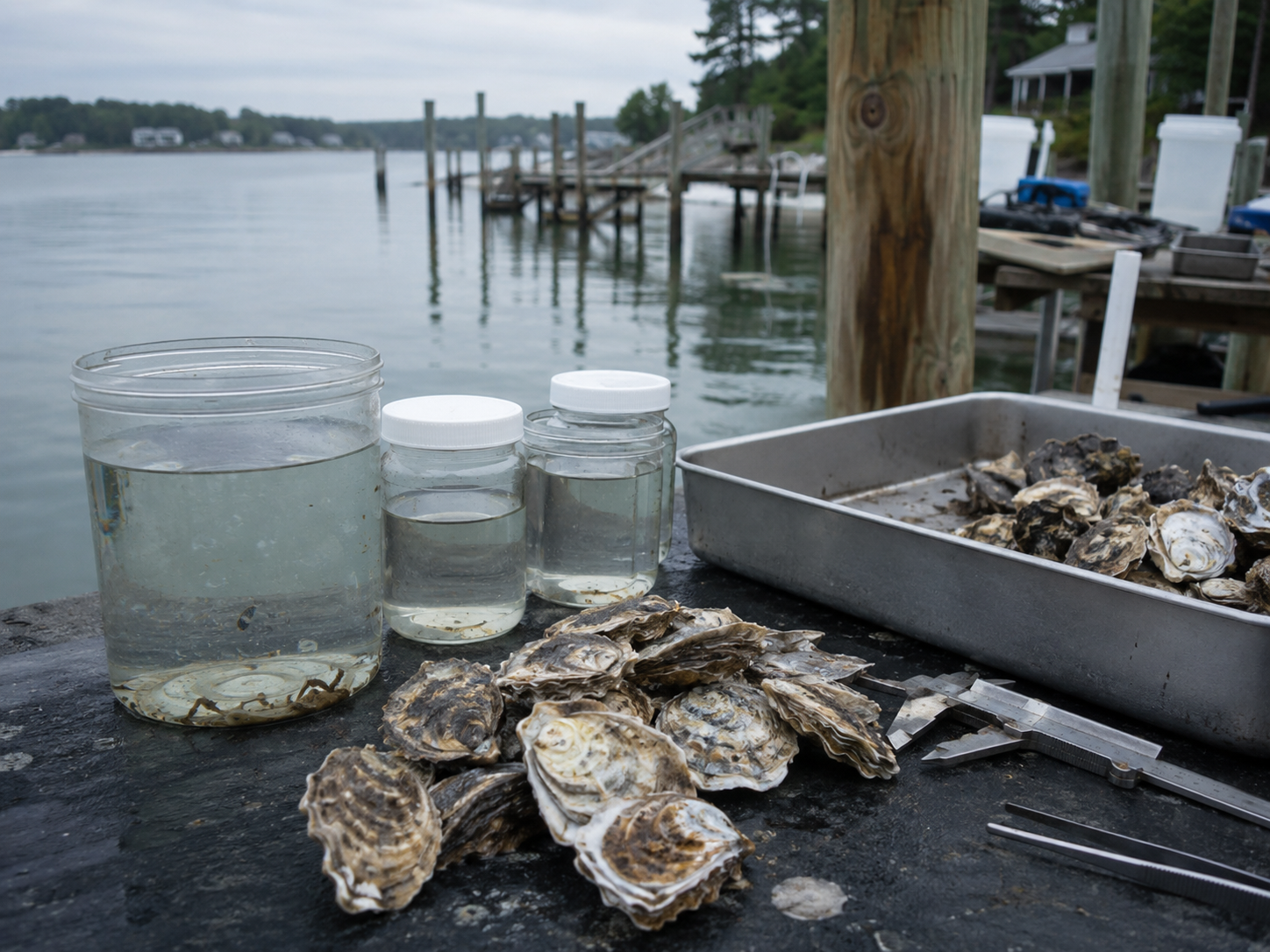
Ocean acidification connects atmospheric carbon dioxide, seawater chemistry and the health of marine food webs. Editorial illustration by TheDailyGlobe.
Key Facts
- NOAA explains that the ocean absorbs carbon dioxide from the atmosphere.
- NOAA says that when carbon dioxide is absorbed by seawater, chemical reactions increase hydrogen ions.
- NOAA Fisheries describes ocean acidification as a global threat to oceans, estuaries, waterways and shellfish.
- NOAA materials connect ocean acidification to commercial industries such as oyster farms.
An oyster shell can make ocean chemistry feel less abstract.
For shellfish, corals and other marine life, seawater is not just the place they live. It is part of the material world they build from. When that chemistry changes, the effects can move from invisible molecules to shells, food webs, fisheries and coastal businesses.
That is the reader-level importance of ocean acidification. It is not a dramatic wave or a single storm. It is a chemical change tied to carbon dioxide, and NOAA materials describe it as an issue that can reach marine ecosystems and industries such as oyster farms.
How Carbon Dioxide Changes Seawater
The basic chemistry starts with carbon dioxide. NOAA explains that the ocean absorbs carbon dioxide from the atmosphere. When that carbon dioxide enters seawater, chemical reactions follow, including an increase in hydrogen ions.
That change matters because ocean chemistry affects the forms of carbon that shell-building organisms use. The public phrase ocean acidification can sound like the ocean is turning into acid. That is not the right picture. The issue is a shift in chemistry that can make life harder for some marine organisms, especially those that depend on shell-building materials.
Keeping the chemistry plain does not make it less important. A small change in the conditions marine organisms evolved around can matter when it plays out across ecosystems, nurseries, estuaries and working waterfronts.
Why Shellfish Are Often Part of the Story
Shellfish are a useful way to understand the issue because they connect the science to food and livelihoods. NOAA Fisheries describes ocean acidification as a threat to oceans, estuaries, waterways and shellfish. NOAA education materials also connect the issue to industries such as oyster farms.
That does not mean every oyster bed, clam population or coastal business faces the same risk at the same time. Local conditions matter. Water chemistry, temperature, freshwater flow, pollution, species, life stage and adaptation efforts can all shape how acidification shows up in a specific place.
But the connection is clear enough to make the issue practical. If shell-building species struggle, the concern is not only about one animal. It can reach food webs, habitat, fisheries, aquaculture and communities that depend on healthy coastal water.
What the Food Chain Has to Do With It
Ocean acidification matters because marine ecosystems are connected. A change that affects small shell-building organisms can ripple into the animals that eat them, the habitats they support and the fisheries that depend on stable ocean conditions.
That is why the issue belongs in climate coverage, not just chemistry class. Carbon dioxide does not only warm the atmosphere. Some of it enters the ocean, where it changes seawater chemistry. The consequences can be ecological first, then economic and social as coastal communities respond.
The food-chain connection should still be stated carefully. Ocean acidification is one pressure among many. Marine species also face warming water, oxygen changes, habitat loss, pollution and fishing pressure. Acidification is important, but it is not the only stressor in the ocean.
What Remains Uneven and Uncertain
The broad chemistry is well described by NOAA. The harder questions are local and biological: which species are most affected, how quickly conditions are changing in a given region, and how much adaptation is possible.
Some organisms and regions may be more vulnerable than others. Some coastal businesses may be able to monitor and adjust. Others may have fewer resources or less flexibility. That is why blanket statements can mislead readers. Ocean acidification is global in its drivers, but its effects can be highly local.
What to Watch Next
The next useful signals will come from NOAA monitoring, fisheries research, local shellfish and aquaculture reports, and climate studies that track how ocean chemistry is changing by region.
For readers, the main point is simple: ocean acidification turns carbon dioxide from an atmospheric issue into a seawater issue. From there, it can reach shells, food webs and coastal economies. The chemistry may be quiet, but the chain it touches is not small.
Reporting note: Reporting draws on NOAA ocean science explainers, NOAA Fisheries materials, marine environment guidance, and reviewed science background. This article was produced with AI-assisted research and reviewed by an editor before publication.