Ancient DNA Shows Plague Was Killing Humans 5,500 Years Ago
New ancient DNA reporting suggests plague was killing humans thousands of years before the crowded city conditions linked to later outbreaks.
Save Article
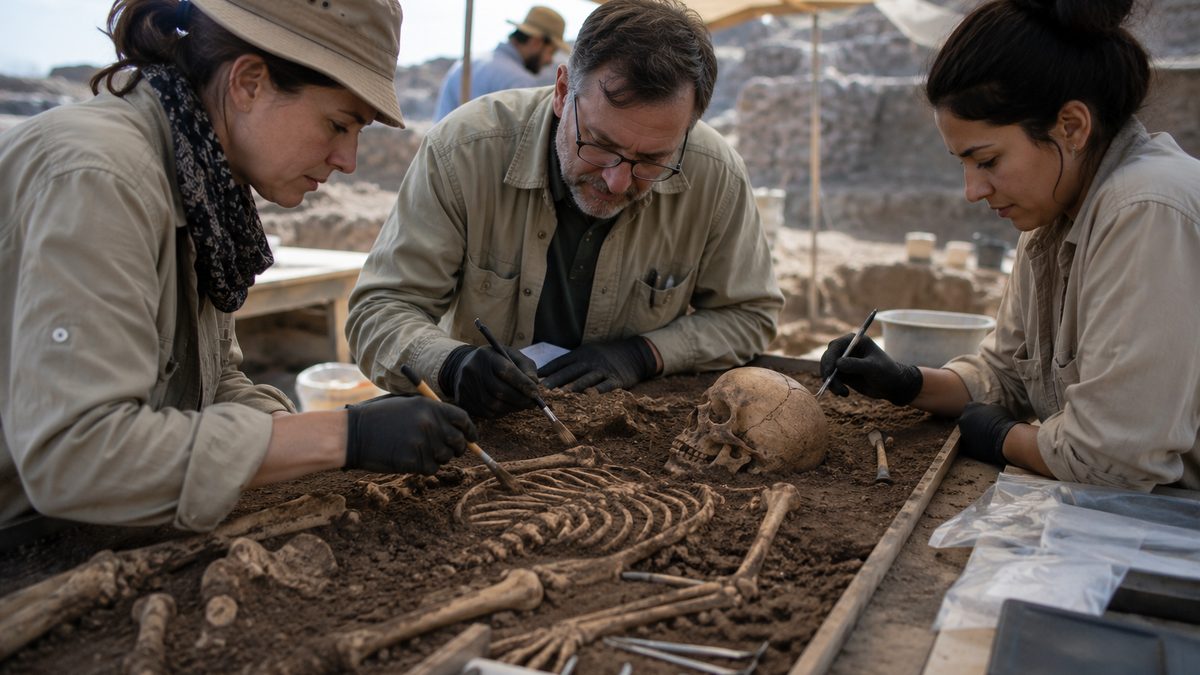
Ancient DNA research can help scientists trace how infectious diseases affected humans thousands of years ago. Editorial illustration by TheDailyGlobe.
Key Facts
- Recent reporting described ancient DNA evidence indicating plague was killing humans about 5,500 years ago.
- The finding places deadly plague infections long before later outbreaks commonly linked to crowded cities and rat-infested conditions.
- Ancient DNA research allows scientists to look for genetic traces of pathogens in human remains.
- The finding does not prove that early plague spread in the same way as later historic pandemics.
- Questions remain about how the disease moved, how widespread it was and how it affected ancient communities.
Plague is usually remembered through the worst images of later history: crowded towns, mass death, rats, fleas and the Black Death. But ancient DNA research is pushing the story much farther back.
Recent reporting from ScienceDaily and Archaeology Magazine describes evidence that plague was killing humans about 5,500 years ago. The finding matters because it suggests the disease affected people long before the crowded city conditions usually associated with later plague outbreaks.
That does not mean the earliest plague looked exactly like the pandemics people learn about in school. It does mean researchers are using genetic evidence from ancient remains to trace disease history in a more direct way than older archaeology alone could provide.
What Ancient DNA Can Show
Ancient DNA has changed how researchers study disease. Instead of relying only on bones, burial patterns or later written accounts, scientists can sometimes recover genetic material from ancient remains and identify traces of pathogens that infected people long ago.
That kind of work is especially important for diseases that may not leave obvious marks on bone. A person can die from an infection without the skeleton showing a clear cause of death. DNA can give researchers another kind of evidence, one that points to the presence of the disease itself.
In this case, the key point is not just that plague existed thousands of years ago. It is that researchers found evidence tied to human deaths. That makes the discovery more important for understanding the relationship between early human communities and infectious disease.
Why the Timing Matters
The date is what makes the finding stand out. Plague is often connected in the public mind with dense settlements, trade routes and urban living. Later outbreaks spread through societies with large populations, close contact and conditions that made disease transmission easier.
Evidence of plague killing people 5,500 years ago complicates that simple picture. It suggests the disease was dangerous before the best-known historical outbreaks and before the public usually imagines plague becoming a human threat.
That does not mean scientists can treat every later plague pattern as ancient. Early communities were different from medieval cities. Their population size, movement, housing, animal contact and burial practices were different. A disease can exist in different settings without spreading in the same way each time.
What the Discovery Does Not Prove
The careful part of this story is just as important as the discovery itself. Ancient DNA can show that a pathogen was present, but it does not automatically reveal every detail of transmission, behavior or outbreak size.
The finding should not be read as proof that early plague caused pandemics like later ones. It also should not be read as proof that rats, fleas or crowded cities played the same role thousands of years earlier. The available reporting points to deadly infection, not a complete map of how the disease spread.
That distinction matters because disease history is easy to oversimplify. A headline can make it sound as if one discovery answers the whole story. In reality, ancient DNA usually adds an important piece, then leaves researchers with sharper questions.
How Researchers Study Ancient Disease
The basic work is painstaking. Researchers study ancient remains, recover samples under controlled conditions and test for genetic traces that may identify pathogens. They also have to guard against contamination, because modern DNA can interfere with ancient evidence if samples are not handled carefully.
Once pathogen DNA is identified, researchers can compare it with other known samples to understand how a disease may have changed over time. That can help build a longer timeline of human exposure, infection and disease evolution.
For readers, the practical value is that ancient disease research is not only about the past. It helps explain how humans and pathogens have interacted across thousands of years. It shows that infectious disease has shaped human life long before modern medicine, written records or public health systems existed.
What Remains Unclear
Several important questions remain. Researchers still need to understand how widespread this early plague was, how it moved between people or communities and whether it caused isolated deaths or larger outbreaks. The available reporting does not settle those questions.
It also remains unclear how early plague fits into the longer history of later plague strains. Ancient DNA can help build that timeline, but each discovery has to be placed carefully alongside other samples, archaeological context and genetic evidence.
The next thing to watch is whether additional ancient DNA studies find similar evidence in other places or periods. More samples could help researchers understand whether this was a rare finding or part of a wider pattern.
The clearest takeaway is not that plague history has been solved. It is that the disease was killing humans far earlier than many readers might expect, and modern genetic tools are giving scientists a more detailed way to see how old that threat really was.
Reporting note: Reporting draws on ScienceDaily coverage, Archaeology Magazine reporting, ancient DNA research summaries, and reviewed background materials. This article was produced with AI-assisted research and reviewed by an editor before publication.