Why Tulsi Gabbard’s Resignation Matters
Tulsi Gabbard’s resignation as director of national intelligence raises a practical question for Washington: who coordinates the intelligence community next?
Save Article

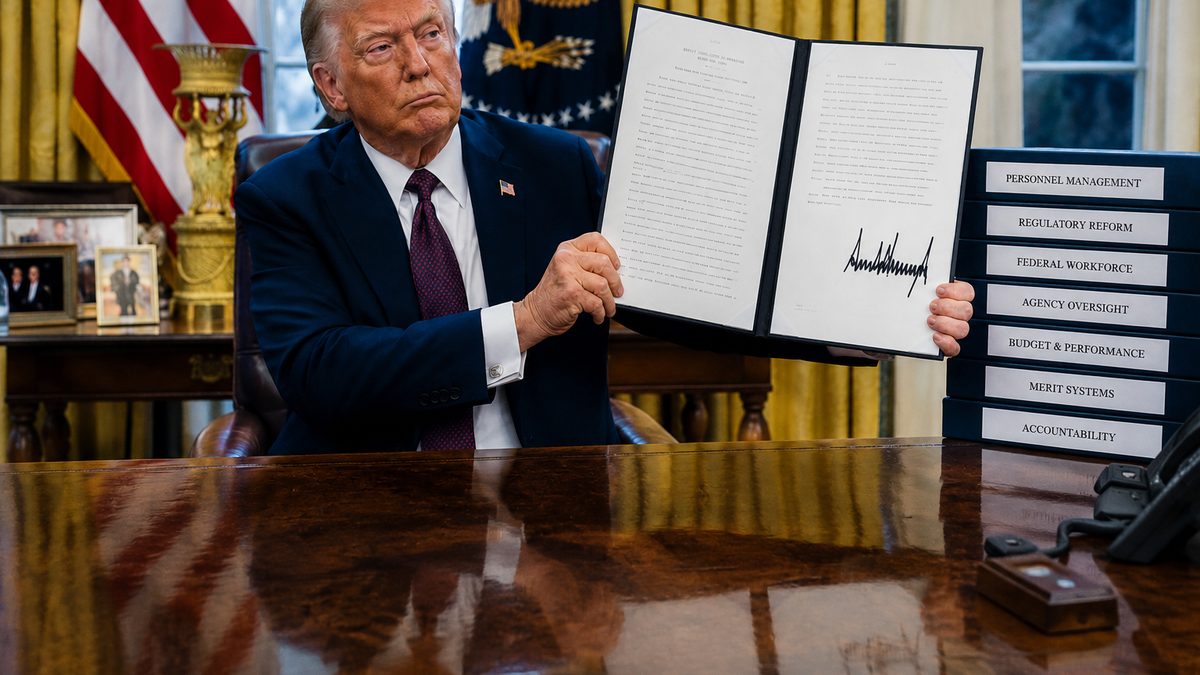
National security leadership changes can shape how agencies communicate priorities and manage public accountability. Editorial illustration by TheDailyGlobe.
Key Facts
- The Associated Press reported that Tulsi Gabbard resigned as director of national intelligence, citing her husband’s health.
- Government Executive also reported that Gabbard would resign from the role, citing her husband’s health.
- AP reported that Gabbard was the fourth Cabinet member to depart during Trump’s second term.
- ODNI materials show Gabbard had been serving as director of national intelligence and had appeared in official ODNI releases this year.
- Who will become the next permanent director of national intelligence remains unclear.
Tulsi Gabbard has resigned as director of national intelligence, citing her husband’s health, according to reporting from The Associated Press and Government Executive.
The resignation is more than a personnel change inside the Trump administration. The director of national intelligence sits above the country’s intelligence agencies as a coordinator, adviser, and public-facing official for intelligence priorities. When that office changes hands, the immediate question is not only who replaces the director, but how smoothly the government maintains coordination across national-security work that depends on steady communication.
For regular readers, the important part is simple: the person in this role helps organize intelligence for the president, Congress, and agencies that handle threats involving foreign governments, terrorism, cyber activity, and national security. A resignation does not mean the intelligence community stops working. It does mean the White House and Senate now face a leadership question at the top of a sensitive part of government.
What the DNI Job Does
The director of national intelligence is not the head of one spy agency in the way the CIA director leads the CIA. The job is broader. The DNI is meant to help coordinate the work of the intelligence community and make sure intelligence reaches the president and other decision-makers in a usable form.
That makes the job partly about information and partly about management. Intelligence work is spread across agencies with different missions. Some focus on foreign intelligence, some on military intelligence, some on domestic security support, and some on technical collection or analysis. The DNI’s office is supposed to help connect that work so national-security leaders are not relying on disconnected pieces.
ODNI materials this year showed Gabbard carrying out that public-facing role, including official releases connected to intelligence priorities and threat assessment work. Those materials help show why the office matters even when most of its work is not visible to the public.
Why Continuity Matters
Leadership changes happen in every administration. A resignation by itself does not prove disruption, policy change, or a breakdown inside an agency. But continuity matters in an intelligence role because the work depends on trust, clear lines of responsibility, and regular communication among agencies and elected officials.
The timing also matters because the job sits close to major national-security decisions. Intelligence leaders help brief the president, work with congressional oversight committees, and support agencies that may be dealing with fast-moving foreign-policy, cyber, military, or homeland-security concerns. Even when a transition is orderly, it creates a period when acting leadership or a nominee may have to manage sensitive work while the next permanent leader is chosen.
That is the practical reader value in the story. The resignation is not just about Gabbard as a political figure. It is about whether the White House can keep national-security coordination steady while filling a Cabinet-level intelligence post.
What Is Confirmed About the Resignation
The confirmed reason reported by AP and Government Executive is Gabbard’s husband’s health. That should remain the center of the article unless stronger, clearly sourced information shows otherwise.
Some reporting has discussed tensions around Gabbard’s tenure and whether she had been sidelined in parts of the administration’s national-security process. Those details should be handled carefully. They may be relevant context if clearly attributed, but they should not be treated as the confirmed reason for her departure.
That distinction matters. A public resignation can produce quick speculation, especially when the official involved is tied to national security and presidential decision-making. The facts currently support a narrower and cleaner account: Gabbard resigned, she cited her husband’s health, and the administration now has to manage a leadership transition in the intelligence community.
What Remains Unclear
The biggest unanswered question is who will be nominated or confirmed as the next permanent director of national intelligence. Until that is clear, it is difficult to know whether the resignation will lead to a short transition, a longer acting-leadership period, or a broader shift in how the office is run.
It is also unclear how the change may affect intelligence coordination, congressional oversight, or national-security decision-making. Those effects should not be overstated. Large agencies have career staff, established processes, and existing chains of command. But leadership still matters, especially in a role designed to organize information across the government.
Congress may also have a role if the White House nominates a permanent replacement who requires Senate confirmation. That process can bring questions about experience, intelligence priorities, surveillance authorities, politicization concerns, and how the nominee would work with both the president and oversight committees.
The Reader Takeaway
Gabbard’s resignation should be understood as an institutional story first. The personal reason cited for the departure is important and should not be buried under speculation. At the same time, the office she is leaving is one of the government’s most sensitive coordinating jobs.
The next phase will be measured less by political reaction and more by the transition itself: who leads the office in the near term, who is put forward as the permanent choice, how Congress responds, and whether the administration keeps intelligence coordination steady while the leadership change unfolds.
For now, the confirmed story is straightforward. Gabbard is stepping down as director of national intelligence. The reason reported is her husband’s health. What comes next is the part that will matter most for the intelligence community, the White House, Congress, and the public.
Reporting note: Reporting draws on wire reporting, official ODNI materials, broadcast listings, Government Executive reporting, and reviewed background materials. This article was produced with AI-assisted research and reviewed by an editor before publication.