Trump’s AI Order Delay Shows the Fight Over Speed and Oversight
A postponed White House AI order highlights a central policy question: how far the government should go in reviewing advanced AI systems without slowing U.S. technology companies.
Save Article
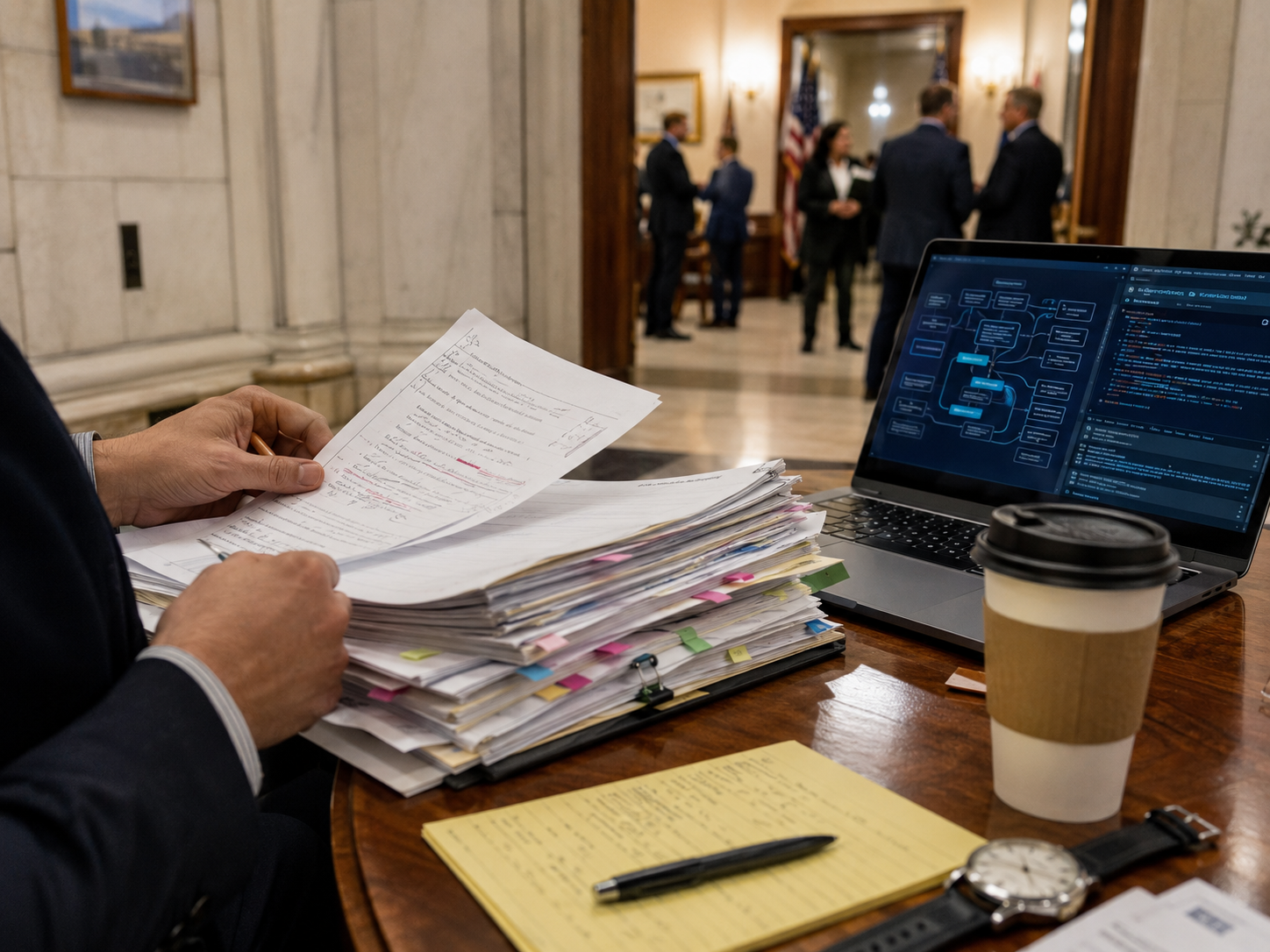
A postponed White House AI order highlights a central policy question: how far the government should go in reviewing advanced AI systems without slowing U.S. technology companies. Editorial illustration by TheDailyGlobe.
Key Facts
- Trump postponed or canceled a planned signing ceremony for an AI executive order.
- National reporting says the draft order involved voluntary government review or sharing of advanced AI models.
- The decision followed concerns that added oversight could slow U.S. AI competitiveness.
- The unsigned order has not been released as final policy.
- It remains unclear whether a revised AI order will be signed later or what obligations AI companies may ultimately face.
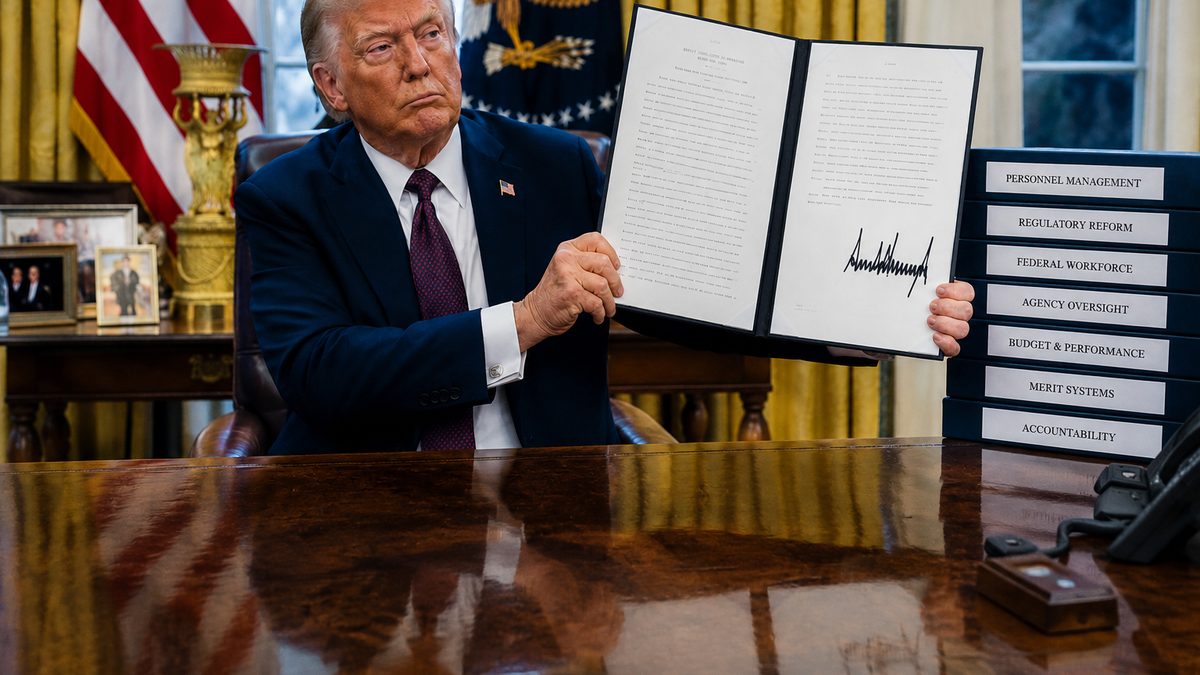
President Donald Trump postponed or canceled a planned signing ceremony for an artificial intelligence executive order, leaving unresolved how his administration will handle one of the hardest questions in technology policy: how to encourage fast AI development while still giving the public some confidence that powerful systems are being reviewed.
The unsigned order, according to national reporting, involved voluntary government review or sharing of advanced AI models. No final order was signed, and the exact policy language has not been made public.
For regular readers, the delay matters because AI policy is no longer a narrow tech-industry issue. Decisions made in Washington could shape how AI companies build products, how the government thinks about cybersecurity and national security, and how much transparency the public gets as advanced systems move into workplaces, schools, medicine, finance, and daily consumer life.
What Changed at the White House
The immediate development is simple: a planned AI order did not move forward as expected. That matters because executive orders are one of the fastest ways a president can direct federal agencies, set priorities, and signal how the government intends to approach a major policy area.
In this case, the reported draft order appears to have touched a sensitive point for the AI industry: whether developers of advanced models should voluntarily share information with the government or submit to some form of review. Because the order was not signed, those reported draft ideas should not be treated as final rules.
Reports from AP, The Washington Post, and The Wall Street Journal describe concerns inside and around the administration that additional oversight could weaken the U.S. technology edge. The Washington Post also reported that pressure from Silicon Valley helped block the expected order, while other reporting described concern about overregulation. Those details should be attributed to the outlets reporting them because the White House has not issued a final public order spelling out the policy.
The Policy Tradeoff Is Not Simple
The core argument is not whether AI should move forward. It already is. The harder question is whether the federal government should ask for more visibility into the most advanced systems before they are widely deployed, and if so, how much.
Supporters of stronger oversight generally argue that powerful AI systems can create risks that are difficult to understand after the fact. Those risks can include cybersecurity concerns, misuse by bad actors, effects on jobs, and possible failures in systems that people or institutions come to rely on.
Opponents of heavier oversight argue that the United States could lose ground if federal review slows companies while competitors abroad keep moving. That concern is especially sharp in AI, where a few months can matter for product releases, model development, investment, and hiring.
The postponed order shows why the issue is politically difficult. A policy that sounds cautious to one group can sound like a brake pedal to another. A policy that sounds pro-innovation to one side can sound under-supervised to people worried about security, privacy, or accountability.
Why Readers Should Care
AI policy can feel distant until it shows up in ordinary places. A company may use AI to screen applicants. A school may use it to help students or monitor cheating. A hospital may test it for administrative work or clinical support. A bank may rely on automated tools to sort documents, detect fraud, or make customer service decisions.
That is why the federal government’s approach matters. If Washington takes a light-touch approach, companies may be able to move faster, but the public may have fewer assurances about how advanced models were tested. If Washington takes a more active role, the public may get more oversight, but companies may warn that compliance slows innovation.
Neither side of that tradeoff can be dismissed with a slogan. Fast development can produce useful tools and economic gains. Poorly understood systems can also create risks that are harder to fix once they are built into daily life. The question for policymakers is where to draw the line before the technology becomes even more embedded.
What Remains Unclear
Several important questions remain unanswered. The public does not yet know whether Trump will sign a revised AI order later. It is also unclear whether any future order would keep the idea of voluntary model review, change it, or drop it entirely.
The final obligations for AI companies are also unknown. The source material supports that a draft order was under discussion and that concerns over competitiveness played a role in the delay. It does not establish what the final policy will require, whether companies will have to share model information, or how federal agencies would review that information.
The reporting also describes lobbying and internal disagreement, but those accounts should be handled carefully. They help explain the political pressure around the decision, but they are not a substitute for a signed order or a public White House policy document.
What Happens Next
The administration still has several options. It could return with a revised executive order, direct agencies to act through guidance, work with Congress, or leave more decisions to the market and existing regulators. Each path would send a different signal to AI companies and to people worried about safety, security, and accountability.
For now, the most important fact is that the expected order did not become final policy. That leaves the Trump administration’s AI approach partly unsettled at a moment when the technology is moving faster than the political system built to govern it.
Reporting note: Reporting draws on national reporting, White House-related coverage, technology policy reporting, and reviewed background materials. This article was produced with AI-assisted research and reviewed by an editor before publication.