What Trump’s Banking Order Could Change for Banks and Immigrant Households
A new White House order puts immigration status and financial-system risk into the same policy lane, but much depends on what regulators do next.
Save Article

Editorial illustration by TheDailyGlobe.
Key Facts
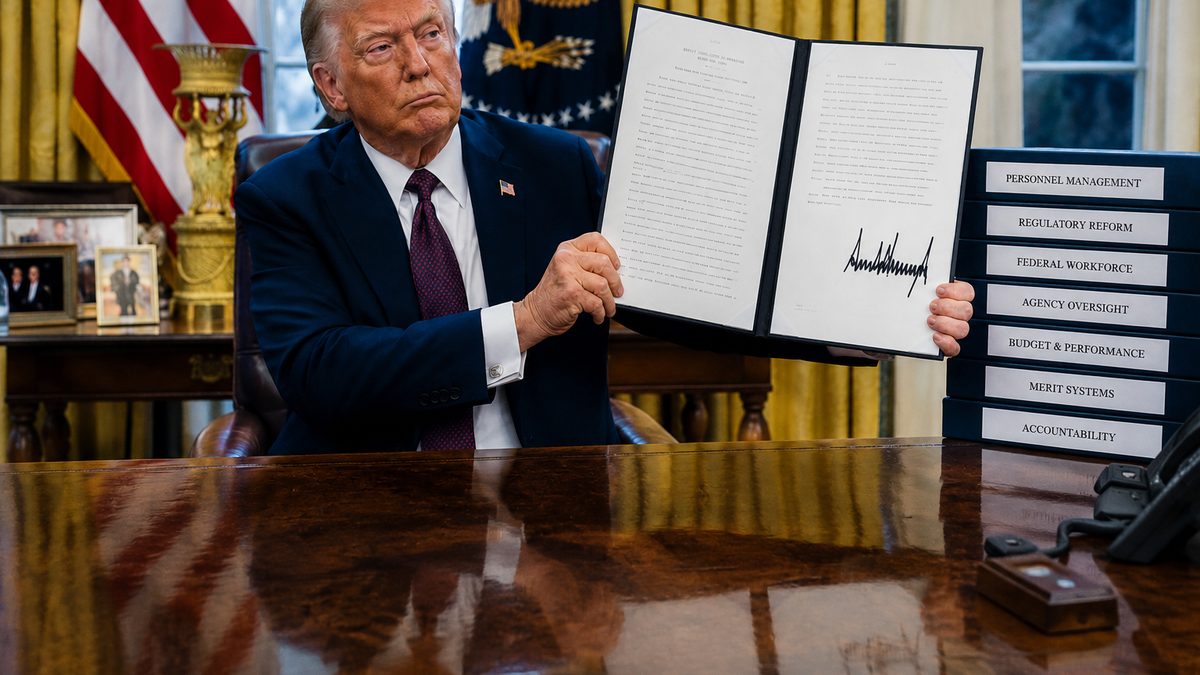
- The White House published an executive order titled “Restoring Integrity to America’s Financial System” on May 19, 2026.
- The order says the administration seeks to safeguard financial institutions against structural risks and deter fraud and abuse.
- AP reported that the order directs banks to scrutinize customer citizenship status more closely as part of immigration enforcement.
- American Banker reported that the order directs Treasury, bank regulators, and the Consumer Financial Protection Bureau to advise banks on red flags tied to informal work arrangements.
- What final agency guidance or rulemaking will require from financial institutions remains unclear.
A new White House executive order is pushing immigration enforcement deeper into banking oversight, directing federal financial regulators to examine risks tied to undocumented immigrants’ use of accounts, loans, credit cards, and other financial services.
The order, titled “Restoring Integrity to America’s Financial System,” was signed May 19. The administration says it is meant to safeguard financial institutions from structural risks and deter fraud and abuse. Independent reporting from The Associated Press and American Banker described the order as a new immigration-enforcement move that asks banks and regulators to look more closely at citizenship or immigration-related risk.
For ordinary readers, the issue is not just a fight over banking paperwork. Depending on how regulators carry out the order, it could affect how banks screen customers, how immigrant households access mainstream financial services, and how lenders manage compliance risk.
What the Order Says
The White House order frames the issue as one of financial-system integrity. It says financial institutions play a role in protecting Americans against fraud and abuse, and it directs federal agencies to take follow-up action.
The practical next step is guidance. American Banker reported that the order directs the Treasury Department, banking regulators, and the Consumer Financial Protection Bureau to advise banks on red flags tied to informal work arrangements. AP reported that the order asks banks to take a closer look at customers’ citizenship status as part of the administration’s broader immigration-enforcement strategy.
That does not mean banks already have a final rule telling them exactly what to collect, deny, report, or change. The order starts a regulatory process. The details that matter most to banks and consumers will come from agency guidance, possible rulemaking, compliance expectations, and how examiners apply the order in practice.
Why Banks Are Involved
Banks already operate under “know your customer” and anti-fraud rules. They must verify identity, monitor suspicious activity, and follow federal requirements designed to prevent money laundering, fraud, and other illegal activity. The White House order adds an immigration-related lens to that existing compliance world.
The administration’s argument is that financial institutions may face risk when they provide services to people who could be removed from the country. AP reported that the order points to possible credit risk if a borrower is deported and cannot repay a loan. Supporters of the policy are likely to describe that as basic risk management.
But banking access is also a practical household issue. A checking account, debit card, credit history, or loan can shape how a family pays rent, receives wages, buys a car, starts a small business, or avoids higher-cost financial services. Critics warn that if immigrants believe banks will become an enforcement pathway, some may avoid the formal banking system altogether.
What Banks Do Not Know Yet
The biggest uncertainty is implementation. The order points agencies toward action, but it does not by itself answer how banks should treat existing customers, new applicants, borrowers, or account holders who use Individual Taxpayer Identification Numbers rather than Social Security numbers.
It also remains unclear whether banks will be expected to build new systems, ask new questions, change lending standards, report different kinds of activity, or simply watch for risk signals under existing compliance rules. That distinction matters because each path carries a different burden for banks and a different level of concern for customers.
The order also leaves legal and operational questions. Banks must follow federal financial rules, but they also have to avoid discrimination, protect customer privacy, and keep access to basic banking services available under applicable law. A poorly defined standard could make banks more cautious than regulators intend.
The Consumer Impact Could Be Uneven
For U.S. citizens and lawful permanent residents, the order may not produce a visible change unless banks begin asking additional questions during account opening, lending, or customer reviews. For immigrant households, mixed-status families, and workers who rely on informal income records, the change could feel more immediate if banks tighten documentation expectations.
The risk is not only account denial. It could also mean delays, extra paperwork, higher compliance scrutiny, or confusion among frontline bank staff. Even small changes can matter for people who already face difficulty proving income, building credit, or meeting standard documentation requirements.
At the same time, it would be premature to say the order will automatically cut people off from banking. The final impact depends on how agencies write the guidance, how banks interpret it, and whether courts, regulators, or lawmakers challenge or clarify the policy.
What Happens Next
The next important documents will come from Treasury, bank regulators, and the Consumer Financial Protection Bureau. Those agencies may explain what red flags banks should watch for, how citizenship or immigration-related information should be handled, and whether the order changes customer due diligence expectations.
Banks will be watching for how specific the guidance becomes. Consumer advocates and immigrant-rights groups will be watching for whether the policy discourages people from using mainstream banks. Regulators will have to balance the administration’s fraud and risk concerns with the practical need for clear, lawful, and workable banking rules.
For now, the clearest takeaway is that the White House has moved immigration enforcement into another part of federal policy: financial oversight. What changes for banks and customers will depend less on the headline of the order than on the guidance that follows.
Reporting note: Reporting draws on White House materials, wire reporting, banking-industry reporting, legal analysis, and reviewed background materials. This article was produced with AI-assisted research and reviewed by an editor before publication.