Redistricting Pushes More House Races Into Legal and Political Uncertainty
Congressional maps are still shifting before the 2026 midterms, leaving candidates, courts, and voters waiting to see which districts will actually be used.
Save Article

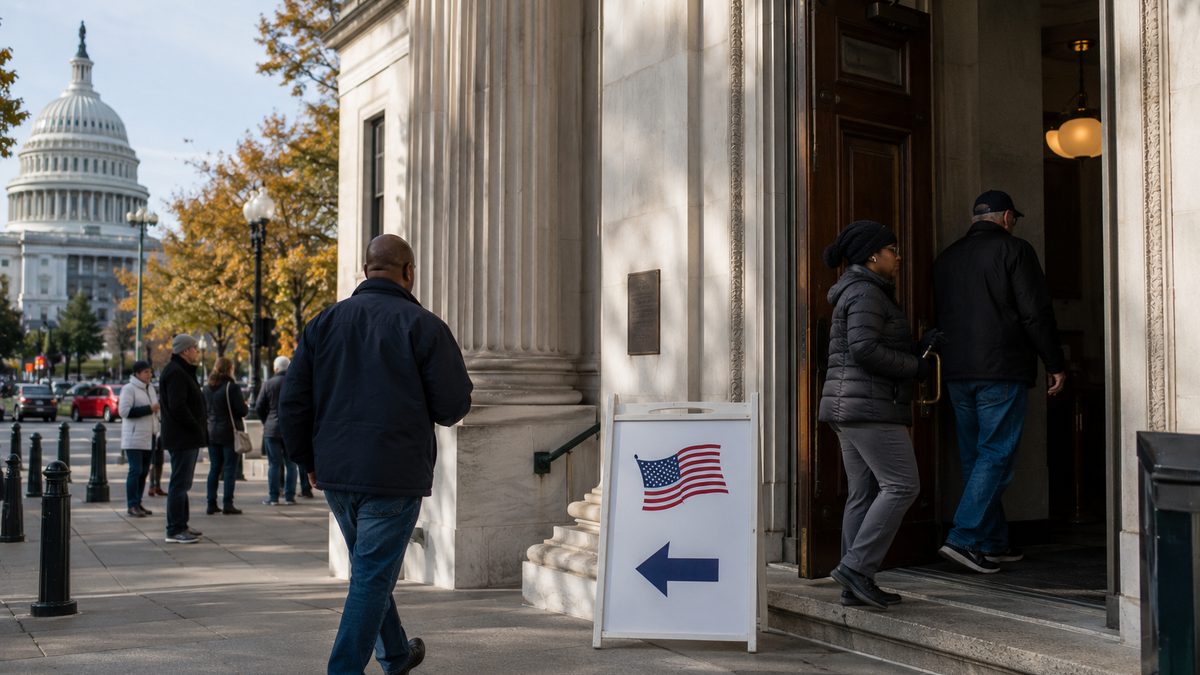
Editorial illustration by TheDailyGlobe.
Key Facts
- AP reported that Republicans are rushing to redraw congressional districts before the 2026 midterms.
- AP reported that new Republican-favored maps have been enacted or are advancing in several states, while legal and legislative challenges remain.
- PBS/AP reporting said a Supreme Court Voting Rights Act ruling may affect redistricting this cycle and beyond.
- SCOTUSblog reported on a major Voting Rights Act redistricting decision in April 2026.
- It remains unclear which maps will ultimately be used in every affected state’s 2026 congressional elections.
A late redistricting push is putting more 2026 House races into uncertainty before voters ever see a ballot.
The Associated Press reported that Republicans are rushing to redraw congressional districts before the midterms, with new Republican-favored maps enacted or advancing in several states. The push follows a major Supreme Court ruling involving the Voting Rights Act and comes as control of the House may turn on a small number of seats.
For readers, the issue is straightforward: congressional district lines help decide which voters are grouped together, which candidates run where, and how competitive a race may be. When those lines are still being fought over close to an election year, the uncertainty reaches beyond party strategy and into the basic structure of the election.
Why the Maps Are Moving Now
Congressional districts are usually redrawn after each census, not in the middle of a decade. But court rulings, state political calculations, and legal fights can reopen the mapmaking process before the next census cycle.
That is what is happening now. AP reported that Republican-led redistricting efforts are moving quickly in several states as the 2026 midterms approach. Some maps have been enacted. Others are still advancing through state legislatures or facing legal challenges.
The result is a moving target. Candidates may not know the final shape of the districts they want to run in. Voters may not know which district they will be placed in. Parties may not know how many seats are truly competitive until courts and legislatures finish their work.
The Supreme Court Ruling Behind the Fight
A key part of the current fight is the Supreme Court’s April 2026 redistricting decision involving Louisiana and the Voting Rights Act. SCOTUSblog reported that the Court struck down a redistricting map challenged as racially discriminatory.
PBS/AP reporting described the ruling as weakening a landmark Civil Rights-era voting law and said it could affect redistricting this cycle and beyond. That legal change is one reason state officials and party leaders are reassessing what maps they can draw and defend.
The legal issue is not simple. Courts have to weigh the Voting Rights Act, the Constitution’s equal-protection limits, and claims about race, representation, and political advantage. Those disputes are often described in sharply different language by each side, and the neutral point is this: court rulings are changing the legal boundaries for mapmakers.
How Map Uncertainty Shapes House Races
Redistricting can change a race without changing a single voter’s mind. Moving district lines can shift which communities are grouped together, which incumbents are protected or exposed, and which party has a better chance in a given seat.
That matters in a closely divided House. A handful of altered districts can affect the national fight for control, especially when both parties are already preparing for a midterm election shaped by turnout, candidate quality, retirements, and the president’s standing.
The effect on voters is more practical than abstract. A voter may end up in a different congressional district than before. A familiar incumbent may no longer represent the same area. A primary field may change after a map is redrawn. Campaigns may shift resources once they know which voters are actually inside the final district lines.
What Is Still Unsettled
The biggest unresolved question is which maps will be used in each affected state’s 2026 elections. Some states may have maps in place but still face lawsuits. Others may still be debating legislation. Courts may also have to decide whether deadlines, election calendars, or legal defects require changes before voting begins.
Candidate filing and primary schedules can make the timing even harder. If a map changes late, candidates may have to decide quickly where to run, whether to challenge another incumbent, or whether to leave a race entirely.
There is also a broader trust issue. Redistricting is legal and necessary after population shifts, but repeated mid-decade map fights can make voters feel as if election rules are being changed by insiders before the public gets a say. That concern cuts across party lines when the party in power draws maps for its own advantage.
What Readers Should Watch
The next signals will come from state legislatures, federal and state courts, and official election calendars. The important question is not only whether a map is proposed, but whether it survives long enough to be used in 2026.
Readers should also watch whether legal disputes focus mainly on racial representation, partisan advantage, procedure, or timing. Those differences matter because they affect what courts can do and how quickly a case may move.
For now, the redistricting fight leaves the 2026 House map less settled than it may appear. The campaigns are beginning, but in several places, the field itself is still being drawn.
Reporting note: Reporting draws on wire reporting, Supreme Court coverage, election-calendar materials, redistricting analysis, and reviewed legal context. This article was produced with AI-assisted research and reviewed by an editor before publication.