Why a Local D.C. Election Has National Implications for Self-Government
Washington, D.C., voters are choosing new leadership in races shaped by ranked-choice voting, federal oversight, and a long-running debate over how much control the nation's capital should have over its own affairs.
Save Article
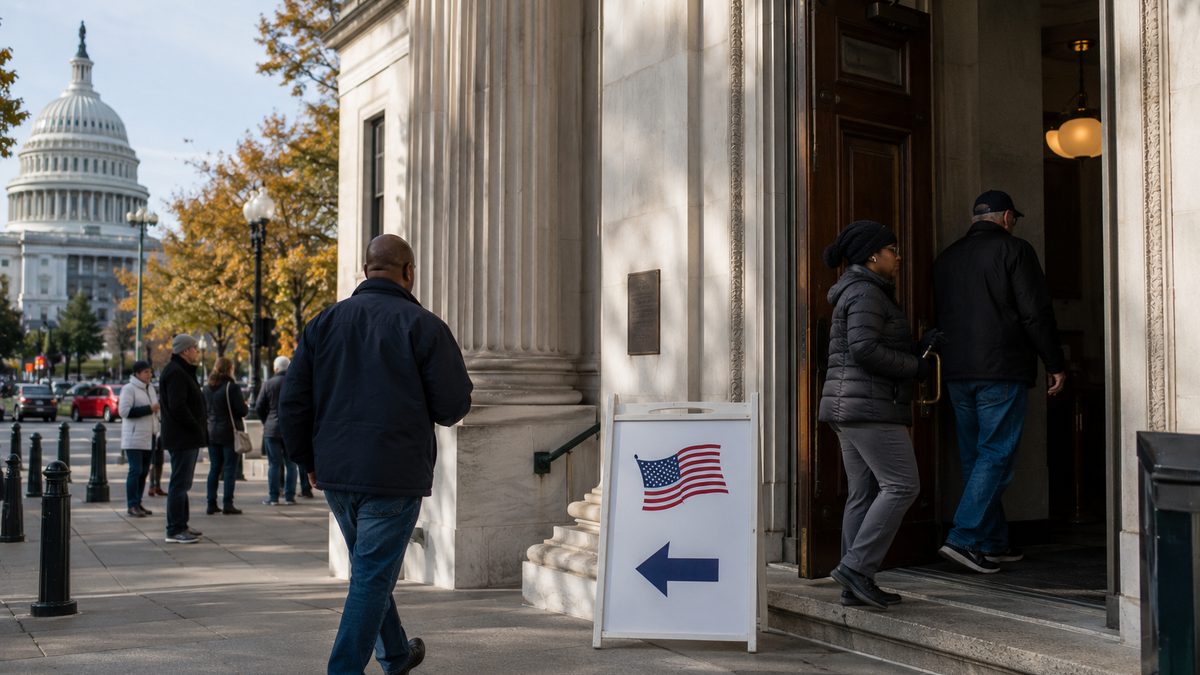
D.C. elections carry unusual stakes because local self-government still operates under federal power. Editorial illustration by TheDailyGlobe.
Key Facts
- D.C. voters are participating in primary elections for mayor and congressional delegate.
- Mayor Muriel Bowser and Delegate Eleanor Holmes Norton are stepping aside from their respective offices.
- The city is using ranked-choice voting in the citywide primary.
- Associated Press reporting describes the election as taking place amid ongoing debate over D.C. autonomy and federal influence.
- Final results may take longer to determine because ranked-choice ballots require additional tabulation rounds if necessary.
Most city elections are primarily about local issues. Residents choose leaders, local officials take office, and the results rarely attract much national attention outside the communities directly affected.
Washington, D.C., is different. The nation's capital elects its own local leaders, but those leaders govern within a system where Congress retains significant authority over the city. That unusual arrangement means even local elections can become part of a larger debate about self-government, federal power, and political representation.
As voters cast ballots Tuesday in major D.C. primary elections, they are choosing candidates who could help shape how the city responds to that continuing tension between local control and federal oversight.
A City With Different Rules
Unlike states, Washington, D.C., operates under a home-rule system that allows residents to elect local officials while still leaving Congress with substantial authority over the city. Lawmakers on Capitol Hill can review local legislation and influence decisions affecting the district.
That arrangement has long fueled debate about whether D.C. residents have sufficient control over their own government. Supporters of greater autonomy argue that residents should have more authority over local affairs. Others maintain that the nation's capital occupies a unique constitutional position that requires continued federal oversight.
The election is unfolding against that backdrop rather than as a simple contest between competing local policy platforms.
What Voters Are Deciding
The primary features major leadership transitions. With both Mayor Muriel Bowser and Delegate Eleanor Holmes Norton stepping aside, voters are selecting candidates who could define the next chapter of city leadership.
The congressional delegate position is particularly unique. D.C.'s delegate can participate in congressional activities but does not have the same voting authority as representatives from states. That reality has made the office an important symbol in debates over representation and self-government.
Because the election includes open races for key offices, the outcome could influence how aggressively future leaders pursue questions involving home rule, federal relationships, and local authority.
How Ranked-Choice Voting Changes Election Night
Another feature attracting attention is the city's use of ranked-choice voting. Instead of selecting only one candidate, voters can rank candidates in order of preference.
If no candidate reaches the required threshold during initial counting, lower-performing candidates can be eliminated and their voters' next preferences redistributed through additional tabulation rounds. The process is intended to produce winners with broader support, but it can also take longer to finalize results.
That means election-night headlines may not immediately answer every question. Depending on vote totals and ranking patterns, some outcomes could require additional counting before a winner is officially determined.
Federal Pressure Remains Part of the Conversation
Associated Press reporting has noted that the election is occurring amid broader discussions about federal pressure on D.C. governance. Candidates have offered differing views on how city leaders should respond when federal officials challenge local priorities or authority.
The exact impact of those debates on voter decisions remains unclear. Elections often involve a mix of concerns, including housing, public safety, schools, transportation, and economic development. But in Washington, those local issues can intersect with questions about who ultimately has the power to make decisions for the city.
That dynamic helps explain why observers outside the district sometimes pay attention to D.C. elections even when no national office is on the ballot.
What Remains Unclear
Several important questions remain unanswered as ballots are counted. The most immediate is who will emerge as the winners once ranked-choice tabulation is complete.
It is also unclear how quickly final results will be available. Ranked-choice systems can require additional rounds of counting, particularly in closely contested races.
Beyond the election itself, questions remain about how future city leaders will approach ongoing debates surrounding home rule and federal authority. Public reporting has not established how federal officials might respond to whichever candidates ultimately prevail.
What Readers Should Watch Next
The next developments will come from the vote count itself. Election officials will continue tabulating ballots, and ranked-choice procedures may shape how quickly winners emerge.
After results are finalized, attention is likely to shift from campaign promises to governing priorities. Observers will be watching for statements from the winning candidates on home rule, congressional relations, and the city's broader relationship with the federal government.
For readers outside Washington, the election offers a reminder that the nation's capital occupies a unique place in American democracy. Residents elect local leaders like voters elsewhere, but those leaders operate within a system where questions about local control and federal authority remain unresolved.
Reporting note: Reporting draws on Associated Press reporting, District of Columbia Board of Elections materials, local election reporting, and reviewed background materials. This article was produced with AI-assisted research and reviewed by an editor before publication.