Why a Georgia Voter Records Case Is Becoming a Test of Public Trust in the Courts
A federal judge's recusal from a Georgia voter-records dispute has added a new layer to an already sensitive case involving election data, government authority, and confidence in the judicial system.
Save Article
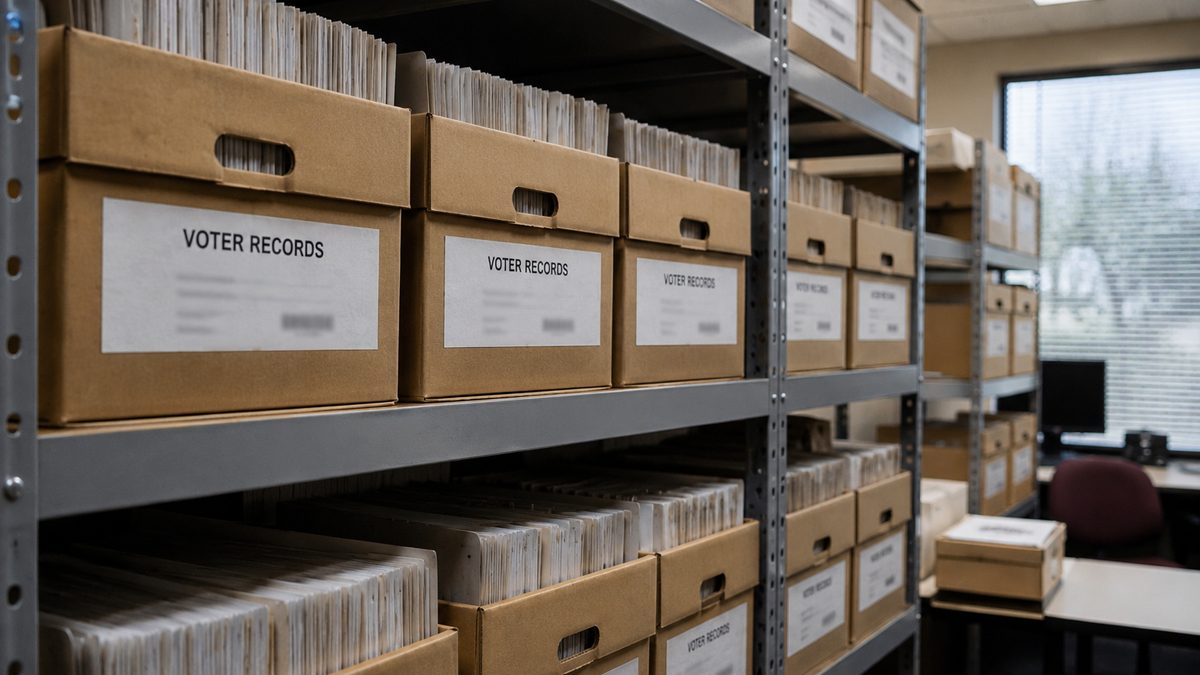
Election lawsuits require careful handling of both voter data and public confidence in the courts. Editorial illustration by TheDailyGlobe.
Key Facts
- U.S. District Judge Eleanor Ross recused herself from a federal case involving Georgia voter records.
- The Justice Department sought access to Georgia's unredacted voter list.
- Associated Press reported that DOJ questioned Ross's impartiality after a disciplinary investigation.
- A previous DOJ lawsuit involving Georgia voter-roll records was dismissed earlier this year after being filed in the wrong federal district.
- The future path of the current voter-data litigation remains uncertain following the recusal.
Election disputes often involve more than laws and court filings. They also depend on public confidence that sensitive voter information will be handled properly and that judges overseeing those cases are viewed as impartial by both sides.
Those two issues came together this week in a federal case involving Georgia voter records. U.S. District Judge Eleanor Ross recused herself from the matter after questions were raised about whether she should continue presiding over the case. The dispute itself centers on the Justice Department's effort to obtain access to Georgia's unredacted voter list.
Why the Case Matters Beyond One Judge
The legal dispute involves records that election officials consider sensitive because they contain information tied to voter registration and election administration. Questions about who can access that information, how it can be used, and what safeguards apply have become recurring issues in election-related litigation around the country.
At the same time, courts play a central role in resolving those disputes. That makes judicial neutrality especially important. Even when a judge believes they can fairly handle a case, concerns about public perception can become a factor in deciding whether recusal is appropriate.
Ross's decision to step aside does not determine the outcome of the underlying voter-records dispute. It changes who will oversee the case, not the legal questions that remain unresolved.
What the Justice Department Was Seeking
According to reporting on the case, the Justice Department sought access to Georgia's unredacted voter list. The request is part of a broader legal disagreement involving election records and federal authority.
Supporters of federal access to election records have argued that such information can be important in enforcing election laws and reviewing how voter rolls are maintained. Critics have raised concerns about privacy, state authority, and the handling of sensitive voter information.
The current court fight does not fully resolve those competing arguments. Instead, it focuses on whether the federal government is entitled to the records being sought and under what legal framework that access would occur.
The Recusal and the Public Trust Question
The immediate development attracting attention is Ross's recusal. Associated Press reported that the Justice Department raised concerns about her impartiality following a disciplinary investigation. Ross indicated that stepping aside was intended to avoid concerns about perceived bias.
Recusal is not uncommon in the federal court system. Judges sometimes remove themselves from cases to avoid conflicts of interest or situations that could create questions about neutrality. In highly visible election-related litigation, those concerns can receive additional scrutiny because public confidence in the process is often part of the story itself.
Importantly, the recusal should not be confused with a ruling on the merits of the case. The legal dispute over voter records remains separate from the question of who should preside over it.
What Remains Unclear
Several key questions remain unanswered. Public reporting has not yet established how the litigation will proceed once a new judge is assigned. It is also unclear whether the Justice Department will narrow, modify, or continue pursuing its request for voter data in its current form.
Another unresolved issue involves what protections or safeguards would apply if access to sensitive voter information were ultimately granted. The current reporting does not provide final answers on that question.
What Readers Should Watch Next
The next major development will likely be the assignment of a new judge to the case. After that, attention will shift back to the underlying dispute over voter records and the legal arguments surrounding federal access to election data.
Future court filings from the Justice Department and responses from Georgia officials may provide a clearer picture of where the litigation is headed. For now, the case serves as a reminder that election-related lawsuits often test two forms of public confidence at the same time: confidence that voter information is handled appropriately and confidence that courts remain trusted referees when election disputes reach the courtroom.
Reporting note: Reporting draws on court reporting, election-law reporting, Associated Press reporting, and reviewed background materials. This article was produced with AI-assisted research and reviewed by an editor before publication.