Congress Tests War Powers
A House vote aimed at curbing U.S. military action against Iran puts Congress, the White House and the limits of presidential war authority back at the center of a widening foreign-policy fight.
Save Article
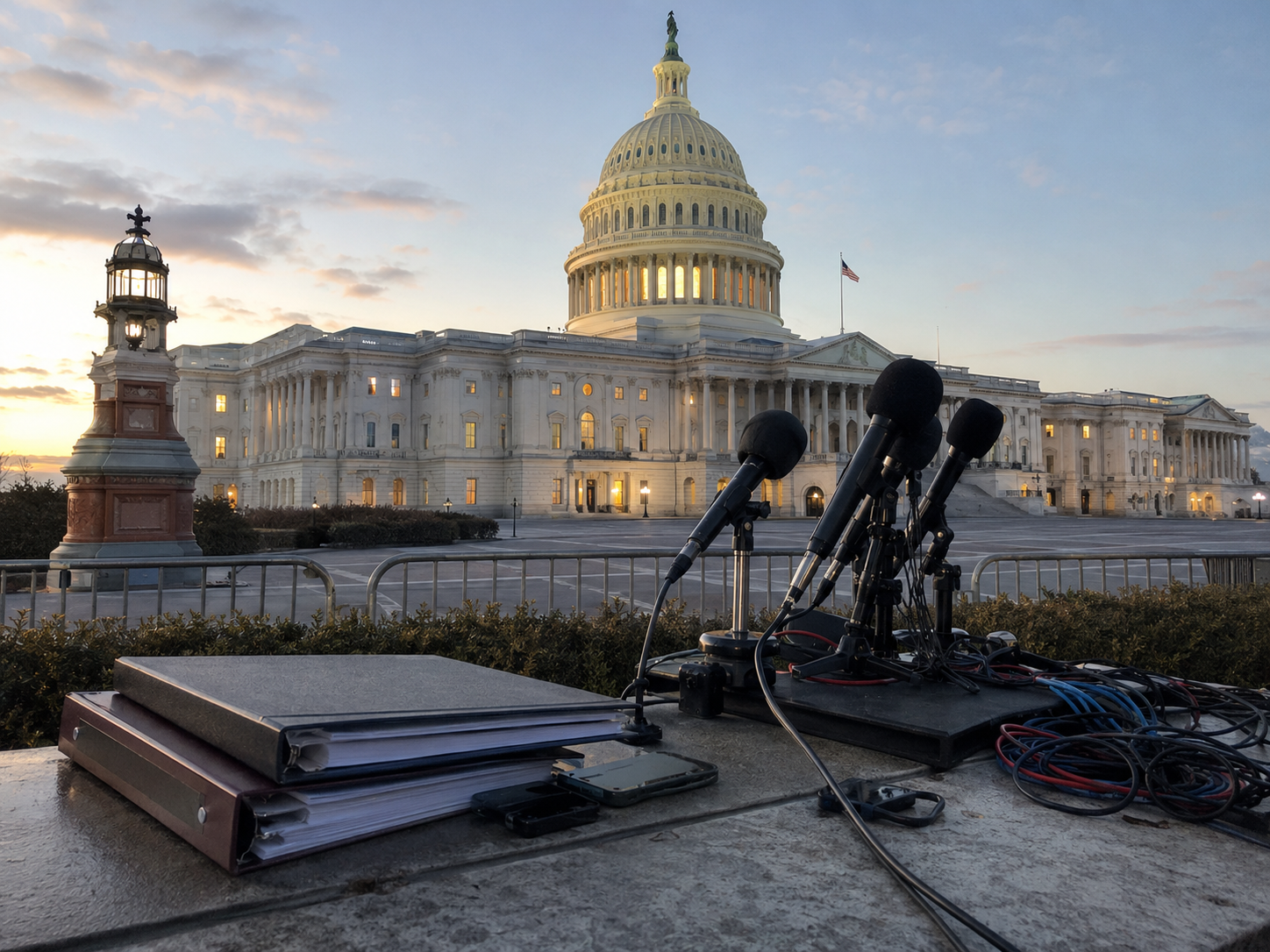
Congressional votes on war powers can shape how long U.S. military action continues overseas. Editorial illustration by TheDailyGlobe.
Key Facts
- The House approved a war powers resolution related to U.S. military action against Iran.
- The vote was a rare bipartisan rebuke of the administration’s handling of the conflict, with four Republicans joining Democrats.
- The measure does not immediately end U.S. military action and faces major hurdles in the Senate and from the White House.
- The fight centers on Congress’s constitutional role in authorizing war and the president’s authority to direct military operations.
- The next major question is whether the Senate takes up similar action and how the administration responds.
Congress rarely gets a clean moment to test the boundaries of presidential war power while a conflict is still unfolding. This week, the House created one.
The House approved a war powers resolution aimed at halting U.S. military action against Iran, a vote that does not immediately end American involvement but does put new political pressure on the White House and the Senate. The measure passed narrowly, 215–208, with a small group of Republicans joining Democrats in support.
The result turns a complicated foreign-policy fight into a basic civic question: when the United States is involved in hostilities overseas, how much authority belongs to the president, and how much must come back to Congress?
What the House Vote Does
The House vote is important, but it is not the same as Congress ordering an immediate end to U.S. military operations. War powers measures can carry political force, but their practical effect depends on the exact form of the resolution, action in both chambers, and whether the White House accepts or challenges Congress’s authority.
That distinction matters because a headline about Congress voting to halt military action can sound final when the process is not. The House has acted. The Senate path remains uncertain. The White House still has significant power to resist, reinterpret or challenge the effort.
Supporters of the resolution argue that Congress must reassert its constitutional role before U.S. involvement deepens further. Opponents argue that the president needs flexibility to respond to threats, protect American interests and conduct diplomacy without Congress limiting military options in the middle of a conflict.
Why War Powers Are Back in Focus
The U.S. Constitution gives Congress the power to declare war, while the president serves as commander in chief. In practice, modern presidents of both parties have often used military force without a formal declaration of war. Congress responded to that long-running tension after the Vietnam era with the War Powers Resolution of 1973, which was meant to create limits and reporting requirements for military action without congressional approval.
The law has been debated for decades. Presidents have often treated parts of it as constitutionally disputed, while lawmakers have repeatedly argued that Congress cannot allow presidents to commit the country to open-ended conflict without a meaningful vote.
That is why this House vote matters beyond the immediate fight over Iran. It is also a test of whether Congress can still impose political and legal pressure on a president once military action has begun.
Why Readers Should Care
War authority can sound like an abstract Washington argument until it affects troops, families, fuel prices, shipping lanes, alliances and the risk of a broader conflict. The question is not only whether lawmakers agree with the president’s Iran policy. It is whether the public gets a clear process for deciding how long military action continues and who is accountable for that decision.
The issue also reaches beyond party lines. Congress has wrestled with war powers under presidents from both parties. Lawmakers often defend congressional authority more loudly when the opposing party controls the White House, then soften when their own party holds power. That pattern is one reason war powers debates can feel inconsistent to voters.
Still, the core issue remains serious: military action can expand faster than public understanding. A war powers vote forces elected officials to take a position on the record instead of leaving the decision entirely inside the executive branch.
The Political Stakes
The House vote was narrow, but the Republican defections matter. They show that concern over the Iran conflict is not limited to one party, even if most Republicans remain aligned with the president. For Democrats, the vote offers a way to argue that the administration has exceeded its authority. For Republican critics, it offers a way to argue that constitutional limits still matter even under a president from their own party.
House Speaker Mike Johnson and other administration allies have defended the president’s position, arguing that the White House is acting to protect American security. Critics counter that continued hostilities require clearer congressional authorization, especially if diplomacy remains uncertain and military risk continues.
That leaves the Senate as the next major arena. A similar measure would need enough support to move forward, and even then the White House could resist. The political value of the House vote may therefore be clearer than its immediate legal effect.
What Remains Unclear
Several important questions remain unresolved. It is unclear whether the Senate will advance a similar measure. It is unclear whether any final congressional action could survive a presidential veto or legal challenge. It is also unclear whether diplomatic talks involving Iran will reduce the military risk or simply pause the conflict long enough for the next confrontation.
The status of military operations also requires careful wording. The House vote signals pressure to halt or limit action, but it does not mean hostilities have ended. It also does not settle whether the administration’s legal position will hold if challenged.
For readers, the safest way to understand the moment is this: the House has escalated a constitutional and political fight over who controls U.S. military involvement with Iran. The vote matters, but the outcome is not finished.
What Happens Next
The next steps are likely to unfold on three tracks at once. In Congress, lawmakers will watch whether the Senate takes up similar action and whether more Republicans are willing to break with the White House. In the administration, officials will continue defending the president’s authority while managing the military and diplomatic situation. Overseas, the central question is whether negotiations, ceasefire efforts or regional pressure reduce the chance of renewed escalation.
The vote also gives voters a clearer record. Lawmakers can no longer discuss the Iran conflict only in statements, interviews or party messaging. The House has now put names and votes behind the question of war authority.
That does not resolve the conflict. It does not settle the law. It does not guarantee a change in U.S. military posture. But it does make one thing harder to avoid: if the country remains involved in hostilities, Congress will face growing pressure to explain whether it is authorizing, opposing or simply watching the war continue.
Reporting note: Reporting draws on Associated Press coverage, NPR member-station reporting, U.S. House floor activity, official statements, public legislative records, and reviewed background materials on the War Powers Resolution. This article was produced with AI-assisted research and reviewed by an editor before publication.