Why Front Porches Are Quietly Making a Comeback in Some American Neighborhoods
For generations, the front porch served as an informal gathering place between private life and public life. Some planners and homebuilders believe it still has a role to play today.
Save Article
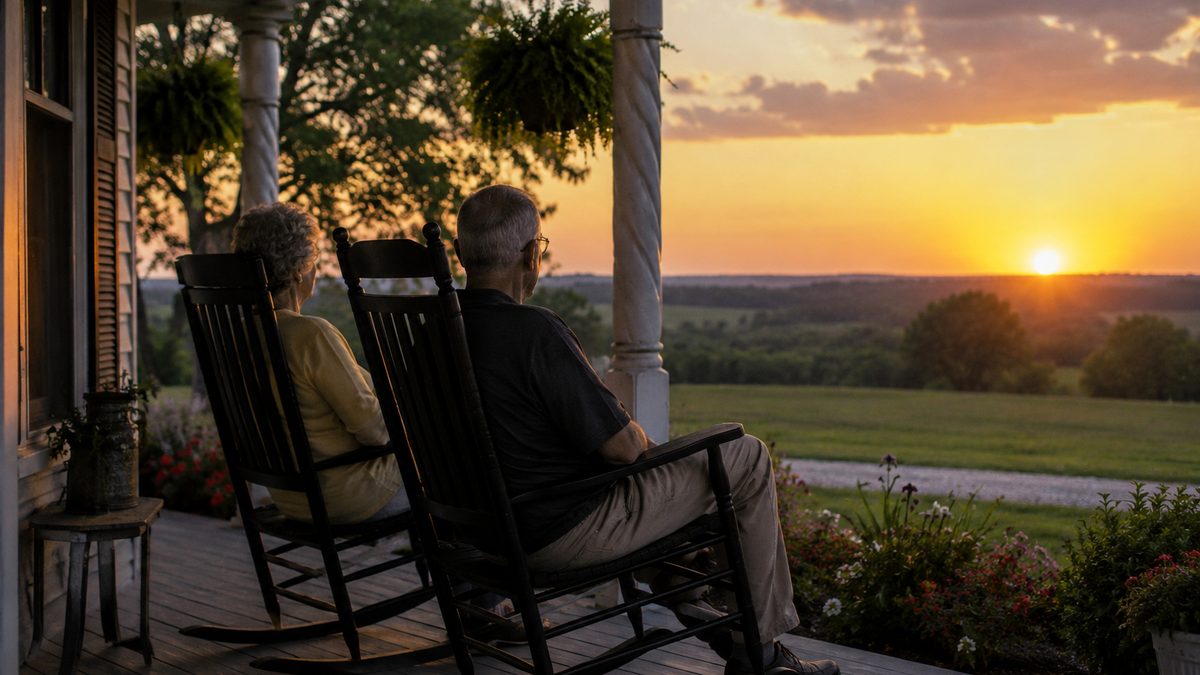
Front porches continue to serve as informal gathering spaces in many American neighborhoods. Editorial illustration by TheDailyGlobe.
Key Facts
- Front porches remain a common feature in many new urbanist neighborhood developments.
- Housing design can influence how often neighbors interact with one another.
- Porch use varies significantly by region, climate, and neighborhood design.
- Many planners view front porches as a tool for strengthening community connections.
- Modern homebuyers continue to show interest in outdoor living spaces.
Many Americans can picture the scene even if they rarely experience it themselves: a warm evening, neighbors sitting outside, children riding bikes down the street, and conversations that happen without anyone needing to schedule a meeting or send a text message first.
For much of American history, the front porch helped make those interactions possible. It served as a space that was neither fully private nor fully public, allowing people to remain connected to neighborhood life while staying close to home.
Today, some urban planners, architects, and homebuilders are revisiting that idea. While front porches never disappeared entirely, they are receiving renewed attention as communities look for ways to encourage more casual social interaction in an increasingly digital world.
The Space Between Home and Street
One reason front porches continue to attract attention is their unique location. Unlike a backyard, a porch faces the neighborhood. Unlike a sidewalk, it remains part of the home.
That positioning creates opportunities for small interactions that rarely happen in more isolated settings. People wave to neighbors, stop for brief conversations, or simply become familiar faces to one another over time.
Supporters of traditional neighborhood design often argue that these small moments matter. Strong communities are not built entirely through organized events. They also grow through everyday encounters that help people feel connected to the places where they live.
Why Some New Developments Are Bringing Them Back
Organizations focused on neighborhood design have frequently highlighted the role front porches can play in creating more walkable and socially connected communities. In many newer developments influenced by new urbanist principles, homes are positioned closer to sidewalks and public spaces, making porches more practical and visible.
The idea is not that architecture alone creates community. A porch cannot guarantee friendships or neighborhood involvement. But designers often view physical spaces as invitations that make certain behaviors easier and more natural.
A home with a usable front porch may encourage residents to spend more time facing the neighborhood rather than retreating entirely to private spaces. Whether people accept that invitation depends on many factors, but the opportunity exists.
Why Porches Work Differently in Different Places
The story is not the same everywhere. Climate plays a major role in how often front porches are used. In some regions, mild weather allows residents to spend significant time outdoors. In others, extreme heat, humidity, cold, or seasonal weather may limit how practical a porch becomes.
Neighborhood design also matters. A porch overlooking a quiet street with sidewalks may function differently than one facing heavy traffic or limited pedestrian activity. Population density, local culture, and housing styles can all influence whether residents view a front porch as part of daily life or simply an architectural feature.
That variation helps explain why some communities embrace porch culture while others rely on different gathering spaces such as parks, community centers, patios, or local businesses.
The Appeal of Casual Connection
Part of the renewed interest in front porches may reflect a broader search for simple ways to maintain social connections. Many aspects of modern life have become more private, more scheduled, and more dependent on technology.
A front porch offers something different. It creates a setting where interactions can happen naturally. There is no invitation list, reservation, or event calendar. Someone can spend an hour reading a book and still end up chatting with a neighbor walking past.
Those moments may seem small, but community researchers and planners often point to repeated casual interactions as one factor that helps people feel attached to their neighborhoods.
What the Future May Look Like
Front porches are unlikely to become the defining feature of every new neighborhood. Housing preferences vary, and modern homeowners often prioritize different amenities based on lifestyle, budget, and location.
Still, the continued interest in porch-centered design suggests that many people remain drawn to spaces that encourage everyday human interaction. As builders and planners look for ways to create neighborhoods that feel connected rather than isolated, the front porch continues to offer a surprisingly simple idea.
It is not a solution to every challenge facing modern communities. But for a feature that has existed for generations, the front porch continues to remind people that sometimes the most meaningful social spaces are the simplest ones.
Reporting note: Reporting draws on housing design research, planning organization materials, homebuilding trend reporting, and reviewed background materials. This article was produced with AI-assisted research and reviewed by an editor before publication.