Community Gardens Are Becoming Summer's Most Practical Gathering Places
Community gardens offer more than fresh vegetables. In many neighborhoods, they have become places where food, outdoor activity, education, and community life come together.
Save Article
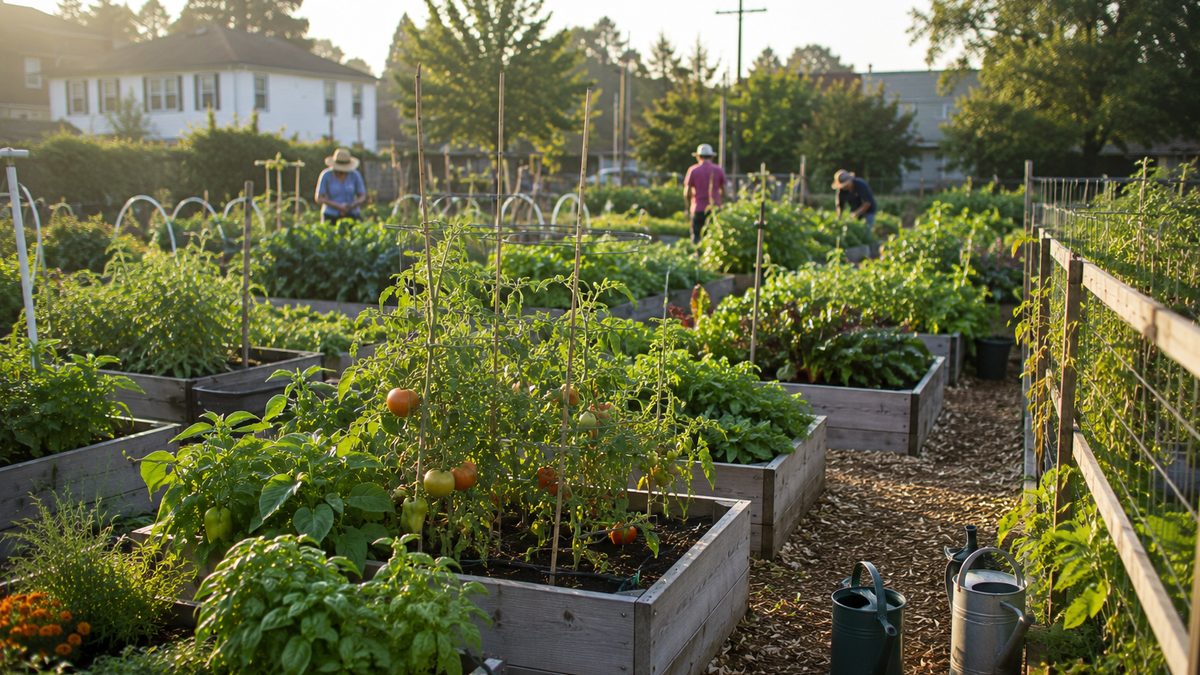
Community gardens often bring food, outdoor routines, and neighborhood connection into the same space. Editorial illustration by TheDailyGlobe.
Key Facts
- The American Community Gardening Association held its 2026 annual conference from June 4–7.
- ACGA describes community gardens as tools for food access, education, collaboration, and neighborhood sustainability.
- Community gardens are commonly linked to food security and nutrition efforts.
- Many gardens host educational programs for children, families, and community groups.
- Reliable national figures on the total number of active community gardens remain unclear.
On a summer morning, a community garden can feel different from almost any other public space. Someone is watering tomatoes before work. A retiree is pulling weeds from a small plot. Children are examining insects while a volunteer explains how plants grow. None of these people may know one another well, yet they are sharing the same piece of ground for a common purpose.
Community gardens have existed for decades, but they continue to attract interest because they solve several practical problems at once. They create opportunities to grow food, spend time outdoors, learn new skills, and connect with neighbors. In an era when many public spaces struggle to bring people together, community gardens remain surprisingly durable.
More Than a Place to Grow Vegetables
The most visible purpose of a community garden is food production. Raised beds filled with tomatoes, peppers, beans, herbs, and other crops are often the first thing visitors notice. But gardeners and organizers frequently describe a broader mission.
The American Community Gardening Association highlights education, collaboration, sustainability, and community development alongside food access. In practice, that means a garden may serve several roles at once. One section might be devoted to individual garden plots while another hosts workshops, school visits, or volunteer projects.
The result is a space that functions as both a garden and a gathering place. People may arrive because they want to grow vegetables, but they often leave with new connections and knowledge as well.
Why Gardens Appeal to Different Generations
One reason community gardens remain relevant is that they can serve people at very different stages of life. Families may use them as a hands-on learning experience for children. Retirees may enjoy the routine and social interaction. Renters who lack yard space often gain access to a place where they can grow food.
Schools and community groups sometimes use gardens as outdoor classrooms. Lessons about science, nutrition, and local ecology become easier to understand when students can see plants growing in front of them rather than only reading about them in a book.
For some participants, the harvest is the main reward. For others, the value comes from having a reason to spend time outdoors and engage with people they might not otherwise meet.
The Challenges Behind the Green Space
Community gardens are often presented as simple success stories, but maintaining them requires work. Land must be available. Water access must be secured. Volunteers and organizers need to coordinate schedules, maintenance, and rules for shared spaces.
Not every neighborhood has suitable land, and not every community has the resources needed to support a long-term gardening project. Some gardens thrive for years while others struggle to maintain participation or funding.
Those realities help explain why community gardens are not a universal solution to food access or neighborhood development. They can be valuable where conditions allow, but their success often depends on local support and sustained effort.
A Different Kind of Neighborhood Infrastructure
When people hear the word infrastructure, they often think of roads, bridges, and utilities. Community gardens represent a different kind of local asset. They create places where neighbors interact, skills are shared, and small community projects can take root.
Unlike many recreational spaces, gardens usually require active participation. People contribute time and effort rather than simply passing through. That shared responsibility can help create a stronger sense of ownership and local pride.
The effect may be difficult to measure, but it is one reason many communities continue supporting gardens year after year even when they occupy valuable land that could be used for something else.
What Readers Can Look For Locally
The national picture remains incomplete. Available information does not establish exactly how many community gardens operate across the United States or how much food they collectively produce each year. What is clear is that community gardening remains active in cities, suburbs, and small towns around the country.
For readers interested in exploring one, the easiest starting point is often local. Parks departments, libraries, schools, nonprofit groups, and gardening organizations frequently maintain information about nearby projects. Some gardens offer individual plots, while others welcome volunteers regardless of gardening experience.
At a glance, a community garden may look like a collection of vegetables and flowers. Spend a little time there, however, and it often becomes clear that the real crop is something broader: a place where food, learning, and community life can grow together during the summer months.
Reporting note: Reporting draws on American Community Gardening Association materials, USDA National Institute of Food and Agriculture resources, community gardening conference materials, and reviewed background materials. This article was produced with AI-assisted research and reviewed by an editor before publication.