The Lost Art of Knowing Your Local History
Many people can name major events in American history but know little about the stories that shaped their own towns, neighborhoods, and communities.
Save Article
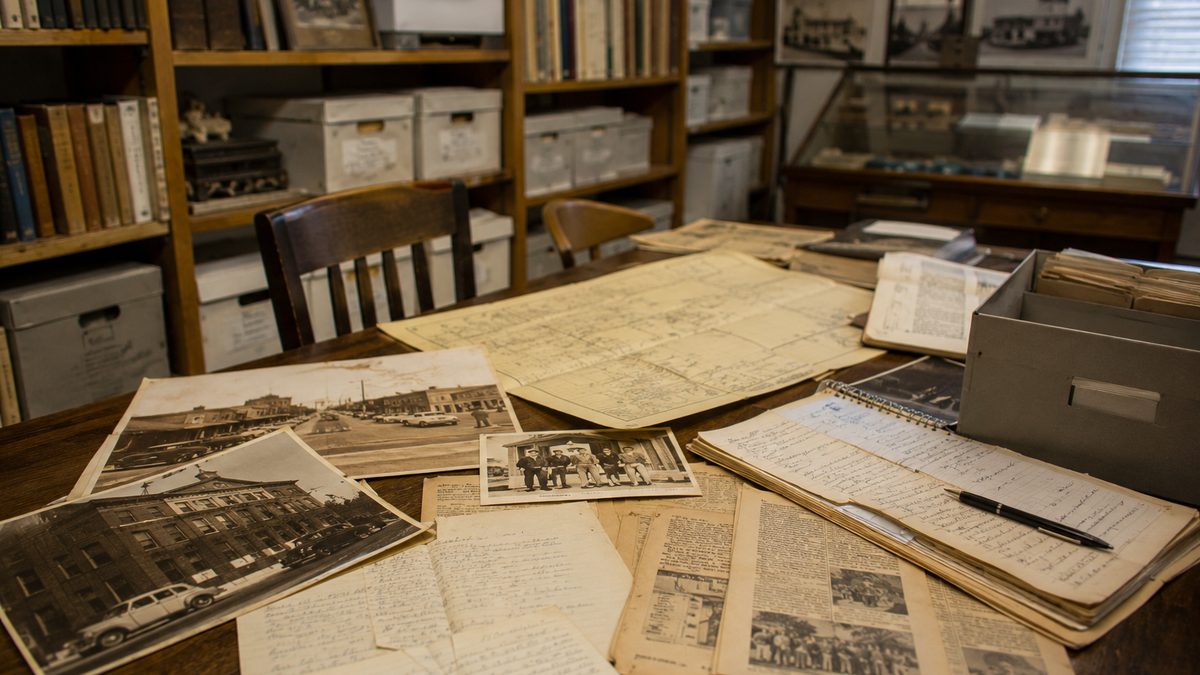
Local archives help preserve stories that might otherwise disappear from community memory. Editorial illustration by TheDailyGlobe.
Key Facts
- Thousands of local historical societies operate across the United States.
- Local archives preserve photographs, newspapers, maps, and public records.
- Community history projects remain active in many cities and towns.
- Organizations such as the Library of Congress provide resources for local-history research.
- Local history often documents everyday experiences that may not appear in national histories.
Ask someone about American history and they may mention the Civil War, the Great Depression, or the moon landing. Ask about the history of their own town, however, and many people draw a blank.
That gap is surprisingly common. While national history often receives the most attention in classrooms, books, and media, local history tends to live quietly in archives, museums, libraries, historical societies, and family collections. Yet the stories closest to home may explain more about daily life than many people realize.
Understanding how a community developed, why neighborhoods look the way they do, or how local traditions emerged can offer a clearer picture of the place people call home. It can also help connect residents to one another in ways that are difficult to replicate through national narratives alone.
History That Happened Close to Home
When people think about history, they often picture major events involving presidents, wars, or national movements. Those stories matter, but local history offers a different perspective. It focuses on how ordinary people lived, worked, built communities, and responded to change.
A town's history might explain why a railroad was built through one area and not another. A neighborhood archive might reveal how immigration shaped local culture. Old photographs can show how a downtown district changed over generations. These details rarely make national headlines, but they often explain the places people encounter every day.
In many cases, local history turns abstract events into something more personal. National economic changes, transportation projects, industrial growth, and demographic shifts become easier to understand when viewed through the experience of a single community.
The Records That Keep Communities Connected
Across the country, local archives continue preserving documents that might otherwise be lost. Historical societies, libraries, museums, and volunteer groups collect photographs, newspapers, oral histories, maps, property records, and other materials that help document community life.
These collections serve practical purposes beyond curiosity. Researchers use them to trace family histories. Journalists consult them when reporting on local issues. Property owners may use historical records to understand older buildings. Teachers and students often rely on them for community-based learning projects.
Without these records, many stories would disappear as generations pass. What seems ordinary today can become valuable historical evidence decades later.
Why Local History Matters Today
The value of local history is not limited to understanding the past. It can also help explain present-day decisions and debates. Questions about growth, preservation, transportation, housing, and community identity often have roots that stretch back many years.
Knowing that history does not automatically settle modern disagreements, but it can provide context. Residents may better understand why certain streets follow unusual routes, why particular landmarks are protected, or why community traditions continue long after their original purpose has faded.
Local history can also strengthen a sense of belonging. People are often more invested in places when they understand the stories behind them. A building becomes more than a building when someone knows who built it, how it was used, and what role it played in community life.
The Challenge of Keeping Interest Alive
Organizations devoted to local history remain active nationwide, but questions remain about long-term participation. Available information does not clearly establish whether younger generations are becoming more involved in local-history projects or whether volunteer participation is growing over time.
Many historical organizations are adapting by digitizing records, creating online exhibits, and making archives more accessible. These efforts can help reach people who might never visit a traditional archive or museum in person.
At the same time, the success of those efforts varies from one community to another. What works in a large city may not work in a small town, and local organizations often operate with limited resources.
What Readers Can Explore Next
For anyone interested in learning more about where they live, the first step is often surprisingly simple. Local libraries, historical societies, museums, and county archives frequently offer public access to records, photographs, and historical materials.
The story of a community is rarely contained in a single book or exhibit. It is scattered across photographs, newspaper clippings, family stories, public records, and the memories of people who have lived there. Taking the time to explore those pieces can reveal that history is not something that happened somewhere else. In many cases, it happened right down the street.
Reporting note: Reporting draws on National Trust for Historic Preservation resources, Library of Congress local-history materials, American Association for State and Local History resources, and reviewed background materials. This article was produced with AI-assisted research and reviewed by an editor before publication.