Why Buy Nothing Groups Feel More Useful Than Ever
Neighborhood sharing groups are turning unwanted household items into useful resources while giving online communities a more practical purpose.
Save Article
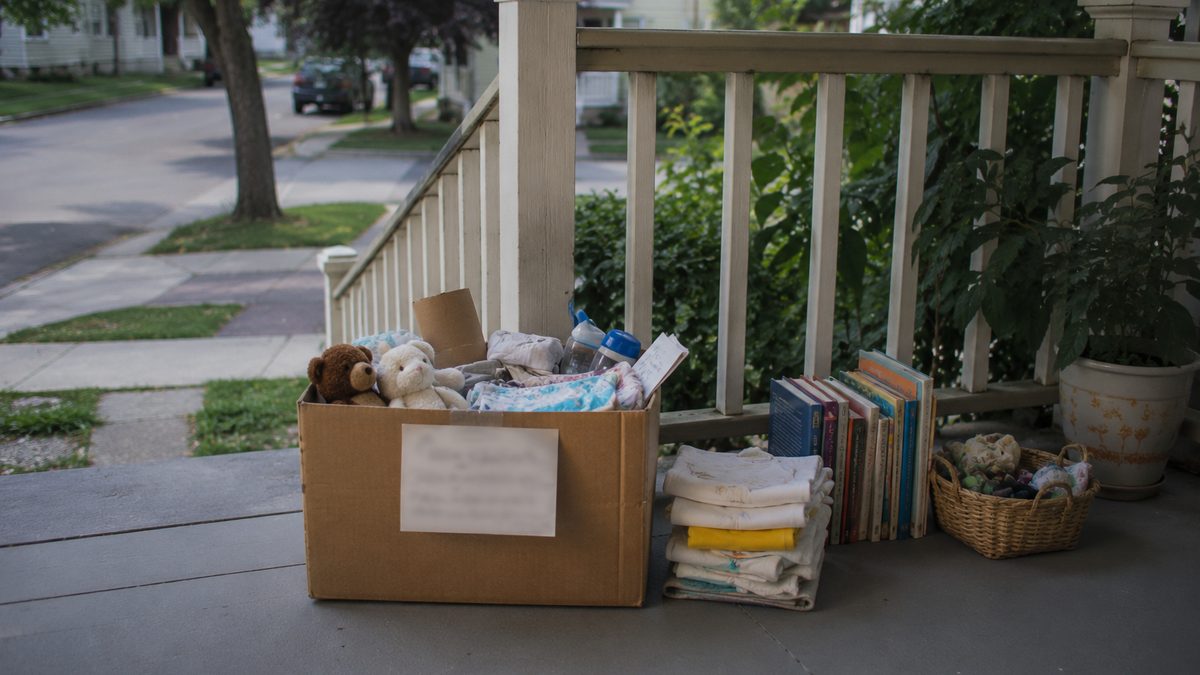
Neighborhood giving groups turn unwanted household items into useful finds for someone nearby. Editorial illustration by TheDailyGlobe.
Key Facts
- The Buy Nothing Project describes itself as a community built around giving and receiving items for free.
- Participation takes place through neighborhood-based groups and app-based platforms.
- The organization announced a redesigned platform in January 2026.
- Members commonly share household goods, clothing, furniture, books, and other everyday items.
- Reliable national figures on active U.S. participation are not currently available.
A family finishes cleaning out a garage and discovers a stroller that no longer gets used. Instead of hauling it to a donation center or throwing it away, they post a photo in a neighborhood group. Within hours, another family nearby picks it up. No money changes hands. No shipping label is printed. The item simply moves from one household that no longer needs it to one that does.
Scenes like that help explain why Buy Nothing groups continue to attract attention. At a time when many online platforms are associated with arguments, advertising, and endless scrolling, these groups offer something more practical: a way for neighbors to share useful items with one another.
How the Groups Work
The basic concept is simple. People offer items they no longer need, and neighbors who can use them request them. The exchange is intended to happen without payment. Unlike online marketplaces that focus on buying and selling, the emphasis is on gifting.
Many groups are organized around neighborhoods or local communities. That local focus helps keep exchanges practical. A bookshelf, moving boxes, children's clothing, kitchen supplies, or garden tools can often change hands within a short distance rather than requiring shipping or long drives.
The Buy Nothing Project has expanded beyond social-media groups and now supports participation through its own platform as well. The organization announced updates to that platform in early 2026 as it continues developing its network.
Why the Idea Connects With People
Part of the appeal is financial. Household items that sit unused in one home may represent money someone else does not have to spend. A family preparing for a new baby, for example, may find clothing, toys, or equipment that would otherwise require a trip to the store.
But cost is only part of the story. Many participants are motivated by convenience. Giving away a usable item can be faster than selling it, and receiving something locally can be easier than shopping for a replacement.
The groups also address a problem many households understand well: accumulation. Closets, garages, attics, and storage rooms often contain items that still have value but no longer serve a purpose for their current owner.
When Internet Culture Becomes Neighborhood Culture
One reason Buy Nothing groups stand out is that they turn online interaction into something tangible. Many digital communities exist entirely on screens. These groups often lead to real-world exchanges between people who live only a few streets apart.
That does not necessarily mean participants become close friends or build lasting relationships. In many cases, the interaction is brief. A message is sent, an item is picked up, and both parties move on with their day.
Even so, the process can create a stronger awareness of the people living nearby. The internet becomes less about connecting with strangers around the world and more about connecting with neighbors around the corner.
The Limits of the Model
The benefits should not be overstated. Buy Nothing groups are not a replacement for broader economic support systems, charitable organizations, or public assistance programs. Their effectiveness depends on local participation and the willingness of members to contribute useful items.
Moderation also varies. Different groups may have different rules, leadership structures, and participation standards. Some communities are highly active while others see less engagement. Safety practices, pickup procedures, and membership requirements can differ from one group to another.
For that reason, people interested in joining should review local guidelines and understand how a particular group operates before participating.
What Readers Should Know Before Joining
Anyone considering a Buy Nothing group should approach it with realistic expectations. The experience often depends on the size and activity level of the local community. Some groups may see dozens of daily exchanges while others move at a slower pace.
The most successful participants are often those who view the groups as both giving and receiving spaces. The model works because members contribute items as well as request them.
The exact size of the movement remains difficult to measure. Available information does not clearly establish how many active neighborhood groups currently operate in the United States or how participation is divided between social-media platforms and the organization's app. What is clear is that many people continue finding value in a simple idea: something taking up space in one home may be exactly what another neighbor needs.
Reporting note: Reporting draws on Buy Nothing Project materials, platform announcements, community organization resources, and reviewed background materials. This article was produced with AI-assisted research and reviewed by an editor before publication.