Why 432 Hz Music Is Showing Up in Work Playlists and Wellness Feeds
The tuning trend reflects how people use music to manage focus and stress, but broad healing claims still run ahead of the evidence.
Save Article
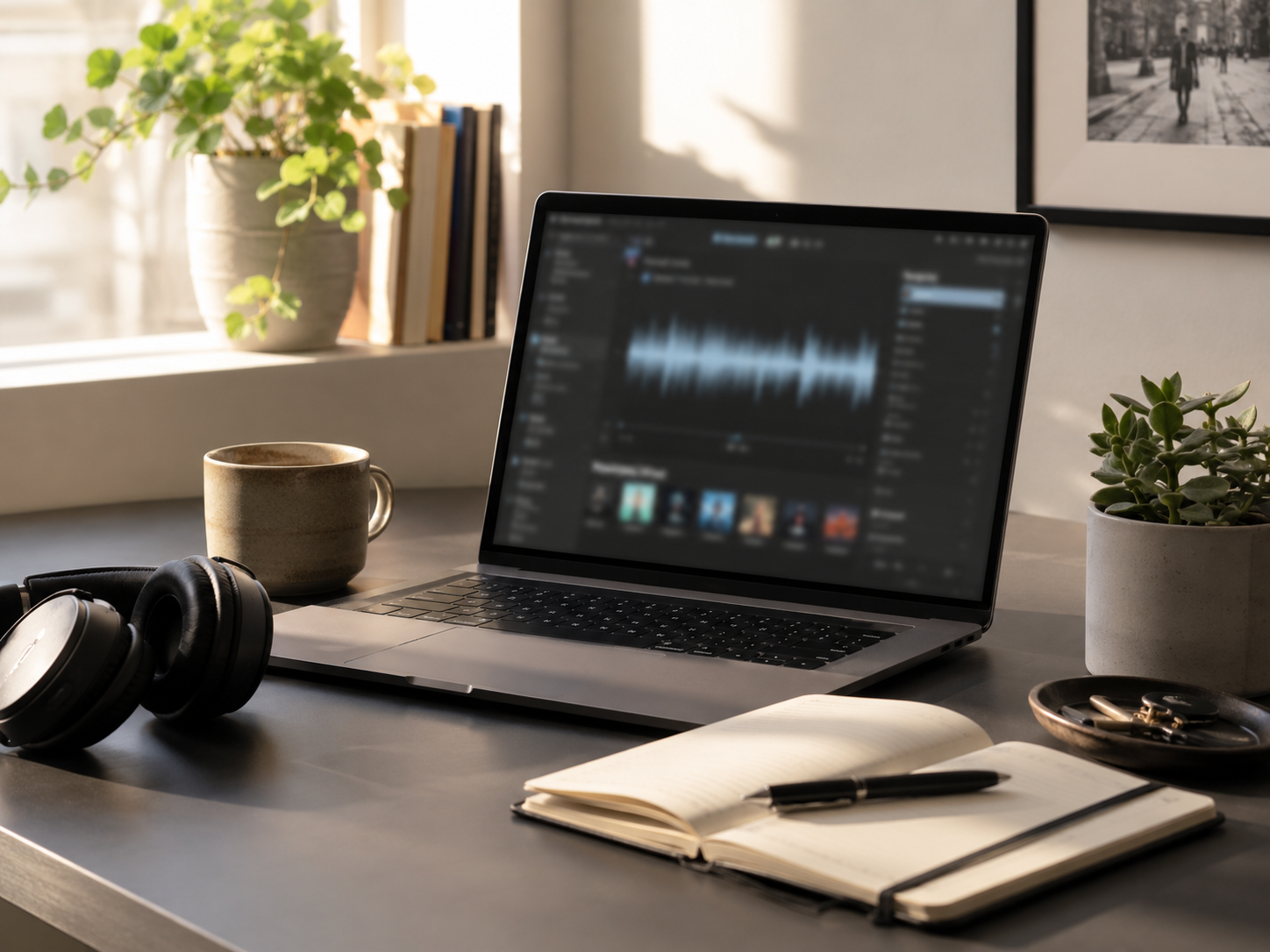
Many listeners use background music as part of their workday routines, even when wellness claims outpace the evidence. Editorial illustration by TheDailyGlobe.
Key Facts
- AP reported growing use of 432 Hz music on social platforms and streaming services.
- Standard concert pitch is commonly based on A above middle C tuned to 440 Hz.
- Music tuned to 432 Hz is slightly lower in pitch than music tuned to 440 Hz.
- Listeners report benefits such as calm, focus or relaxation, but those are subjective experiences.
- Existing research on 432 Hz is limited and does not establish broad healing claims.
A lot of modern workdays now have a soundtrack. Some people use lo-fi beats to answer email. Others keep rain sounds, ambient piano or white noise running in the background while they study, write, cook, commute or try to calm down after a long day.
Into that everyday listening habit comes a more specific trend: music tuned to 432 Hz. AP reported growing interest in 432 Hz music on social platforms and streaming services, where it is often promoted as a calmer or more natural alternative to standard tuning. The appeal is easy to understand. It offers a simple promise at a time when many people are looking for small ways to feel less scattered.
But the evidence is more modest than the claims. Some listeners say the music helps them relax or focus. Existing studies are limited, and they do not prove broad claims that 432 Hz has universal healing effects. The useful question is not whether everyone should switch their playlists. It is why the trend is spreading, what the tuning difference actually means, and where personal experience ends and scientific evidence begins.
What 432 Hz Means
The number refers to tuning. In much modern music, A above middle C is commonly tuned to 440 Hz. In music tuned to 432 Hz, that reference pitch is slightly lower. To many listeners, the difference may sound subtle, especially when they are not comparing two versions side by side.
That technical difference has taken on a larger cultural meaning online. In wellness feeds and playlist titles, 432 Hz is often described as calming, grounding or better suited for focus. Some claims go much further, suggesting broad physical or emotional effects. Those stronger claims are where caution is needed.
Music can absolutely affect mood. People use it to concentrate, grieve, exercise, sleep, pray, unwind and feel less alone. The hard part is separating the effect of music itself from the effect of one specific tuning system.
Why People Are Listening
The trend fits neatly into how people already use digital sound. Streaming platforms have made background listening easy. Social platforms have made wellness language easy to spread. Remote and hybrid work have also made personal sound environments more common, especially for people trying to create focus in bedrooms, kitchens, offices or shared spaces.
For some listeners, 432 Hz music may simply feel good. It may sound warmer, softer or less tense to them. That experience does not need to be mocked. If a playlist helps someone settle into work, relax before sleep or take a quieter break, that personal benefit can be real to the listener even if the scientific explanation remains uncertain.
The problem comes when personal preference is marketed as proven medicine. A calmer playlist is one thing. A claim that a tuning frequency broadly heals the body is another.
What the Evidence Does and Does Not Show
The scientific picture is limited. A PubMed-listed 2022 study compared listening to music tuned to 440 Hz and 432 Hz, adding to a small body of research on whether tuning differences may affect listeners. Scientific context from ScienceAlert also cautions that the idea has attracted large claims without enough evidence to support sweeping conclusions.
That means readers should be careful with certainty. It is possible that some people find 432 Hz music calming. It is also possible that the calming effect comes from slower music, familiar sounds, expectation, a quiet listening routine or relaxation from music generally.
The available evidence does not show that 432 Hz music should be treated as a substitute for medical care, therapy or other professional support. It also does not prove that the tuning has the same effect on every listener.
Why the Trend Still Matters
Even if the science is unsettled, the popularity of 432 Hz music says something about the moment. People are looking for tools that feel low-cost, low-effort and private. They may not want another app telling them how stressed they are. They may just want something gentle in their ears while they get through the day.
That is part of why wellness trends move so quickly online. A small personal habit becomes a playlist category. A playlist category becomes a claim. A claim becomes a shortcut that gets repeated until the careful version is harder to find.
For listeners, the practical standard is simple: it is fine to use music that helps you feel calmer or more focused. It is also worth being skeptical when a playlist title promises more than music has been shown to deliver.
What to Watch Next
The next question is whether 432 Hz remains a niche wellness label or becomes a lasting streaming category. Musicians, platforms and playlist creators may continue using the term if listeners keep searching for it.
Researchers may also keep studying whether tuning differences have measurable effects beyond preference and expectation. Larger studies would be needed before broad claims could be made with confidence.
For now, 432 Hz music is best understood as a cultural signal as much as a sound. It shows how people are trying to build calmer routines inside noisy digital lives, while also reminding readers that a peaceful playlist and a proven health claim are not the same thing.
Reporting note: Reporting draws on established reporting, scientific context, peer-reviewed research records, and reviewed background materials. This article was produced with AI-assisted research and reviewed by an editor before publication.