Teen Social Media Use Is More Complicated Than the Usual Panic
Pew’s research on TikTok, Instagram and Snapchat shows teen social media life is not one simple story of harm or connection.
Save Article
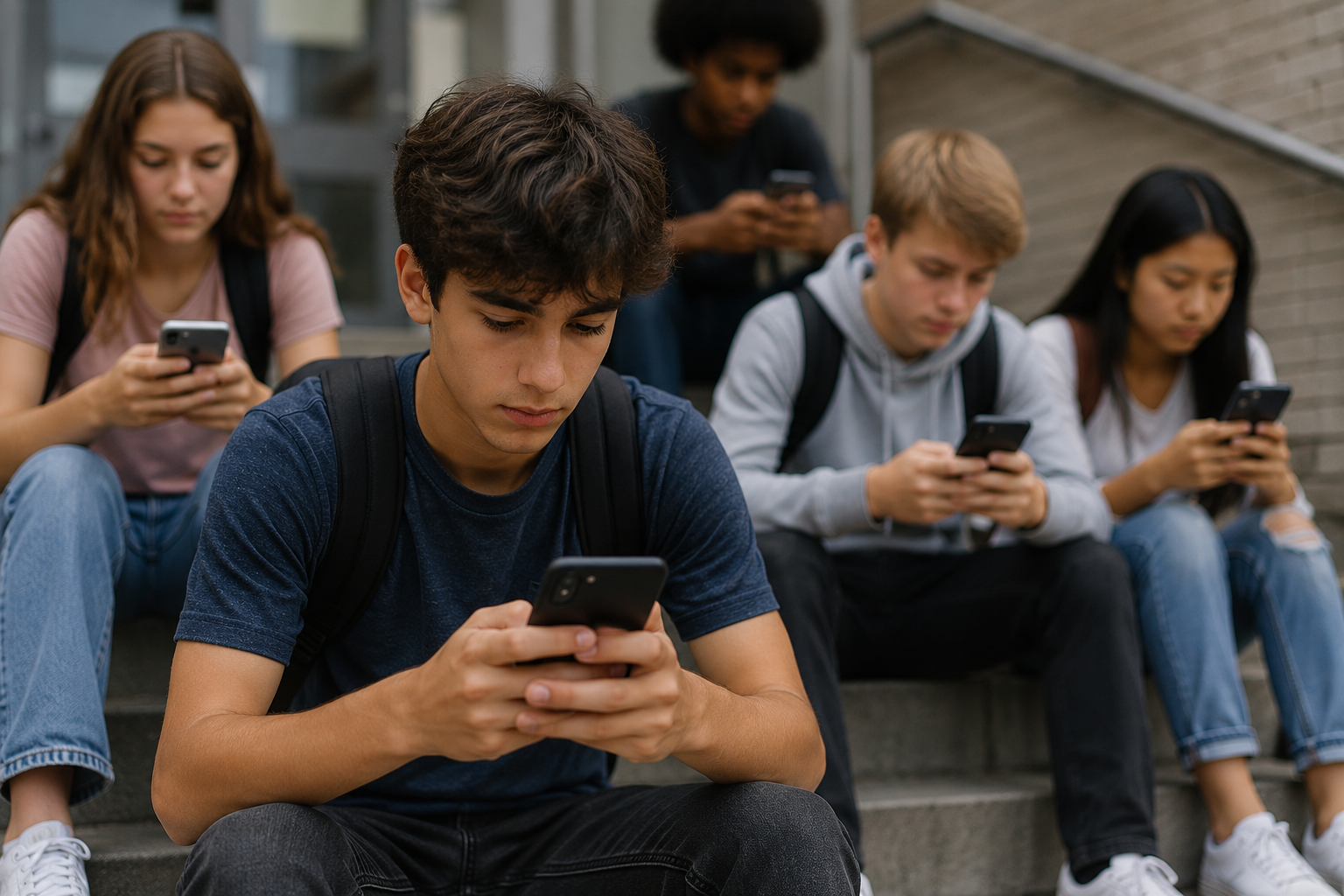
Pew’s research on TikTok, Instagram and Snapchat shows teen social media life is not one simple story of harm or connection. Editorial illustration by TheDailyGlobe.
Key Facts
- Pew published “Teens’ Experiences on TikTok, Instagram and Snapchat” in April 2026.
- The report focuses on three widely used teen platforms and includes teens’ and parents’ views.
- Pew’s prior research found parents and teens often differ in how they describe social media’s impact on teen mental health.
- The topic has broad relevance for families, schools, and online life.
- It remains unclear how platform behavior will change as policies and teen habits evolve.
Teen social media use is often discussed as if there are only two choices: panic or praise. Pew Research Center’s 2026 work points to a more complicated picture.
Pew published “Teens’ Experiences on TikTok, Instagram and Snapchat” in April 2026. The report focuses on three widely used teen platforms and includes views from teens and parents. Pew’s prior research also found that parents and teens often differ in how they describe social media’s impact on teen mental health.
For readers, the useful point is not that social media is harmless or that every platform affects every teen the same way. The better takeaway is that teens use these spaces for different reasons, and families often see the same digital life from different angles.
Three Platforms, Different Experiences
TikTok, Instagram and Snapchat are often grouped together as “social media,” but teens do not necessarily use them in the same way. A platform built around short videos can feel different from one centered on photos, messaging, stories, or private communication.
That distinction matters because broad claims about social media can hide what teens are actually doing. One teen may use an app mostly for entertainment. Another may use it to keep up with friends. Another may feel pressure from comparison, appearance, attention, or the need to respond.
The Pew report’s value is that it looks across major platforms rather than treating one app as the whole story. That helps move the conversation away from one viral example and toward a more careful look at teen online life.
Why Parents and Teens May See It Differently
Parents often see social media through concern: time spent online, sleep, mental health, bullying, distraction, safety, or pressure. Teens may see some of those same problems, but they may also see friendship, humor, creativity, identity, entertainment, and a place to keep up with what others are doing.
Pew’s prior research found that parents and teens do not always describe social media’s impact on teen mental health the same way. That difference does not mean one side is wrong. It means the issue is being experienced from different positions.
A parent may notice mood changes or screen time. A teen may notice connection or pressure that is hard to explain. A school may notice distraction or conflict. A platform may emphasize entertainment or engagement. Those views overlap, but they are not identical.
Connection and Pressure Can Coexist
The most realistic way to understand teen social media is to allow more than one thing to be true. Social platforms can help teens keep in touch, find entertainment, follow interests, and feel connected. They can also create comparison, stress, distraction, or pressure to stay visible.
That is why moral-panic framing falls short. It can make every teen sound helpless and every platform sound identical. But pure tech optimism also falls short because it can ignore the parts of online life that teens and parents describe as stressful.
The handoff for this story correctly frames the issue as layered: teens report connection, pressure, entertainment, comparison, and stress in different ways across platforms. That is a more useful starting point than asking whether social media is simply good or bad.
What the Data Does Not Settle
The Pew research helps clarify how teens and parents describe platform life, but it does not settle every question about cause and effect. It does not mean one platform explains teen mental health. It also does not show that all teens have the same experience.
It remains unclear how teen behavior will change as platform policies, school rules, family expectations, and teen habits evolve. A rule change may alter one behavior while leaving another intact. A new feature may shift how teens use an app without changing why they want to be there.
It is also unclear whether parent concerns translate into consistent household rules. Families may agree that social media creates pressure and still struggle to decide what limits make sense, especially when the same platforms are tied to friendships and school social life.
Why Readers Should Care
This story matters because teen social media is not only a tech issue. It is part of family routines, school culture, friendships, entertainment, and mental-health conversations.
A calmer reading of the data helps avoid two bad shortcuts. One says social media is ruining every teen. The other says adults are overreacting and should stop worrying. Pew’s research points to something more realistic: teens’ online lives are varied, and the same platforms can offer connection and pressure at the same time.
For parents, teachers, and anyone trying to understand young people’s online lives, that nuance matters. It leaves room for concern without panic, and for listening to teens without pretending the risks are imaginary.
Reporting note: Reporting draws on Pew Research Center research on teens, social media platforms, parents’ views, and teen mental health, along with reviewed background materials. This article was produced with AI-assisted research and reviewed by an editor before publication.