Mahjong Is Becoming a Screen-Free Social Habit Again
An old tile game is finding new life among younger Americans looking for something increasingly rare: a reason to put their phones away and spend time together in person.
Save Article
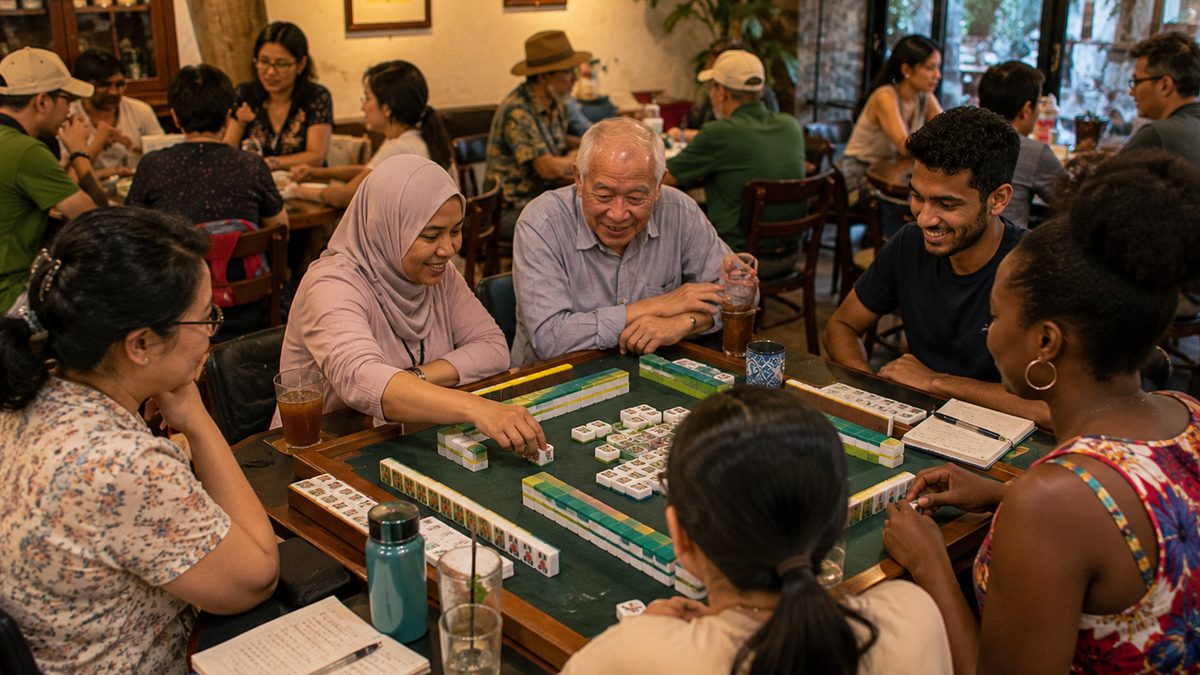
Mahjong clubs, social groups, and casual gatherings are helping introduce new players to a centuries-old game. Editorial illustration by TheDailyGlobe.
Key Facts
- Recent reporting has highlighted growing interest in mahjong among younger adults.
- Community groups and meetup organizations continue to host mahjong events across the United States.
- Mahjong combines strategy, conversation, and in-person social interaction.
- New players are often discovering the game through friends, clubs, and social gatherings rather than family traditions alone.
- The game's growth spans multiple age groups rather than replacing its existing player base.
A lot of hobbies today happen through a screen. People stream movies together, play games online, scroll social media, or chat through apps without ever leaving home.
Mahjong offers something different. The game requires people to sit around the same table, pay attention, read the room, and spend time together face-to-face. In an era when many people say they want less screen time and more genuine connection, that combination is attracting new players.
Across the United States, mahjong groups, social clubs, restaurants, and community gatherings are introducing the game to younger adults while longtime players continue traditions that have existed for generations. The result is a cultural moment that feels both old and surprisingly new.
Why the Game Feels Different Today
Part of mahjong's appeal is that it asks people to be present. A player cannot easily divide attention between the game, a group conversation, and constant notifications. The tiles on the table become the focus.
That experience stands out at a time when many people feel pulled in multiple directions by phones, work messages, and endless digital entertainment options. Activities that encourage sustained attention have become increasingly attractive to people looking for a break from constant connectivity.
For some players, the game is less about competition than about creating a regular reason to gather with friends. The structure of the game provides an activity, but the conversation around the table is often just as important.
A Tradition With Deep Cultural Roots
The renewed interest in mahjong has also created opportunities for people to learn more about the game's history. Mahjong originated in China and spread internationally over many decades, developing different regional styles and traditions along the way.
Today, players may encounter Chinese, American, Hong Kong, Japanese, or other variations depending on where they learn. While rules can differ, the shared foundation of the game connects players to a tradition that long predates social media, smartphones, and even television.
Many advocates emphasize that the game's growing popularity should not come at the expense of understanding its cultural origins. For some families and communities, mahjong has never disappeared. What looks like a trend to new players is a longstanding cultural practice for others.
The Search for Offline Community
The growth of mahjong also fits into a broader pattern. Younger adults have shown increasing interest in activities that create opportunities for in-person interaction. Book clubs, run clubs, crafting groups, community sports leagues, and board game nights have all experienced renewed attention in recent years.
What these activities often share is a simple idea: people want places to meet others without the pressure of networking, dating apps, or online performance. A shared activity can make conversation easier and provide a sense of belonging that feels difficult to find through screens alone.
Mahjong works particularly well in that environment because it combines learning, strategy, and social interaction. New players can improve over time while still participating from the beginning.
What the Trend Does Not Mean
The recent attention does not necessarily mean mahjong is becoming a mainstream national pastime. Available reporting highlights growing interest, but it does not establish how large the player population has become or whether current growth will continue indefinitely.
It also would be inaccurate to portray the game as belonging primarily to one generation. Many of the communities helping sustain mahjong include longtime players who have spent years teaching rules, organizing groups, and preserving traditions.
The current moment appears less like a takeover by younger players and more like an expansion of who is showing up at the table.
What Comes Next
The next question is whether mahjong's popularity becomes a lasting habit or remains a temporary cultural trend. That may depend less on the game itself and more on whether people continue looking for ways to spend time together offline.
Community organizations, meetup groups, cafes, and social clubs will likely play an important role. These spaces often serve as the bridge between curiosity and regular participation.
Regardless of where the trend goes next, mahjong's recent visibility points to something larger. In a culture filled with digital options, many people are still looking for activities that bring them into the same room, around the same table, sharing the same experience. For an old game built on conversation and connection, that may be the strongest advantage of all.
Reporting note: Reporting draws on reporting about mahjong participation trends, community group activity, cultural commentary, and reviewed background materials. This article was produced with AI-assisted research and reviewed by an editor before publication.