Public Pools and Splash Pads Are the Summer Infrastructure Families Actually Use
As temperatures rise, public pools and splash pads remain one of the most practical and affordable ways for families to stay active and cool close to home.
Save Article
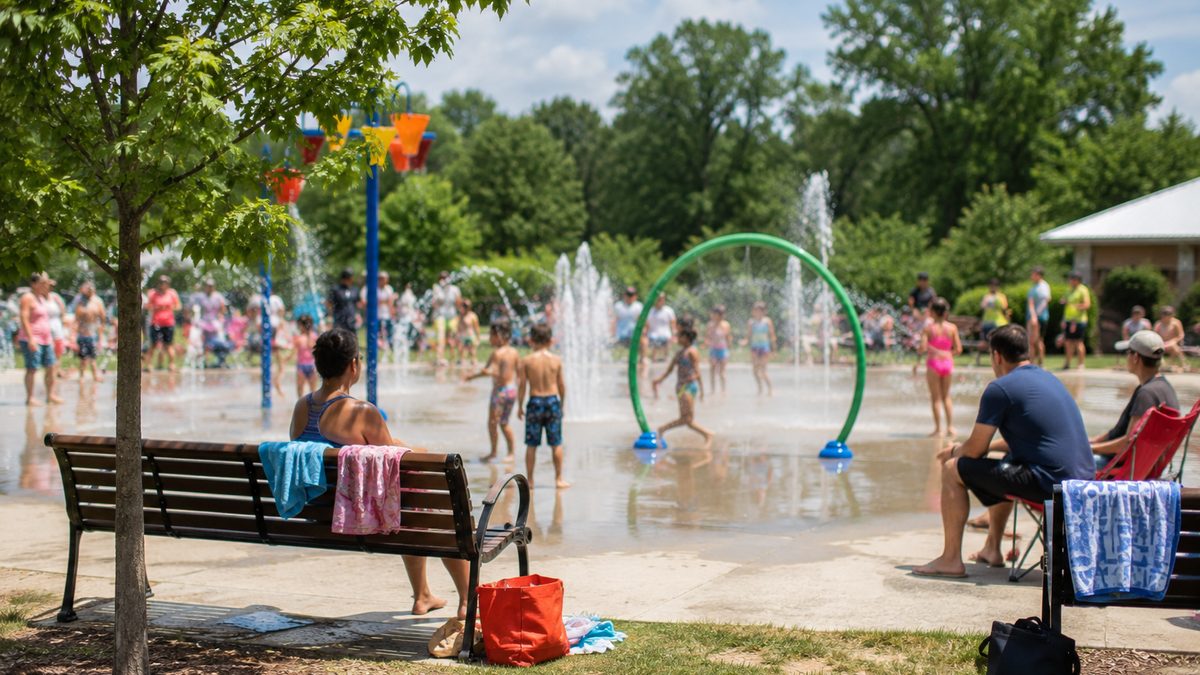
Public pools and splash pads often serve as practical summer spaces for families looking to cool off close to home. Editorial illustration by TheDailyGlobe.
Key Facts
- The CDC provides guidance for healthy swimming in pools, splash pads, and other recreational water settings.
- The American Red Cross offers water safety recommendations for families and swimmers.
- The National Recreation and Park Association provides aquatics resources for local parks and recreation agencies.
- Public pools and splash pads often serve as affordable recreation options compared with many commercial attractions.
- Access to aquatic facilities varies significantly from one community to another.
On a hot summer afternoon, many families are looking for the same thing: somewhere nearby where children can burn off energy and everyone can cool down without spending a small fortune.
That search often leads to a public pool, splash pad, or community aquatic center. These places rarely receive much attention outside local government meetings or recreation guides, yet they are among the public spaces many families use most during the summer months.
More Than A Place To Cool Off
Public pools and splash pads are easy to take for granted because they feel familiar. For many families, however, they fill a practical need that becomes especially important when temperatures climb.
A trip to a theme park, water park, resort, or private club can quickly become expensive. Public recreation facilities often provide a lower-cost alternative that allows children to play, exercise, and spend time outdoors without requiring a major financial commitment.
These spaces also serve a social role. Neighbors see one another, children meet friends, grandparents bring grandchildren, and families spend time together outside the house. In many communities, the local pool becomes a seasonal gathering place in much the same way that parks, libraries, and ball fields do throughout the rest of the year.
The Safety Side Of Summer Recreation
The fun side of swimming tends to get most of the attention, but public health and safety organizations continue to stress the importance of basic precautions.
The CDC maintains guidance for healthy swimming practices in recreational water settings. That guidance includes steps aimed at reducing the spread of germs and helping swimmers enjoy pools and splash areas safely.
The American Red Cross also encourages families to take water safety seriously, particularly when children are involved. That does not mean treating every swim outing as dangerous. It means recognizing that water environments require attention, supervision, and responsible habits.
Most parents already understand these basics. Still, summer serves as an annual reminder that swimming safety works best when it becomes part of the routine rather than something people think about only after an incident occurs.
Access Is Not The Same Everywhere
One reason public aquatic facilities are worth paying attention to is that access varies widely depending on where people live. Some communities operate multiple pools, splash pads, and recreation centers. Others may have limited options or none at all.
The available information does not establish how many communities are expanding aquatic access this summer or how many are reducing services. It is also unclear whether staffing challenges are affecting operations in specific areas. Conditions can differ substantially from one city, county, or park district to another.
That variation means two families living a few hours apart may have very different experiences when it comes to summer recreation opportunities.
Why These Facilities Matter To Families
Discussions about public infrastructure often focus on roads, bridges, airports, utilities, and transit systems. Those services are important, but families tend to experience community life through smaller, everyday places as well.
A splash pad within walking distance of a neighborhood or a public pool with affordable admission can have a direct impact on how people spend their summer. These facilities create places where children can be active, where families can escape the heat for a few hours, and where communities can gather without needing expensive memberships or long-distance travel.
That practical value helps explain why aquatic facilities remain popular even as entertainment options continue to expand. Sometimes the most useful summer destination is simply the one that is nearby, affordable, and open.
What To Check Before Heading Out
For families planning a visit this summer, local information remains the most important resource. Hours, admission fees, age requirements, swim schedules, maintenance closures, and safety rules can differ considerably from one facility to another.
Checking a city, county, park district, or recreation department website before leaving home can help avoid surprises. It can also provide details about swim lessons, family events, and seasonal programs that may not be widely advertised.
As summer settles in, public pools and splash pads remain something many communities quietly depend on. They may not attract headlines, but for countless families looking for a place to cool off, spend time together, and enjoy a break from the heat, they are some of the most practical public spaces around.
Reporting note: Reporting draws on CDC healthy swimming guidance, American Red Cross water safety resources, National Recreation and Park Association materials, and reviewed background materials. This article was produced with AI-assisted research and reviewed by an editor before publication.