Museums Are Better When You Slow Down
A museum visit does not have to be a test of art history knowledge. Sometimes the better visit starts by spending more time with less.
Save Article
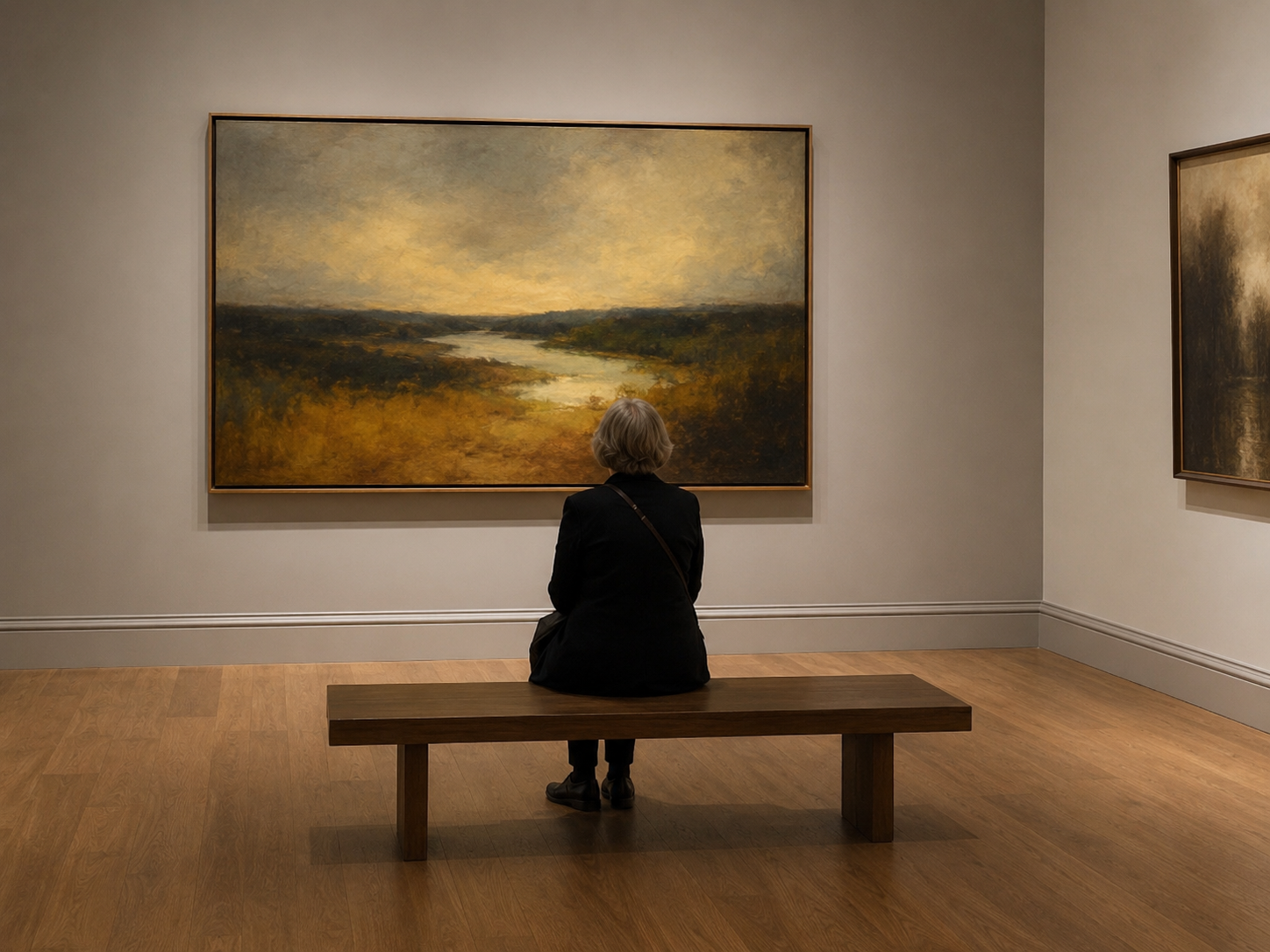
A slower museum visit can make art feel less intimidating and more personal. Editorial illustration by TheDailyGlobe.
Key Facts
- The National Endowment for the Arts tracks U.S. arts attendance and literary reading through the Survey of Public Participation in the Arts.
- The National Gallery of Art provides educational resources for exploring artworks, artists, media and styles.
- The American Alliance of Museums describes museums as public trusts and emphasizes accountability and transparency.
- Slow-looking practice encourages visitors to spend more time with individual artworks instead of rushing through a gallery.
A museum can make a person feel small before they have even reached the first painting.
There are quiet rooms, polished floors, labels full of names and dates, visitors who seem to know where they are going, and the uncomfortable feeling that everyone else understands something you missed. A person can walk in wanting to enjoy art and still feel unsure where to begin.
The better answer may be simpler than trying to see everything. Pick one work. Stand still. Look longer.
Art Is Not a Test
Many people approach museums as if they are supposed to know the right answer. They look at a painting, read the label, glance back at the painting, and move on quickly because they are not sure what else to do.
That habit is understandable. Museums can feel formal. Art history can feel like a language some people learned elsewhere. Even the silence of a gallery can make a visitor feel as if they are being graded.
But art does not only belong to people with degrees, memberships or the right vocabulary. A person can notice color, mood, texture, scale, faces, light, clothing, movement or confusion without knowing the artist’s full biography. Looking is already a form of participation.
What Slow Looking Changes
Slow looking is a plain idea with a formal name: spend more time with one artwork. Instead of treating a museum like a checklist, the visitor treats a painting, photograph, sculpture or object as something worth staying with.
That does not require expertise. It can start with basic questions. What did you notice first? What changed after a minute? Where does your eye keep returning? What feels familiar? What feels strange? What would you ask the artist if that were possible?
The point is not to force a grand emotional reaction. Some works will move a visitor. Some will not. Some will become more interesting with time. Others may remain distant. That is fine. A slower visit gives art a chance to become an encounter instead of a blur.
Museums Are Public Spaces With Public Responsibilities
The American Alliance of Museums describes museums as public trusts and emphasizes accountability and transparency. That framing matters because museums are not only leisure spaces. They hold collections, stories and knowledge that are meant to serve the public.
That does not mean every visitor feels equally welcome. Cost, geography, disability access, language, transportation, school exposure, family background and prior experiences with cultural institutions all shape whether a museum feels open or intimidating.
Museums should not ask visitors to pretend those barriers do not exist. A museum can be beautiful and still be hard to access. It can be educational and still feel confusing. It can serve the public better when it recognizes that many people arrive unsure of the rules.
Education Helps When It Opens the Door
The National Gallery of Art provides educational resources for exploring artworks, artists, media and styles. Resources like that can help visitors who want more context before, during or after a visit.
The best kind of museum education does not make visitors feel behind. It gives them handles. A short explanation of a medium, a period, a symbol or an artist’s method can help a person return to the artwork with sharper eyes.
Still, context should not replace attention. A label can be useful, but it is not the artwork. A visitor who spends ten minutes with one painting may leave with more than someone who speed-walks past fifty.
A Better Way to Visit
A slower museum visit can be practical. Choose a small section instead of the whole building. Let one artwork hold your attention. Read the label after looking, not before. Sit down when benches are available. Bring a child’s question to the room: what is happening here?
Families can do this without turning the visit into school. Friends can choose one favorite and one confusing work, then compare what they noticed. A visitor alone can take a few notes or simply stand quietly until the first impression changes.
None of this turns museums into therapy, moral improvement or a guaranteed emotional experience. Claims about health or emotional benefits should be handled carefully. The simpler claim is enough: slowing down can make art easier to meet.
What Readers Can Watch For
Readers who feel outside the museum world can look for local museum programs, free admission days, community nights, school partnerships, online courses, family guides and slow-looking tours. Those offerings vary by museum and community, but they can make the first step easier.
The National Endowment for the Arts tracks arts attendance and literary reading through national survey data, a reminder that participation in culture can be studied, supported and widened. The question is not only who already goes to museums. It is who feels invited to stay.
Museums are better when they are not treated as rooms full of correct answers. They are better when visitors are allowed to be curious, uncertain, bored, surprised, moved or puzzled.
A person does not have to see everything. Sometimes one painting, one bench and ten quiet minutes are enough to make the whole visit worthwhile.
Reporting note: Reporting draws on National Endowment for the Arts participation data, National Gallery of Art educational materials, American Alliance of Museums standards, arts education context, and reviewed background materials. This article was produced with AI-assisted research and reviewed by an editor before publication.