A New Space Mission Will Search the Faint Edges of Galaxies for Clues to Cosmic History
The European Space Agency has formally adopted the Arrakihs mission, a telescope project designed to study the nearly invisible outer regions of galaxies and help scientists better understand how those galaxies formed over billions of years.
Save Article
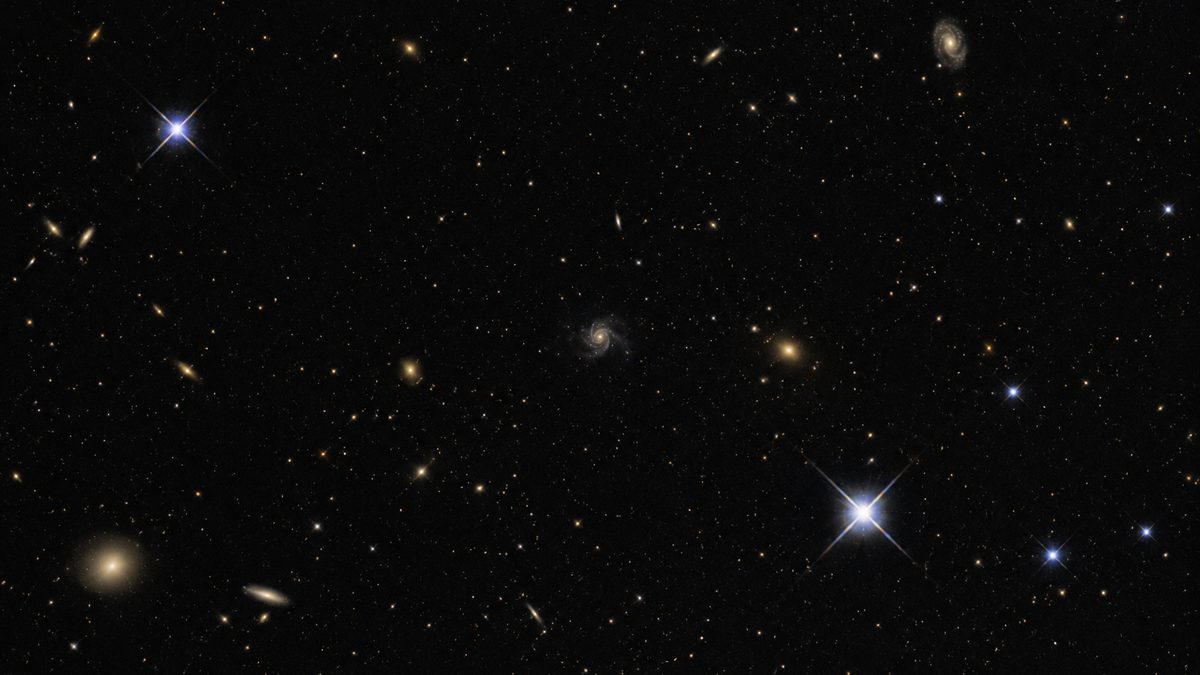
ESA's Arrakihs mission will focus on the faint outer regions surrounding galaxies, areas that may preserve evidence of their formation history. Editorial illustration by TheDailyGlobe.
Key Facts
- The European Space Agency formally adopted the Arrakihs astronomy mission on June 10.
- The mission is designed to study faint structures surrounding galaxies that are difficult to observe from Earth.
- Scientists will focus on galaxy halos, stellar streams, and other dim features linked to galactic evolution.
- The mission is planned for launch in 2030.
- Arrakihs has not yet collected scientific data and remains in the development phase.
When most people picture a galaxy, they imagine a bright spiral of stars stretching across space. What often goes unseen are the extremely faint regions surrounding those galaxies—areas so dim that they are difficult to study even with modern instruments.
Scientists believe those nearly invisible outskirts may contain some of the best surviving evidence of how galaxies formed, merged, and changed over billions of years. That idea sits at the center of a newly adopted European Space Agency mission called Arrakihs.
ESA formally approved the mission this month, moving it into the next phase of development ahead of a planned launch in 2030. While the spacecraft has not yet begun collecting data, researchers hope it will eventually help answer long-standing questions about the history of galaxies throughout the universe.
Looking Beyond the Bright Parts of Galaxies
Most astronomical images emphasize the brightest portions of galaxies because those features are easiest to detect. Spiral arms, dense star clusters, and glowing galactic centers often dominate photographs.
Arrakihs is being designed to do almost the opposite. Its instruments will be optimized to detect extremely faint light around galaxies, including diffuse halos and delicate streams of stars left behind by ancient interactions.
Researchers sometimes describe this work as a form of galactic archaeology. Just as archaeologists study artifacts to understand human history, astronomers examine old structures in space to reconstruct events that happened billions of years ago.
Why Galaxy Halos Matter
Galaxy halos are vast regions surrounding galaxies. They can contain stars, gas, and other material that extends far beyond the bright central portions visible in many photographs.
Over time, galaxies grow through a combination of star formation and interactions with other galaxies. Smaller galaxies may be pulled apart and absorbed. Streams of stars can remain behind as evidence of those encounters. Faint outer structures can preserve records of events that are no longer obvious in the brighter regions closer to a galaxy's center.
By mapping these features in greater detail, scientists hope to better understand how galaxies assembled over cosmic time and how large galactic systems evolved into the structures seen today.
Why Space Offers an Advantage
Observing extremely faint light presents a difficult challenge. Earth's atmosphere, artificial lighting, and other sources of background brightness can interfere with measurements.
A space-based observatory avoids some of those obstacles. By operating above Earth's atmosphere, Arrakihs is expected to obtain cleaner observations of dim structures that are difficult to study from the ground.
The mission's design focuses on detecting subtle differences in brightness across wide areas of space, allowing scientists to search for features that might otherwise remain hidden.
What Scientists Hope to Learn
The mission may help researchers test existing models of galaxy formation and compare those models with what is actually observed around nearby galaxies. Scientists are particularly interested in understanding how often galaxies merged with smaller companions and how those interactions shaped their growth.
Some researchers also hope the observations will provide new information about how matter is distributed around galaxies. ESA's public materials describe the mission as an effort to better understand the processes that drive galactic evolution rather than a single-purpose experiment focused on one question.
Because the mission has not yet launched, however, it remains impossible to know exactly what discoveries may emerge from the data.
What Remains Years Away
One important point is that Arrakihs is not announcing new scientific findings today. ESA has adopted the mission, but the spacecraft still must be built, tested, launched, and operated before observations can begin.
That means many details remain uncertain. Scientists do not yet know what specific structures the telescope will uncover or whether the results will confirm existing theories about galaxy evolution.
For now, the milestone is the mission itself. ESA's decision commits resources to a project aimed at exploring one of astronomy's more difficult observational challenges.
If development stays on schedule, researchers will spend the rest of the decade preparing for a mission that could provide a clearer look at some of the faintest and oldest traces of galactic history still visible in the universe today.
Reporting note: Reporting draws on European Space Agency materials, mission documentation, astronomy reporting, and reviewed background materials. This article was produced with AI-assisted research and reviewed by an editor before publication.