Home Cooking Is Becoming Less About Perfection and More About Getting Dinner Done
Many home cooks are stepping away from complicated recipes and picture-perfect meals in favor of simpler routines that fit real schedules, budgets, and family life.
Save Article
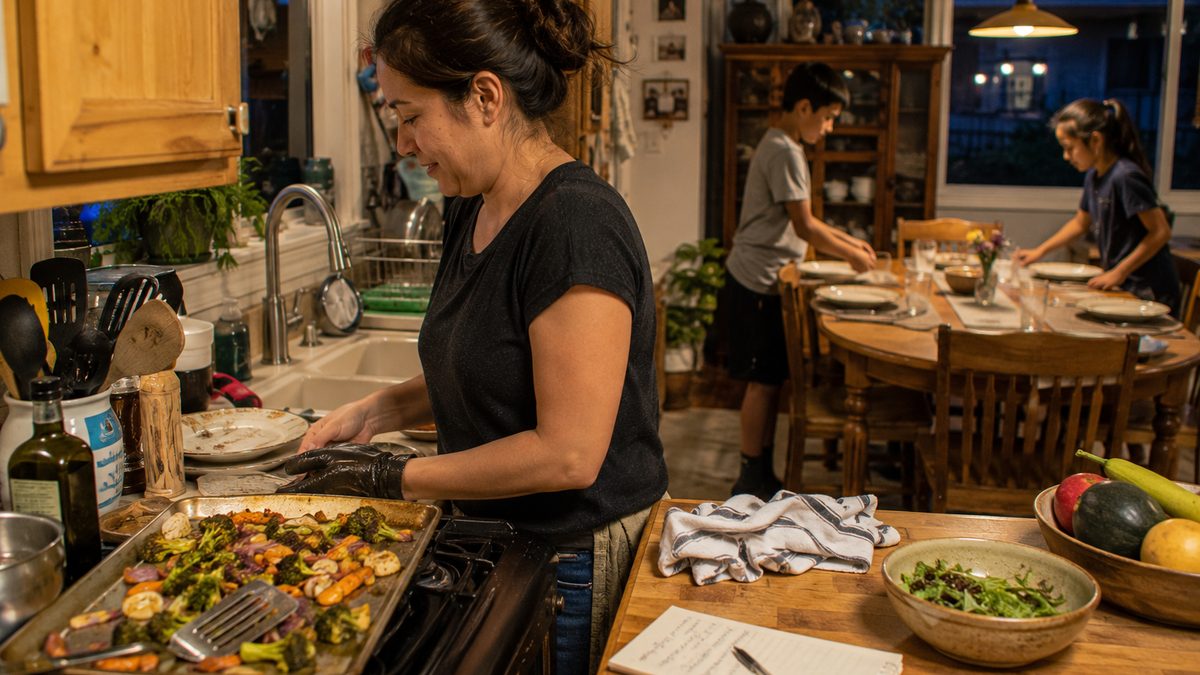
Many home cooks are prioritizing practical meals that fit busy schedules over elaborate recipes. Editorial illustration by TheDailyGlobe.
Key Facts
- Consumer research points to growing interest in simple and repeatable home-cooking routines.
- Many households continue to prepare meals at home regularly despite busy schedules.
- Practical concerns such as time, cost, and convenience heavily influence meal decisions.
- Repeat recipes and familiar meals remain common in many households.
- Food culture discussions increasingly focus on sustainability of routines rather than culinary perfection.
For years, home cooking often came with a certain amount of pressure. Social media feeds filled with restaurant-quality dishes, carefully styled kitchens, and complicated recipes that seemed to suggest every meal should be an event.
But many people cook in a different reality. They are trying to get dinner on the table after work, between school activities, while staying within a grocery budget, and without turning an ordinary Tuesday into a three-hour project.
Recent consumer research suggests that more home cooks are embracing that reality instead of fighting it. The trend is less about mastering elaborate recipes and more about finding meals that are reliable, affordable, and easy enough to repeat.
Dinner Has to Fit Real Life
One reason the shift feels familiar is because it reflects how many people already live. Most households do not have unlimited time, money, or energy available for cooking. Even people who enjoy preparing meals often need recipes that work on ordinary weekdays.
That reality helps explain the popularity of meals built around a handful of dependable ingredients, sheet-pan dinners, slow-cooker recipes, pasta dishes, tacos, soups, rice bowls, and other formats that can be adapted without starting from scratch every night.
Instead of constantly searching for something new, many home cooks appear increasingly comfortable repeating meals that work. Familiarity can reduce stress, simplify grocery shopping, and make meal planning easier.
The End of Cooking as a Performance
Part of the cultural change may involve how people think about cooking itself. For a period of time, online food content often rewarded novelty and visual appeal. The most attention tended to go to dramatic presentations, unusual ingredients, or highly detailed techniques.
That content remains popular, but it does not necessarily reflect how most families eat every day. Practical cooking serves a different purpose. The goal is not creating a viral photo. The goal is feeding people.
Many consumers appear increasingly willing to separate entertainment from everyday life. Watching an ambitious recipe online can be enjoyable without feeling obligated to recreate it on a weeknight.
Why Repeat Meals Are Not a Failure
Some people once viewed repeated meals as a sign of limited cooking ability or lack of creativity. Today, repeat meals are often seen differently.
A recipe that reliably feeds a family, fits a budget, and gets positive reviews from everyone at the table solves several problems at once. In many households, that consistency can be more valuable than constant experimentation.
There is also a practical advantage. Repeating meals can reduce food waste because families become more familiar with ingredient quantities and shopping habits. Leftovers are easier to plan around, and grocery trips become more predictable.
What the Data Does Not Show
The trend does not mean Americans have lost interest in food, cooking, or culinary creativity. Many people still enjoy trying new recipes, hosting special meals, and exploring different cuisines.
Nor does it suggest that every household approaches cooking the same way. Family size, work schedules, income levels, cooking experience, and personal preferences all influence what ends up on the dinner table.
The available research points to a broad mindset shift rather than a universal rule. People appear increasingly interested in cooking habits they can maintain consistently rather than routines that look impressive but prove difficult to sustain.
What Home Cooks May Be Looking For Next
The next phase of this trend may involve tools and resources that make everyday cooking easier rather than more elaborate. Meal planning ideas, flexible recipes, grocery-saving strategies, and practical kitchen shortcuts are likely to remain attractive to busy households.
Food companies, publishers, and recipe creators are already responding to that demand by emphasizing convenience, affordability, and adaptability. Consumers seem increasingly interested in meals that can survive schedule changes, ingredient substitutions, and real-world interruptions.
In the end, the shift is less about lowering standards and more about redefining success. For many people, a successful dinner is no longer the most impressive meal imaginable. It is the one that fits the budget, gets everyone fed, and leaves enough energy to handle the rest of the evening.
Reporting note: Reporting draws on consumer research, USDA food consumption data, food culture reporting, and reviewed background materials. This article was produced with AI-assisted research and reviewed by an editor before publication.