Dance Offers Older Adults More Than Exercise
Moving to music can support balance, mood and social connection for older adults, though access and health needs vary.
Save Article
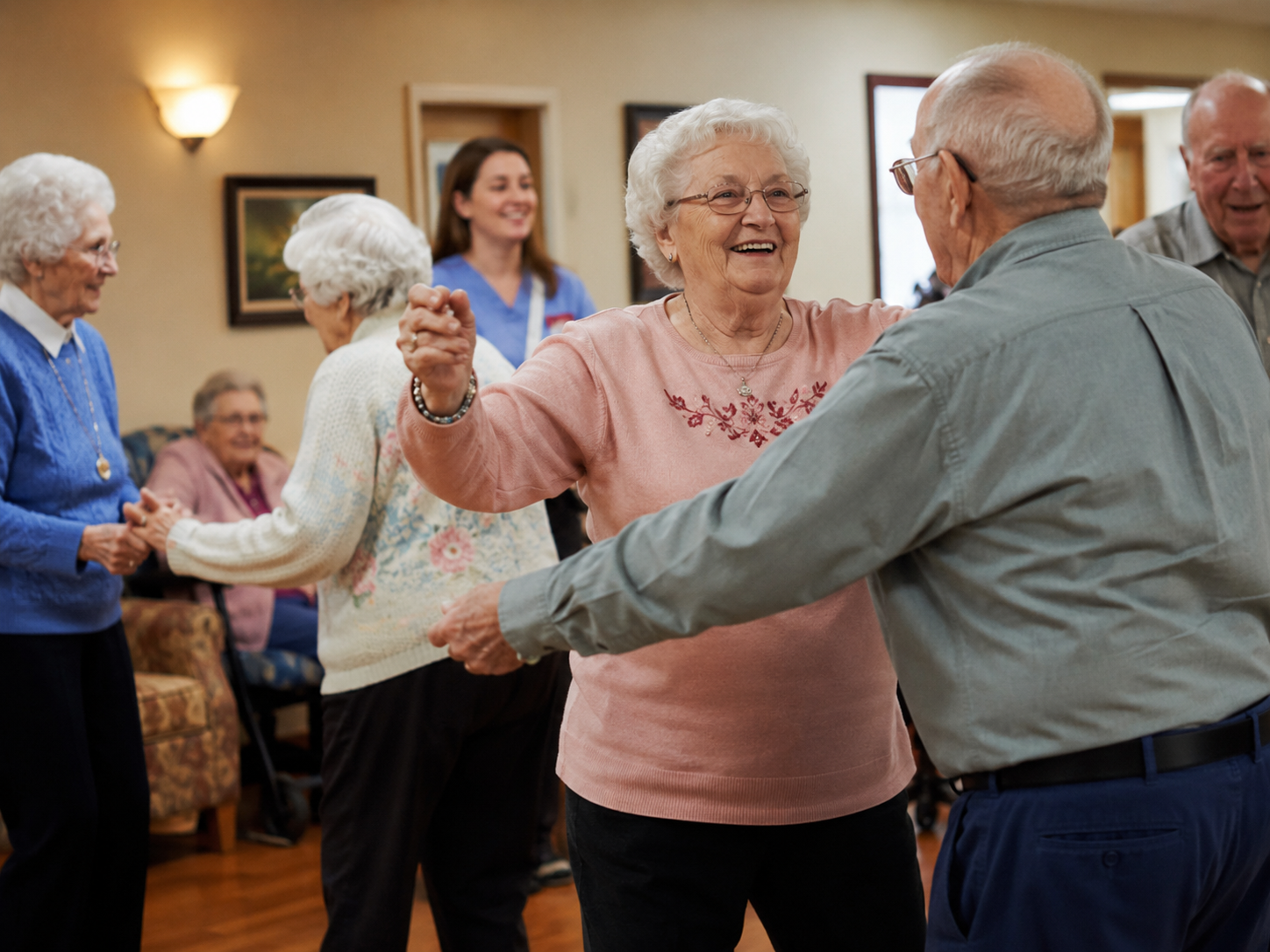
Dance can offer older adults movement, connection and a sense of community. Editorial illustration by TheDailyGlobe.
For many older adults, music and movement are not just recreation. They can be a way to stay steady, connected and visible in a world that too often treats aging as withdrawal.
Associated Press reporting highlighted dance as one activity that can support healthy aging, drawing on medical professionals and community examples. The story included the Rodeo City Wreckettes, a Tucson tap and jazz troupe for women age 50 and older.
Why Movement to Music Helps
Medical professionals cited in the report described dance as beneficial for balance, strength, brain health, mood and social connection. That mix is important because aging is not only a physical question. It can also involve isolation, loss of routine and fewer places to feel part of a group.
Dance brings several of those needs together. It asks the body to move, the brain to follow rhythm and memory, and the person to share space with others. For some older adults, that can make it feel less like a prescribed exercise routine and more like a normal, joyful part of community life.
A Human Example, Not a One-Size-Fits-All Answer
The Rodeo City Wreckettes offer one example of how dance can become more than a class. A troupe gives members a reason to practice, perform, laugh, improve and keep showing up. That kind of structure can matter as much as the movement itself.
Still, the benefits of dance vary by person. Age, balance, heart health, joint pain, mobility and access to safe classes all matter. Readers should not treat dance as a substitute for individualized medical advice, especially if they have health conditions or have not been active for a while.
What To Look For Locally
The practical question is whether people can find dance options that fit their bodies, budgets and neighborhoods. Senior centers, community centers, libraries, churches, recreation departments and local studios may offer classes at different levels, including seated or low-impact options.
What remains unclear is how widely similar programs are available across communities, especially for older adults with limited mobility, transportation barriers or fixed incomes.
The larger point is simple: aging well is not only about avoiding decline. It is also about staying connected to movement, music, people and places where older adults are treated as participants, not spectators.
Reporting note: Reporting draws on Associated Press feature reporting, medical context, expert comments, and reviewed aging and community-health context. This article was produced with AI-assisted research and reviewed by an editor before publication.