Americans’ Views on Religion’s Public Role Are More Mixed Than the Debate Suggests
New Pew data shows many Americans see value in religion’s role in public life, while also drawing lines around direct political involvement by churches.
Save Article

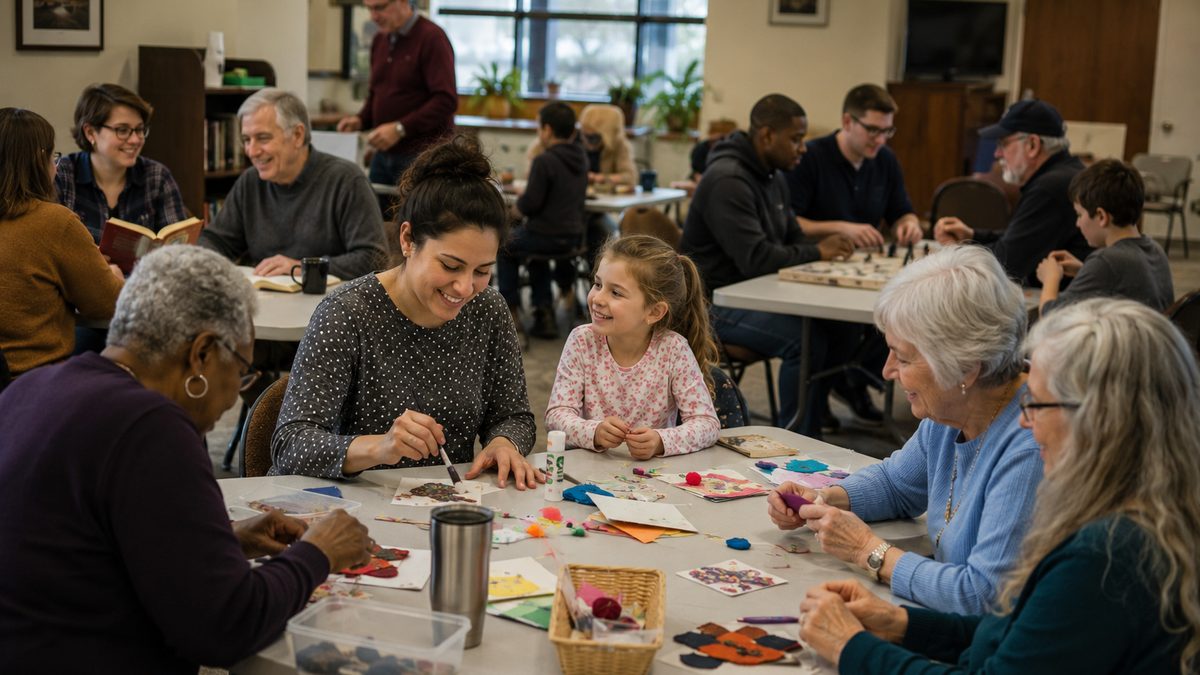
New Pew data shows many Americans see value in religion’s role in public life, while also drawing lines around direct political involvement by churches. Editorial illustration by TheDailyGlobe.
Key Facts
- Pew published a May 14, 2026 report on Americans’ views of religion’s influence in government and public life.
- Pew found 55% of U.S. adults express a positive view of religion’s role in American life.
- Pew also found most Americans think churches should not endorse political candidates.
- PRRI’s April 2026 religion data found no evidence of a broad return to church attendance or Christian affiliation.
- It remains unclear how views will shift during future election or court fights.
Americans’ views on religion in public life are more mixed than the loudest arguments often suggest.
Pew Research Center published a May 14, 2026 report on Americans’ views of religion’s influence in government and public life. Pew found that 55% of U.S. adults express a positive view of religion’s role in American life. At the same time, Pew also found that most Americans think churches should not endorse political candidates.
That combination matters because it does not fit neatly into a simple pro-religion or anti-religion frame. Many people may see religion as a source of meaning, service, morality, community, or public good. But that does not necessarily mean they want religious institutions acting like campaign organizations.
A Positive View With Boundaries
The Pew findings point to a distinction that often gets lost. A person can believe religion plays a helpful role in American life and still oppose churches endorsing candidates. Those are not contradictory positions. They reflect different ideas about faith, public values, and political power.
That distinction matters in everyday civic life. Religious groups often run charities, schools, food programs, counseling services, disaster relief efforts, and community ministries. Many Americans may value that public presence. Candidate endorsements are different. They move religious institutions closer to direct electoral politics, where trust, authority, and identity can become more complicated.
The data does not say Americans all mean the same thing when they talk about religion’s influence. Some may think about personal morality. Others may think about churches, synagogues, mosques, temples, charities, schools, public ceremonies, court fights, or campaign politics. That is why the survey is useful: it shows a mixed public mood rather than a single national verdict.
What the PRRI Context Adds
PRRI’s April 2026 religion data adds another piece of context. PRRI found no evidence of a broad return to church attendance or Christian affiliation. That matters because positive views of religion’s role in public life should not be mistaken for proof of a broad religious revival.
In plain English, Americans can respect religion’s place in public life without necessarily attending services more often or identifying more strongly with a particular religious tradition. Public respect, private belief, institutional trust, and regular attendance are related questions, but they are not the same question.
That is especially important in a country with many religious traditions and many people who are not religious. No single faith group speaks for all religious Americans, and no survey number can capture every reason people support or resist religion’s public influence.
What the Data Does Not Settle
The Pew report helps clarify public opinion, but it does not settle the deeper argument over where religion belongs in government, schools, campaigns, courts, or civic life. Those debates often depend on specific facts: what policy is being discussed, which institution is acting, and whether religious expression is voluntary, official, private, or tied to public power.
It also remains unclear how views will shift during future election or court fights. Survey answers can look different when a question is abstract than when it is attached to a real candidate, law, school policy, or court case.
Another open question is how different faith groups interpret “religion’s influence” in practical terms. One group may hear that phrase as a call for moral service. Another may hear it as political pressure. Another may worry about government favoring one tradition over others.
Why Readers Should Care
Religion and public life are often discussed as if Americans are split into two rigid camps. The survey picture is more complicated. Many Americans appear open to religion having a positive role in society while still wanting limits around direct church involvement in campaigns.
That is useful for readers because it lowers the temperature. The data suggests the real public conversation is not simply religion versus secular life, or faith versus politics. It is also about boundaries: where religion can contribute to community life, where political activity should be limited, and how public institutions can treat different beliefs fairly.
The clean takeaway is that Americans’ views are mixed, not easily reduced to a slogan. Many see value in religion’s public presence. Many also want churches to stay out of candidate endorsements. Holding both ideas at once may be less dramatic than a shouting match, but it is a more accurate way to understand the public mood.
Reporting note: Reporting draws on Pew Research Center survey findings, PRRI religion data, public opinion research, and reviewed background materials. This article was produced with AI-assisted research and reviewed by an editor before publication.