AI Data Centers Are Testing How Communities Weigh Progress and Quality of Life
Gallup polling shows many Americans oppose AI data centers in their local area, turning a technology story into a community debate over infrastructure, trust, and daily life.
Save Article
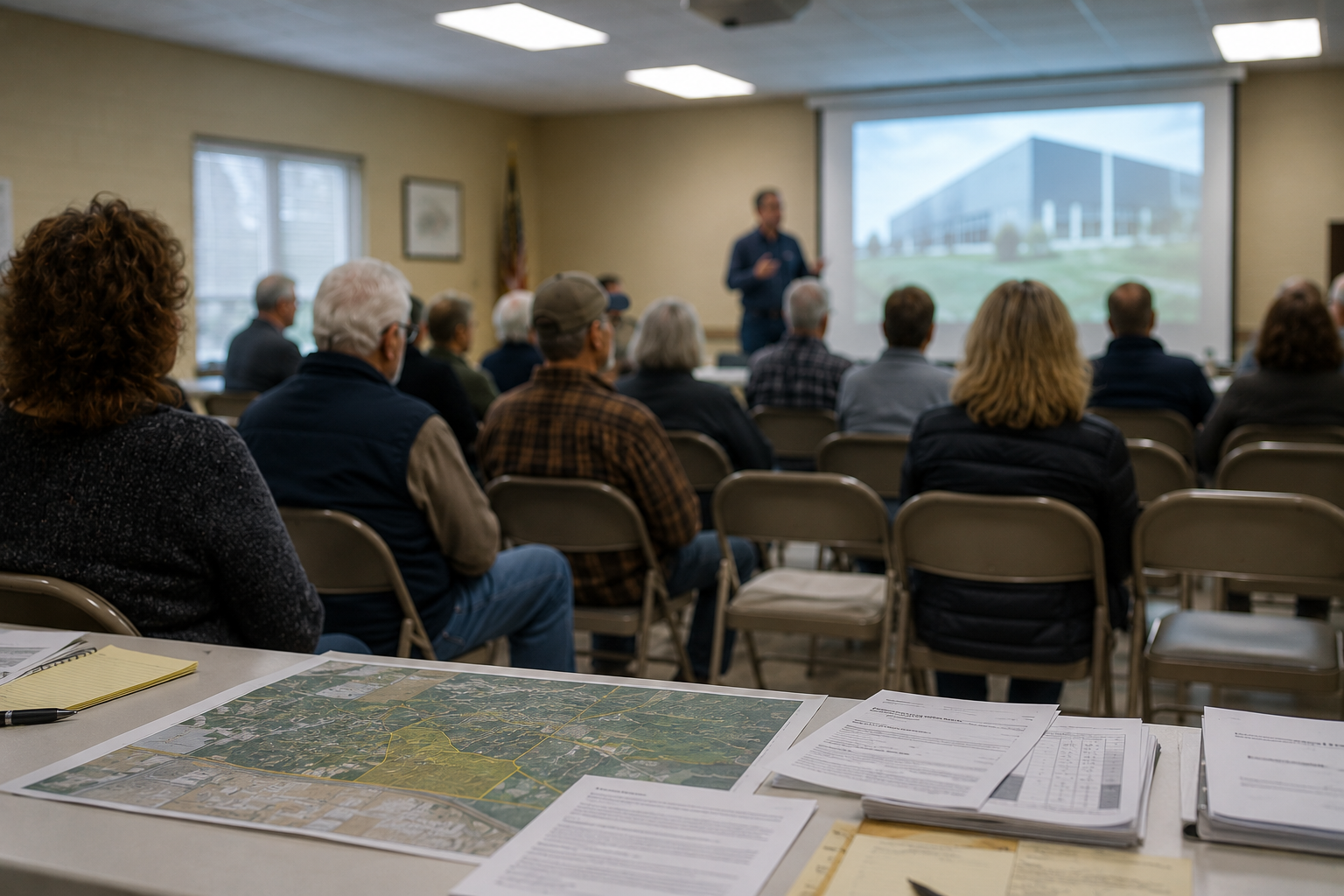
Gallup polling shows many Americans oppose AI data centers in their local area, turning a technology story into a community debate over infrastructure, trust, and daily life. Editorial illustration by TheDailyGlobe.
Key Facts
- Gallup published a May 13, 2026 article on public views of AI data centers.
- Gallup reported that seven in 10 Americans oppose construction of an AI data center in their local area.
- Gallup reported that 48% strongly opposed construction in their area.
- The issue connects technology growth with local concerns about infrastructure, energy, land use and quality of life.
- It remains unclear how opposition changes when communities are offered jobs, tax revenue or infrastructure investment.
AI can feel weightless when it appears as a chatbot, search tool, image generator or office assistant. Data centers make it physical.
Gallup published a May 13, 2026 article on public views of AI data centers and reported that seven in 10 Americans oppose construction of an AI data center in their local area. Gallup also reported that 48% strongly opposed construction near them.
That finding turns AI into a values-and-community story, not just a technology story. People may use AI tools online while still resisting the buildings, power demands, land use and local changes that can come with the infrastructure behind those tools.
When AI Becomes a Local Building
Most people encounter AI through a screen. They ask a question, generate text, summarize a document or use a feature built into software. The physical system behind that interaction is easier to ignore until it becomes part of a local planning fight.
A data center is not just an abstract piece of the internet. It needs land, electricity, cooling, roads, utility connections and local approval. That is where the debate can shift from national excitement over AI to neighborhood questions about daily life.
The Gallup finding suggests many Americans are drawing that line close to home. They may accept AI as a tool but oppose the construction needed to power more of it nearby. That difference is important because it shows the gap between using a technology and hosting its infrastructure.
The Tradeoff Communities Are Being Asked to Consider
The handoff for this story connects data-center opposition to infrastructure, energy, land use and quality of life. Those are practical local concerns. A community may ask whether a project strains the grid, changes land use, affects nearby neighborhoods, creates jobs, brings tax revenue or alters the character of a place.
The available source material does not show exactly how much each concern drives the opposition. That matters. It would be too strong to say Americans oppose data centers only because of energy use, water use, noise, distrust of AI companies or land development. The safer reading is that the opposition sits at the intersection of several concerns.
That makes this a public-trust question. If companies and local officials present data centers only as progress, residents may hear that as a request to accept costs they do not fully understand. If opponents describe every project as harmful before details are known, they may miss local benefits that deserve a fair hearing.
Why This Is Not a Simple Anti-Tech Story
Opposition to local data centers does not necessarily mean opposition to AI itself. A person can use AI at work, school or home and still object to a large facility nearby. That is not hypocrisy. It is the same tension communities face with many kinds of infrastructure: people may want the service but disagree over where the burden should land.
The issue also should not be treated as partisan by default. The handoff does not support a party-based explanation, and the better lens is local control. Residents often respond to the specific project in front of them: the location, size, utility demands, traffic, promised jobs and trustworthiness of the company or officials involved.
That local lens helps explain why AI infrastructure may face resistance even as AI tools spread. The software can be adopted quietly. The infrastructure asks a community to make room for something visible.
What Remains Unclear
Several important questions remain open. It is unclear whether opposition changes when communities are offered jobs, tax revenue or infrastructure investment. Those benefits may matter to some residents, but the source material does not show whether they are enough to change the overall public mood.
It is also unclear how views differ in areas already affected by data-center construction. People who live near existing facilities may judge the tradeoffs differently from people reacting to the idea in general.
Finally, the available source material does not settle how much concern is driven by energy use, water use, land use, noise or distrust of AI companies. Those questions matter because different concerns require different answers.
Why Readers Should Care
AI is often described as software, but its growth depends on physical systems. Those systems have to be built somewhere. Gallup's findings suggest many Americans do not want that somewhere to be close to home.
For readers, the useful takeaway is not that data centers are good or bad in every case. It is that AI's future will be shaped not only by engineers, investors and tech companies, but also by communities asked to live with the infrastructure.
That makes the data-center debate a test of trust. Communities will want clearer answers about costs, benefits, utilities and quality of life. Companies and officials will have to explain more than what AI can do. They will have to explain what it asks from the places where it is built.
Reporting note: Reporting draws on Gallup public opinion research, Gallup-SCSP American Perspectives on AI materials, survey findings, and reviewed background materials. This article was produced with AI-assisted research and reviewed by an editor before publication.