Ukraine Opens EU Membership Talks While the War Continues
Ukraine has opened the first chapter of European Union membership negotiations, beginning a long reform process even as the country continues to fight Russia's invasion.
Save Article
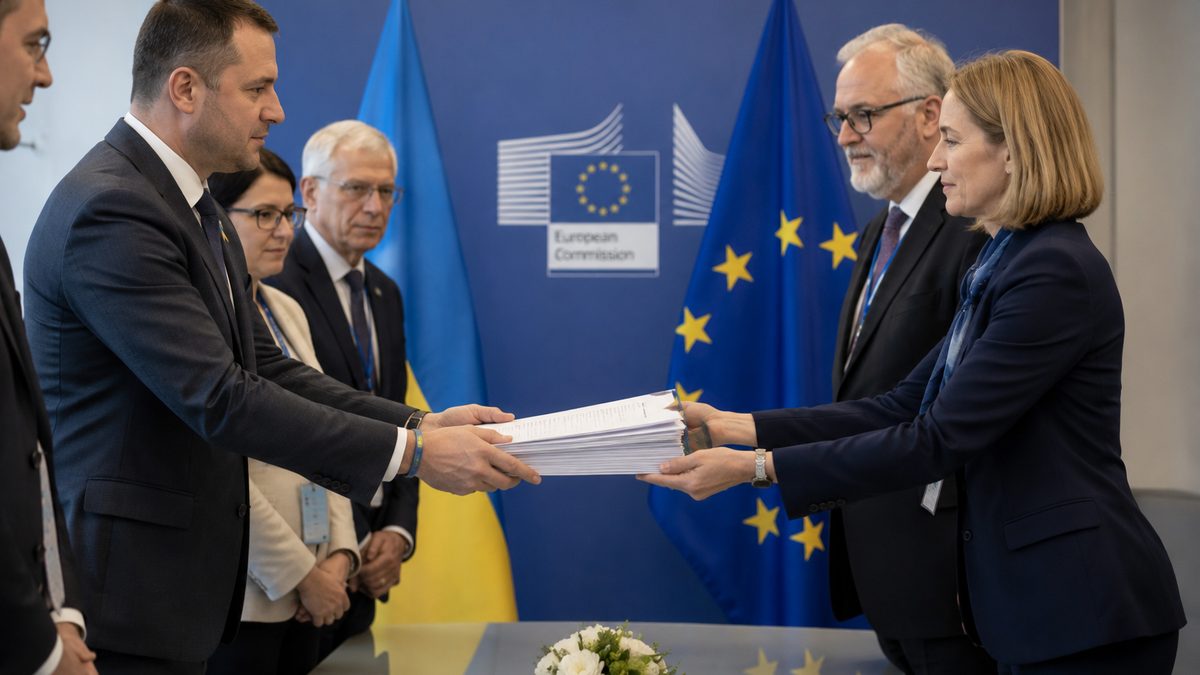
Ukraine’s EU accession talks begin a long reform process while the war with Russia continues. Editorial illustration by TheDailyGlobe.
Key Facts
- Ukraine opened its first EU accession negotiations cluster on June 15.
- Moldova also advanced in the European Union accession process.
- The first negotiation cluster covers rule of law, democratic institutions, public administration, and economic criteria.
- Opening negotiations does not mean Ukraine is close to joining the European Union.
- The pace of future progress will depend on reforms and agreement among EU member states.
Ukraine's future is being shaped in more than one place. While soldiers continue fighting on the front lines against Russia, government officials are also working through legal, political, and economic reforms that could determine where the country fits in Europe for decades to come.
On June 15, Ukraine officially opened the first cluster of negotiations required for membership in the European Union. The move marks an important milestone in a process that could eventually bring Ukraine into the bloc, but it also highlights how much work remains before membership becomes a reality.
A Major Step, Not the Finish Line
The opening of accession negotiations is one of the most significant institutional steps Ukraine has taken since applying for EU membership. According to the Council of the European Union, the first cluster focuses on areas that many European officials view as foundational: courts, governance, democratic institutions, public administration, and economic standards.
These topics may sound technical, but they affect how a country functions day to day. The European Union requires candidate countries to demonstrate that laws are applied fairly, institutions operate independently, and governments can effectively implement EU rules and regulations.
For Ukraine, the challenge is unusual because these reforms are being pursued while the country remains at war. Most previous candidates were not facing an active large-scale conflict while attempting to meet accession requirements.
Why Membership Talks Matter
The negotiations are about more than symbolism. EU membership can influence trade, investment, legal standards, and political cooperation. For Ukraine, the process represents a long-term effort to strengthen ties with Europe and embed itself more deeply within Western institutions.
Supporters of accession argue that the process encourages reforms that can improve government accountability and economic stability. Critics in some European countries have raised questions about costs, expansion fatigue, and how quickly the bloc should grow while dealing with its own political and economic challenges.
Those debates are likely to continue throughout the negotiation process. Every major stage requires approval from EU member states, meaning political support across Europe will remain important long after the opening ceremony has passed.
Moldova Moves Forward Too
Ukraine was not the only country advancing this week. Moldova also moved forward in the accession process, reflecting a broader effort by the European Union to deepen relationships with countries on its eastern border.
Although Ukraine and Moldova are often discussed together in accession conversations, each country must meet its own requirements. Progress by one does not automatically guarantee progress by the other.
For both countries, negotiations are expected to unfold across multiple chapters and policy areas over a period measured in years rather than months.
What Remains Uncertain
The biggest uncertainty is timing. Opening the first negotiation cluster is a clear milestone, but it does not provide a timetable for membership. European officials have repeatedly emphasized that accession depends on meeting benchmarks rather than following a fixed schedule.
It is also unclear how the ongoing war may affect Ukraine's ability to complete reforms. Maintaining government functions during a conflict presents challenges that most candidate countries have not faced during accession negotiations.
Political dynamics inside the European Union could also influence the pace of future talks. Member states must agree on major steps in the process, and views on enlargement do not always align across the bloc.
What Comes Next
The next phase will focus on meeting the standards outlined in the first negotiation cluster and preparing additional areas for review. Future clusters will address other aspects of governance, economic policy, and alignment with EU rules.
For readers following the war, this week's development offers a reminder that Ukraine's future is being shaped through institutions as well as military events. The battlefield remains central to the country's immediate survival, but the accession process is designed to influence what Ukraine may look like long after the fighting ends.
Whether that path ultimately leads to EU membership remains uncertain. What is clear is that Ukraine has moved from discussing membership aspirations to beginning the detailed work required to pursue them.
Reporting note: Reporting draws on official European Union materials, government statements, reputable wire reporting, and reviewed background materials. This article was produced with AI-assisted research and reviewed by an editor before publication.