Serbia Protests Keep Rule-of-Law Questions at the Center of Its European Future
Serbia’s protest movement has turned public anger over a deadly train station collapse into a wider test of rule of law, early election pressure and the country’s EU path.
Save Article
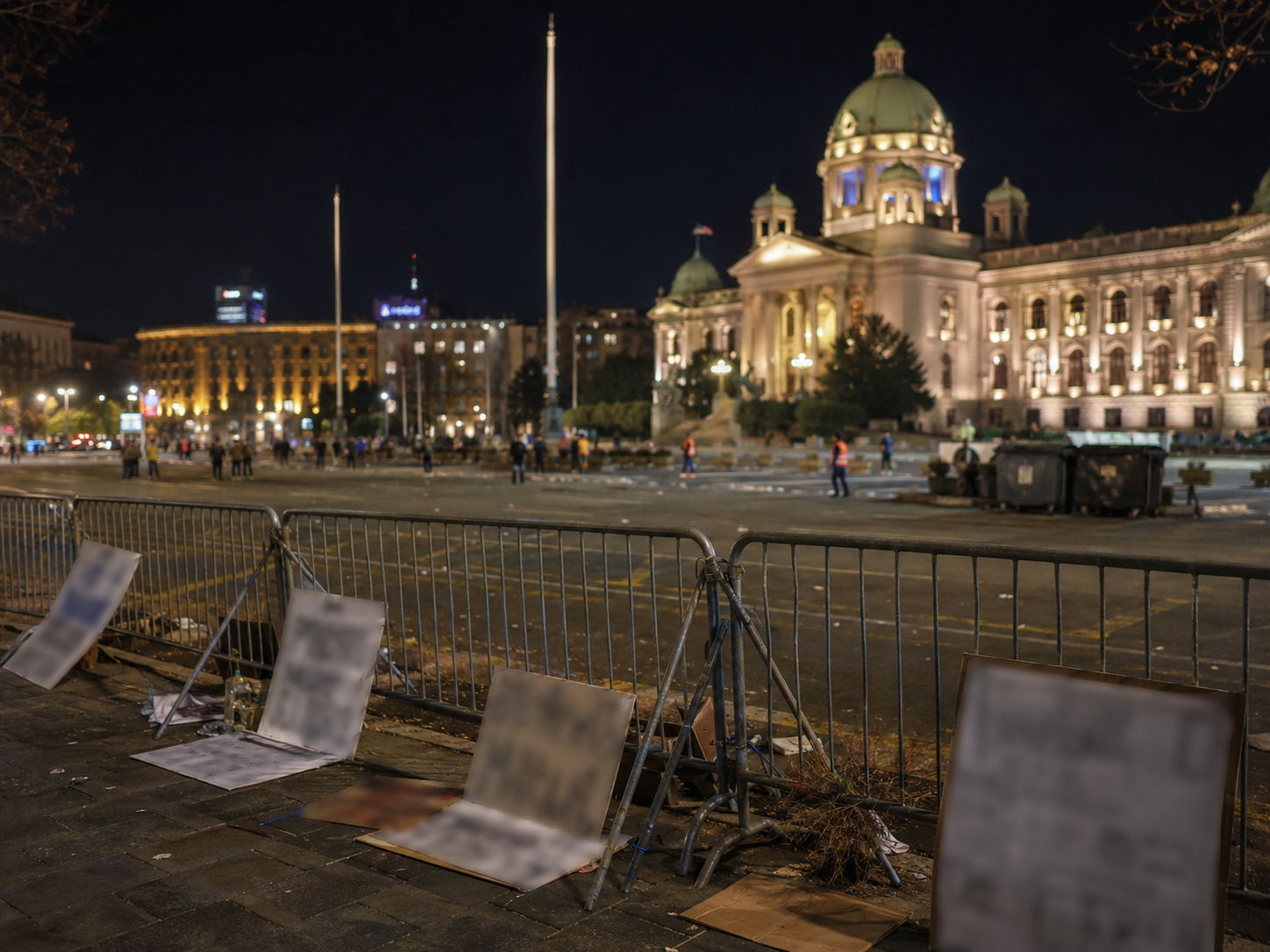
Serbia’s protest movement has turned public anger over a deadly train station collapse into a wider test of rule of law, early election pressure and the country’s EU path. Editorial illustration by TheDailyGlobe.
Key Facts
- AP reported protesters clashed with police after a large anti-government rally in Belgrade on May 23.
- AP reported the student-led movement has pushed for early elections and stronger rule of law.
- AP reported the protests grew out of anger after a 2024 train station collapse in Novi Sad that killed 16 people.
- AP reported President Aleksandar Vučić dismissed protesters as violent extremists while protest organizers emphasized peaceful mobilization.
- Serbia remains formally on an EU accession path while also maintaining close ties with China and Russia.
Serbia’s protest movement is keeping rule-of-law questions at the center of the country’s political future.
AP reported that protesters clashed with police after a large anti-government rally in Belgrade on May 23. The student-led movement has pushed for early elections and stronger rule of law, according to AP.
For readers outside Serbia, the story is not only about another protest in Europe. Serbia remains formally on a path toward European Union membership while also maintaining close ties with China and Russia. That makes questions about accountability, institutions and public trust important beyond Belgrade.
How the Protests Began
The protests grew out of anger after a 2024 train station collapse in Novi Sad that killed 16 people, according to AP. Protesters and critics have linked the disaster to corruption and a lack of transparency.
Those claims should be attributed carefully. Government-aligned voices reject the protest movement’s framing, and the article source basis does not settle every question of legal or political responsibility.
Still, the collapse became more than a single tragedy. It turned into a symbol for people who believe Serbia’s institutions are not transparent enough, not accountable enough or too closely controlled by political power.
The current protest movement began after the collapse of a concrete canopy at the renovated Novi Sad railway station on November 1, 2024. European Parliament research indicates that the collapse resulted in 14 immediate fatalities, with two additional deaths later attributed to the incident, bringing the total to 16.
Why Rule of Law Is the Core Issue
The student-led movement has pushed for early elections and stronger rule of law. That phrase can sound abstract, but in this context it means something practical: whether public institutions investigate failures, punish wrongdoing, protect peaceful protest and allow voters to judge leaders through credible elections.
Vučić has dismissed protesters as violent extremists, according to AP. Protest organizers have emphasized peaceful mobilization. Both positions matter because each side is trying to define what the protests represent.
That is why the clashes after the Belgrade rally need careful wording. Claims about police violence, hooligan involvement or political responsibility should not be treated as settled unless they are clearly confirmed. Serbia’s unrest includes large mobilization, government pushback and specific confrontations, but not every person in the streets shares one motive or one method.
Why Europe Is Watching
Serbia’s domestic politics matter to Europe because the country is still formally part of the EU enlargement process. The Council of the European Union describes enlargement and the stabilization process as part of the bloc’s framework for candidate and potential candidate countries.
For any country seeking EU membership, rule of law is not a side issue. It affects courts, elections, public procurement, anti-corruption efforts, media freedom and trust in government.
Serbia’s case is especially watched because Belgrade has also kept close ties with China and Russia. That does not mean Serbia has left its EU path. It does mean the country’s direction is being judged through more than one lens: domestic democratic standards, foreign alignment and public confidence in institutions.
What Remains Unclear
It remains unclear whether the protests will force early elections or institutional reforms. It is also unclear whether EU concerns over democratic standards will affect Serbia’s accession path or funding.
Another open question is whether protest momentum will hold through the scheduled election window. Large demonstrations can reshape politics, but they can also fade, split or be contained by government strategy.
For now, Serbia’s protests are best understood as a rule-of-law story with European consequences. The immediate dispute is happening in Serbian streets and institutions, but the outcome will also shape how Europe sees Serbia’s readiness, direction and public accountability.
The Broader Context of the Protests
The protests have expanded beyond the immediate demands for accountability regarding the Novi Sad disaster. They now encompass broader issues such as corruption, media freedom, police conduct, and civil liberties. The movement has been largely student-led, with participants calling for justice for the victims of the Novi Sad collapse and demanding enforcement of the rule of law.
The European Commission has indicated that Serbia's path to EU membership hinges on effective rule-of-law reforms, judicial independence, and anti-corruption measures. The 2025 Rule of Law Report highlighted ongoing challenges in these areas, emphasizing the need for Serbia to address issues of media pluralism and checks and balances.
UN High Commissioner for Human Rights Volker Turk has urged Serbian authorities to expedite accountability measures, stressing that accountability is crucial for restoring public trust in institutions and upholding the rule of law. This call for accountability resonates deeply with the protesters, who see it as essential for the future of democracy in Serbia.
As the protests continue, the question remains whether the Serbian government will respond to these demands or whether the protests will simply become another chapter in a long history of political unrest in the country.
Reporting note: Reporting draws on AP reporting, Council of the European Union materials, Serbia political context, and reviewed Balkan regional background. This article was produced with AI-assisted research and reviewed by an editor before publication.