Romania Drone Report Brings NATO Border Risk to the U.N.
Romania says a Russian drone carrying explosives entered its airspace, moving a NATO border-security concern to the U.N. Security Council.
Save Article

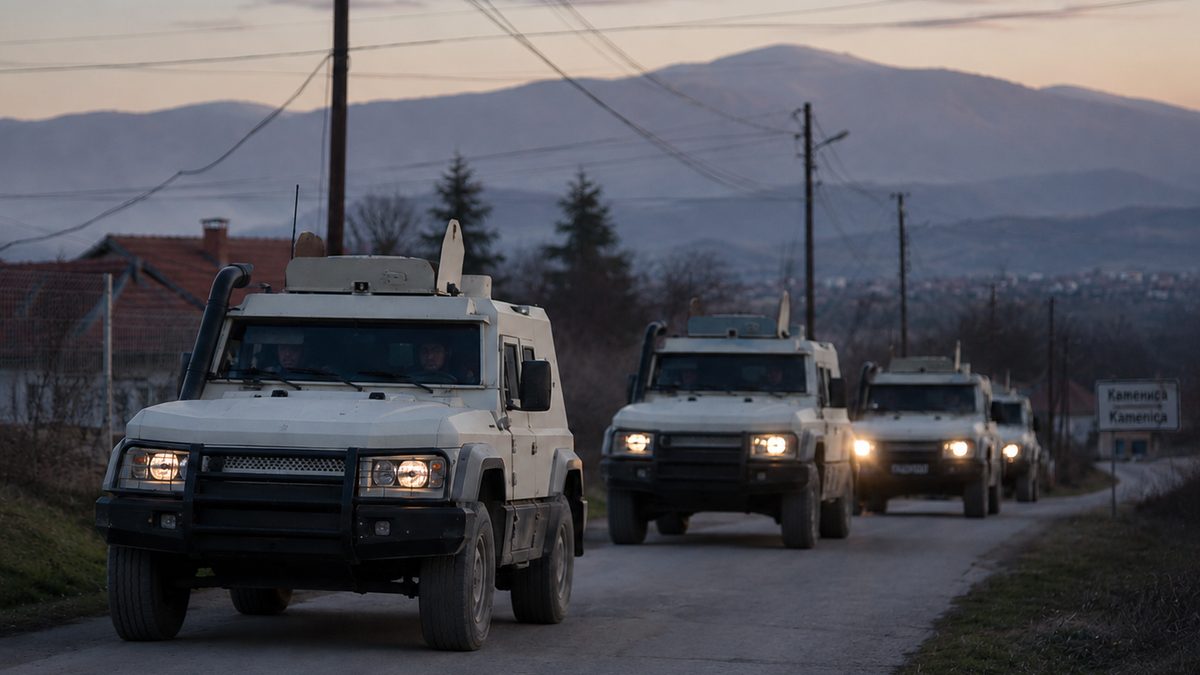
Airspace incidents near NATO territory can quickly move from national concern to international diplomacy. Editorial illustration by TheDailyGlobe.
Key Facts
- The U.N. Security Council scheduled a June 1 briefing after Romania requested a meeting.
- Romania’s request said a Russian drone carrying explosives entered Romanian airspace overnight between May 28 and May 29.
- Several European members of the Security Council supported Romania’s request for the meeting.
- NATO’s public news page listed a June 1 address by Deputy Secretary General Radmila Shekerinska to the NATO Parliamentary Assembly in Vilnius.
- Official EU materials continue to track European responses to Russia’s war against Ukraine.
Airspace incidents near Ukraine’s borders can sound distant until they involve a NATO member. That is why Romania’s report that a Russian drone entered its airspace is now more than a national security complaint. It has moved onto the U.N. Security Council’s agenda.
The Security Council scheduled a June 1 briefing after Romania requested a meeting over an incident it said occurred overnight between May 28 and May 29. According to Romania’s request, a Russian drone carrying explosives entered Romanian airspace during that period.
The allegation matters because Romania is both a European Union country and a NATO member. A drone incident there is not the same as a battlefield event inside Ukraine. It raises a narrower but serious question: how often can Russia’s war near NATO territory create risks beyond Ukraine’s borders, and how should international bodies respond when those risks appear?
What Romania Brought to the Security Council
Romania’s request put the incident into a diplomatic setting where the facts, responsibility, and possible response can be discussed publicly. The Security Council meeting does not by itself prove the full chain of events. It does show that Romania considered the incident serious enough to seek international attention.
The most important distinction is between what is confirmed and what remains an allegation. The Security Council meeting was scheduled. Romania made the request. Romania said the drone was Russian, carried explosives, and entered Romanian airspace. Those drone details should be attributed to Romania unless independent investigators or other official bodies confirm them separately.
That careful wording matters. In conflicts involving drones, air defenses, borders, and competing governments, early accounts can be incomplete. A responsible account should not treat every government claim as fully settled simply because it appears in an official request.
Why NATO Territory Changes the Stakes
Romania’s NATO membership is the reason this incident carries wider weight. NATO’s core security promise is built around defense of alliance territory. That does not mean every airspace incident automatically becomes a military crisis, and nothing in the available record shows that the June 1 Security Council discussion will produce a specific NATO action.
Still, the location matters. Romania borders Ukraine, and the war has repeatedly pushed security concerns toward neighboring countries. Drones, missile fragments, air-defense decisions, and cross-border alerts can create danger even when a government says the original target was inside Ukraine.
For U.S. readers, the practical connection is alliance policy. The United States is a leading NATO member, and security questions involving NATO borders are not only European issues. They shape how Washington, European capitals, and NATO officials think about deterrence, air defense, and the risk of spillover from the war.
What the U.N. Meeting Can and Cannot Do
The Security Council can give Romania a formal setting to present its concerns and can allow other governments to respond. It can also put pressure on the parties involved by creating a public diplomatic record.
But the council’s ability to act is limited by politics, especially when Russia is involved. The meeting may produce statements, criticism, demands for restraint, or calls for clarification. It is not clear whether it will lead to a formal measure, and readers should be careful not to assume that a scheduled briefing means a concrete international response is coming.
Several European Security Council members supported Romania’s meeting request, which signals concern among European governments. That support does not answer the harder questions: whether the drone’s origin will be independently verified, whether the incident was accidental or intentional, and whether NATO will treat it as part of a broader pattern or as a separate episode.
The European Context Around the Incident
The incident comes as European governments continue to respond to Russia’s war against Ukraine through sanctions, aid decisions, diplomatic statements, and security planning. Official EU materials continue to track those responses, while NATO has kept Russia’s war and alliance readiness at the center of its public agenda.
NATO’s public schedule for June 1 included an address by Deputy Secretary General Radmila Shekerinska to the NATO Parliamentary Assembly in Vilnius. That listing does not establish a direct NATO decision tied to Romania’s request, but it reflects the broader alliance setting in which the incident is being discussed.
The safest way to understand the story is this: Romania says its airspace was violated by a Russian drone carrying explosives, the U.N. Security Council agreed to take up the matter, and European governments are watching the issue within the larger security pressure created by the war in Ukraine.
What Remains Unclear
Several important facts remain unsettled. It is not yet clear from the available record whether independent investigators have confirmed the drone’s origin, whether Russia has issued a detailed response tied to the Security Council discussion, or whether the council will produce any formal action.
It is also unclear whether NATO will describe the incident as part of a broader pattern of risk near alliance territory or as a discrete event requiring monitoring. That distinction matters because one incident can be handled as a diplomatic complaint, while a pattern can influence defense planning and public warnings.
What to Watch Next
The next useful signals will come from the Security Council discussion, any evidence Romania presents, any NATO statement after the meeting, and any Russian response. Those details will determine whether this remains a contained diplomatic dispute or becomes another marker of how Russia’s war in Ukraine continues to test the security boundaries around NATO territory.
Reporting note: Reporting draws on United Nations meeting records, NATO public news materials, European Union policy updates, and reviewed background materials. This article was produced with AI-assisted research and reviewed by an editor before publication.