Pakistan Police Attack Adds to Security Strain Near Afghan Border
A suicide bomber and gunmen targeted a police post in Bannu, killing 14 officers, according to AP, in an attack authorities linked to a group believed connected to the Pakistani Taliban.
Save Article
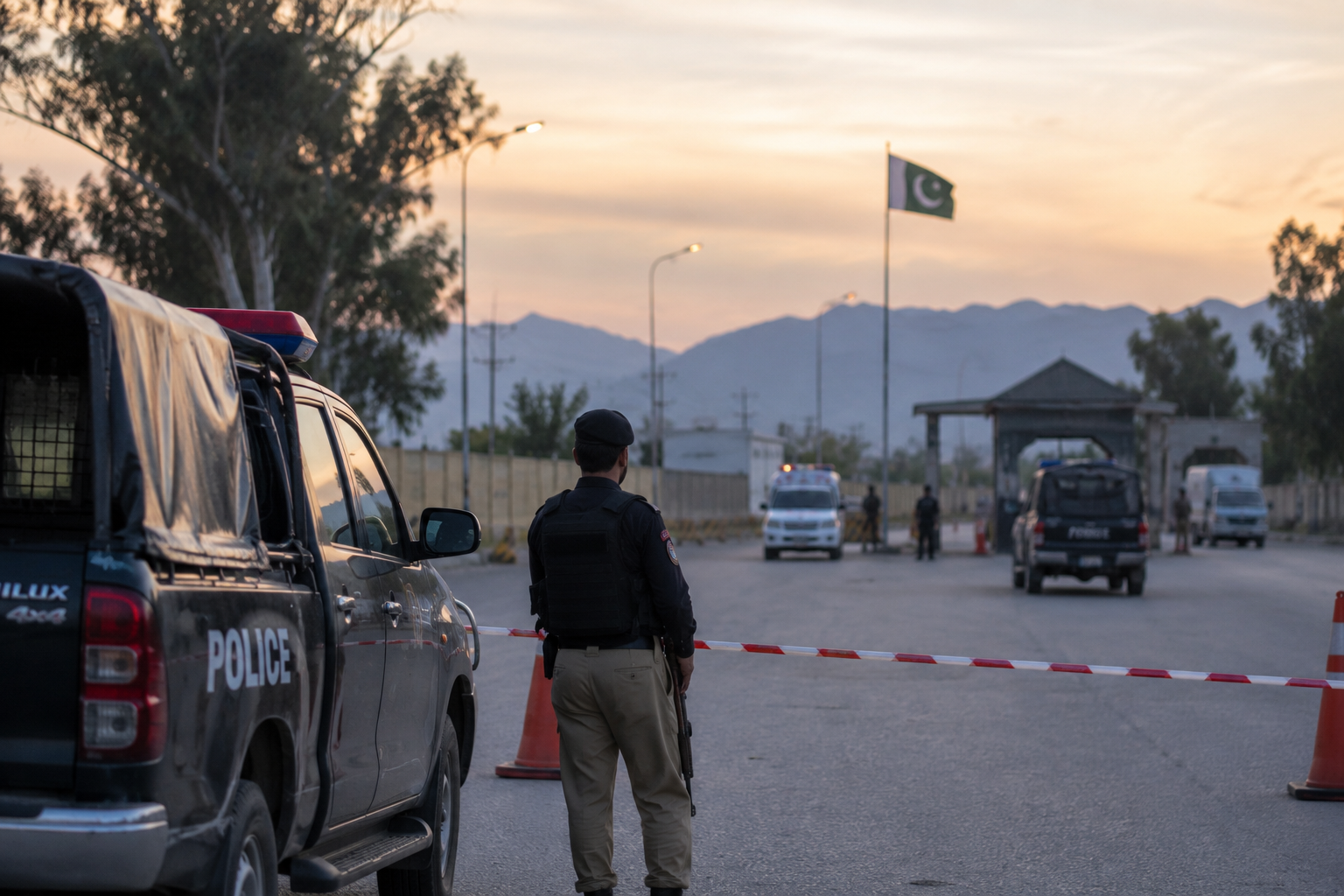
A suicide bomber and gunmen targeted a police post in Bannu, killing 14 officers, according to AP, in an attack authorities linked to a group believed connected to the Pakistani Taliban. Editorial illustration by TheDailyGlobe.
A suicide bomber and gunmen attacked a police security post in Bannu, a district in Pakistan's northwestern Khyber Pakhtunkhwa province, killing 14 police officers, according to AP reporting that cited local authorities.
The attack adds to a growing security strain in northwest Pakistan, where police and other security forces have faced repeated militant violence near the Afghan border. AP reported that the assault involved an explosives-laden vehicle followed by gunfire, with authorities later raising the death toll to 14 officers.
Authorities linked the attack to a newly formed group believed to be connected to the Pakistani Taliban, also known as Tehrik-e-Taliban Pakistan, or TTP. AP reported that a self-described breakaway group claimed responsibility. Pakistani officials have treated the attack as part of a wider militant threat in the region, though responsibility and command links should be handled carefully until investigators provide more detail.
Why Bannu matters
Bannu sits in Khyber Pakhtunkhwa, a province along Pakistan's border with Afghanistan. The area has long been central to Pakistan's fight against militant groups, including factions tied to or inspired by the Pakistani Taliban. Attacks there are not only local security incidents. They often reflect the wider pressure Pakistan faces along its western frontier.
Police posts in the province are frequent targets because officers are often the first line of defense in districts where militant groups try to move, regroup, or pressure the state. Unlike attacks on large military installations, assaults on police checkpoints can expose how difficult it is to secure remote and semi-urban areas where armed groups know the terrain and can strike quickly.
The Bannu attack also comes as Pakistan continues to accuse militants of using areas across the Afghan border as safe haven. Afghan Taliban officials have denied allowing such groups to operate from Afghan soil. That dispute has become one of the sharpest sources of tension between Pakistan and Afghanistan since the Taliban returned to power in Kabul in 2021.
A broader rise in violence
Pakistan has seen increased militant violence since the Afghan Taliban's return to power. The TTP is separate from the Afghan Taliban, but the groups share ideological roots and historical ties. Pakistani officials have argued that the change in Afghanistan gave the TTP more room to operate. Afghan authorities have rejected accusations that they are sheltering militants.
For ordinary Pakistanis in Khyber Pakhtunkhwa, the result has been a steady sense of insecurity. Police, soldiers, government offices, and civilians have all been affected by attacks in recent years. The latest assault in Bannu shows how quickly a local checkpoint can become part of a much larger national and regional security problem.
The attack also puts pressure on Pakistan's civilian and security leadership. Officials are expected to respond firmly after an attack that killed officers, but heavy-handed security responses can also deepen fear in communities already caught between militant pressure and state operations. That balance has challenged Pakistani governments for years.
What is confirmed, and what remains unclear
The confirmed facts are serious enough without adding speculation: AP reported that a suicide bomber and gunmen attacked the police post in Bannu, that the death toll rose to 14 police officers, and that authorities linked the attack to a newly formed group believed to be connected to the Pakistani Taliban.
What remains less clear is the exact structure of the group that claimed responsibility, how directly it is tied to the TTP, and whether the attack was ordered by senior militant leaders or carried out by a smaller faction acting under a new name. Those details matter because militant groups in the region often splinter, rebrand, or use front names after major attacks.
It is also unclear how Pakistan will respond beyond the immediate investigation and security operation. Past attacks have led to stronger patrols, arrests, border pressure, and public warnings to Afghanistan. But long-term stability in Khyber Pakhtunkhwa has proved difficult, especially when militant networks can move across rugged border areas and exploit local grievances.
What happens next
The immediate focus will be on identifying the attackers, confirming the chain of responsibility, and securing the area around Bannu. Police funerals and public mourning are also likely to shape the national response, because the victims were officers serving in one of Pakistan's most dangerous security environments.
The wider question is whether Pakistan can reduce the pace of attacks in Khyber Pakhtunkhwa without escalating tensions with Afghanistan further. The border dispute, the TTP threat, and Pakistan's internal security pressures are now tightly connected. One attack in Bannu does not explain the whole problem, but it shows why the region remains one of the most sensitive security flashpoints in South Asia.
Reporting note: Reporting draws on AP initial and follow-up reports on the Bannu attack, official attribution reported by AP, and reviewed background context on militant violence in northwest Pakistan since the Afghan Taliban returned to power in 2021. All claims This article was produced with AI-assisted research and reviewed by an editor before publication.