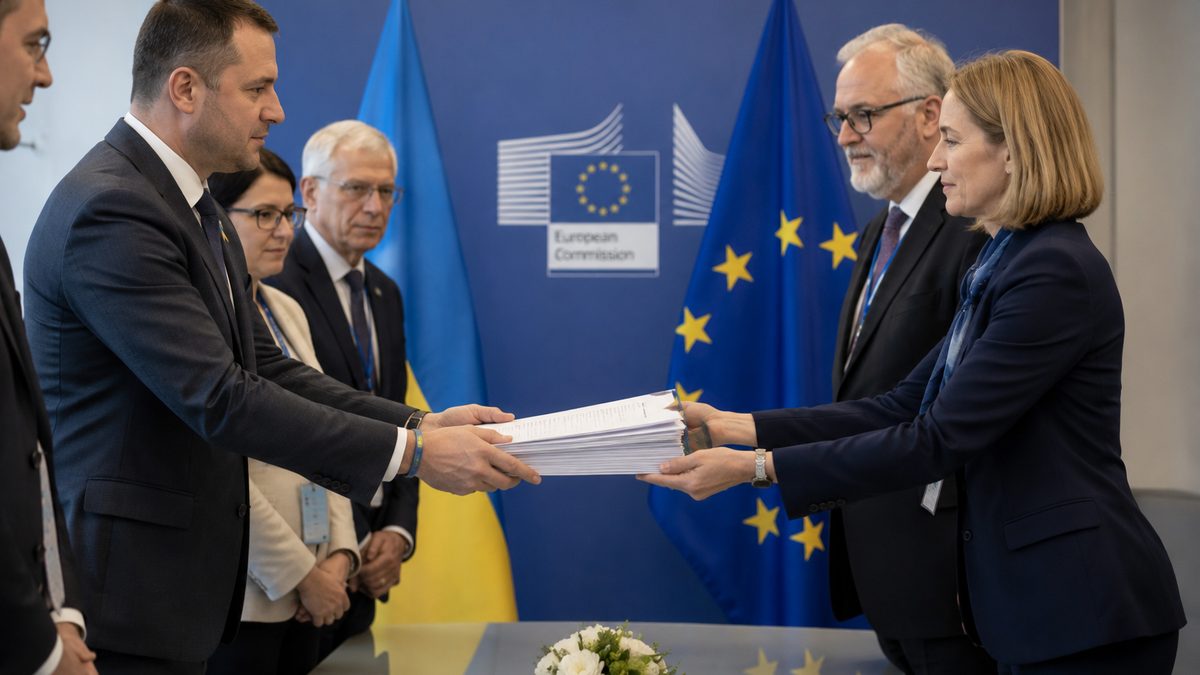
Germany’s Ukraine Proposal Tests Europe’s Role as U.S. Focus Shifts
Germany’s proposal for Ukraine to receive associate EU membership raises a practical question for Europe: how much support can it offer while full accession remains delayed?
Save Article
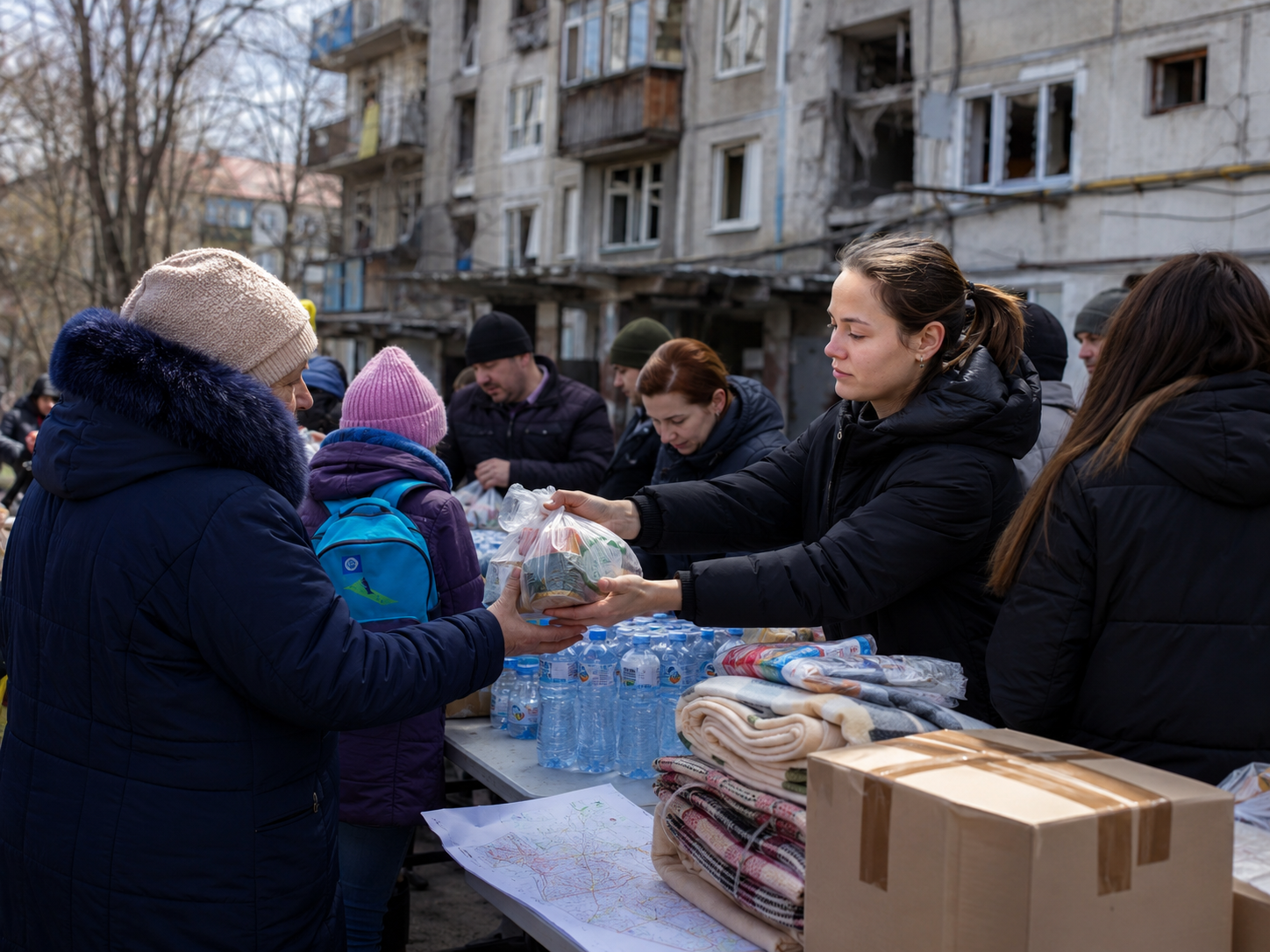
Germany’s proposal for Ukraine to receive associate EU membership raises a practical question for Europe: how much support can it offer while full accession remains delayed?. Editorial illustration by TheDailyGlobe.
Key Facts
- German Chancellor Friedrich Merz proposed an “associate membership” path for Ukraine in the European Union.
- Reporting says the idea would allow Ukraine to participate in EU settings without full voting rights.
- Ukraine’s full EU accession process remains delayed.
- The proposal has not been adopted as EU policy.
- It remains unclear whether associate status would improve Ukraine’s security or speed full EU accession.
German Chancellor Friedrich Merz has proposed giving Ukraine an “associate membership” path in the European Union, a step that would fall short of full membership but could bring Kyiv closer to Europe while its formal accession process remains delayed.
According to reporting, the idea would allow Ukraine to participate in some EU settings without receiving full voting rights. It has not been adopted as EU policy, and it remains unclear whether enough member states would support it.
For U.S. readers, the proposal matters because it points to a larger question about the war and Europe’s role: if Washington’s attention shifts or U.S. policy becomes less predictable, can Europe build a stronger long-term structure for supporting Ukraine?
What Germany Is Proposing
The German proposal appears aimed at creating a middle step between Ukraine’s current position and full EU membership. Associate membership, as described in reporting, would give Ukraine closer involvement with the EU while stopping short of the rights and authority that come with full membership.
That distinction matters. Full EU membership gives a country a formal role in the bloc’s decision-making system, including voting rights. The proposal described in the source material would not give Ukraine full voting rights. Readers should not treat it as the same thing as EU accession.
The idea may still be meaningful if it gives Ukraine more regular access to EU discussions, planning, and political coordination. But the source material does not show that it would automatically provide full economic benefits, security guarantees, or a faster route to membership.
Why Full EU Accession Is Still Difficult
Ukraine has sought a closer future with Europe, but full accession to the EU is a long and politically difficult process. Countries generally have to meet extensive standards on law, governance, markets, institutions, and alignment with EU rules.
For Ukraine, the challenge is even more complicated because it is still at war. The country’s future borders, security needs, reconstruction costs, and institutional reforms all affect how EU governments think about membership.
There is also the politics inside the EU itself. Any major step involving Ukraine can raise different concerns among member states, including cost, security, agriculture, migration, relations with Russia, and the balance of power inside the bloc.
The Security Question
Supporters may argue that associate membership would send a stronger signal that Ukraine belongs in Europe’s political future. But the security value of the proposal is a political argument, not a proven guarantee.
Closer EU participation could give Ukraine more diplomatic backing and a clearer path toward integration. But it is not the same as NATO membership, and the source material does not show that associate EU status would protect Ukraine from military attack or change the battlefield by itself.
That is why the proposal should be understood as part of Europe’s search for a stronger Ukraine strategy, not as a settled solution to Ukraine’s security problem. It may help define Ukraine’s direction. It does not answer every question about defense, deterrence, or enforcement.
Why Europe’s Role Matters Now
The proposal comes as European governments face pressure to show that their support for Ukraine can survive changes in U.S. attention and policy. The United States remains central to Ukraine’s military and diplomatic backing, but Europe has a direct stake in the war’s outcome and in the future security order on the continent.
An associate membership path could be one way for Europe to keep Ukraine tied to European institutions even while full membership remains out of reach. It would give EU leaders a concrete political option between symbolic support and full accession.
For Americans, the issue connects to U.S. foreign policy debates over burden-sharing. If Europe creates stronger mechanisms for Ukraine, it could change how future U.S. administrations think about aid, diplomacy, and responsibility for European security. But the source material does not show that this proposal would replace U.S. support.
What Remains Unclear
The biggest unknown is whether other EU members would support the idea. A proposal from Germany can shape the debate, but EU decisions depend on wider agreement among member states.
It is also unclear whether associate status would speed Ukraine’s path toward full membership or complicate it. Some leaders may see it as a useful bridge. Others may worry it becomes a substitute for full accession or creates new disputes over what rights Ukraine should receive before joining.
The final open question is whether associate membership would materially improve Ukraine’s security. The proposal could strengthen political ties and give Ukraine a clearer place in Europe’s future. But unless the terms include enforceable security commitments, it would not by itself settle the war or remove the threats Ukraine faces.
For now, Germany’s proposal is best understood as a serious but unfinished idea. It shows Europe looking for more tools to support Ukraine, while the hardest questions over membership, security, and the division of responsibility with the United States remain unresolved.
Reporting note: Reporting draws on Associated Press reporting, European policy reporting, Reuters-linked reporting, diplomatic background, and reviewed context. This article was produced with AI-assisted research and reviewed by an editor before publication.