Europe's Drought Watch Is Becoming a Farm and Water Problem
New drought monitoring data highlights dry conditions across parts of Europe, but the bigger story is how farmers and water managers are increasingly planning months ahead for water stress rather than reacting after damage occurs.
Save Article
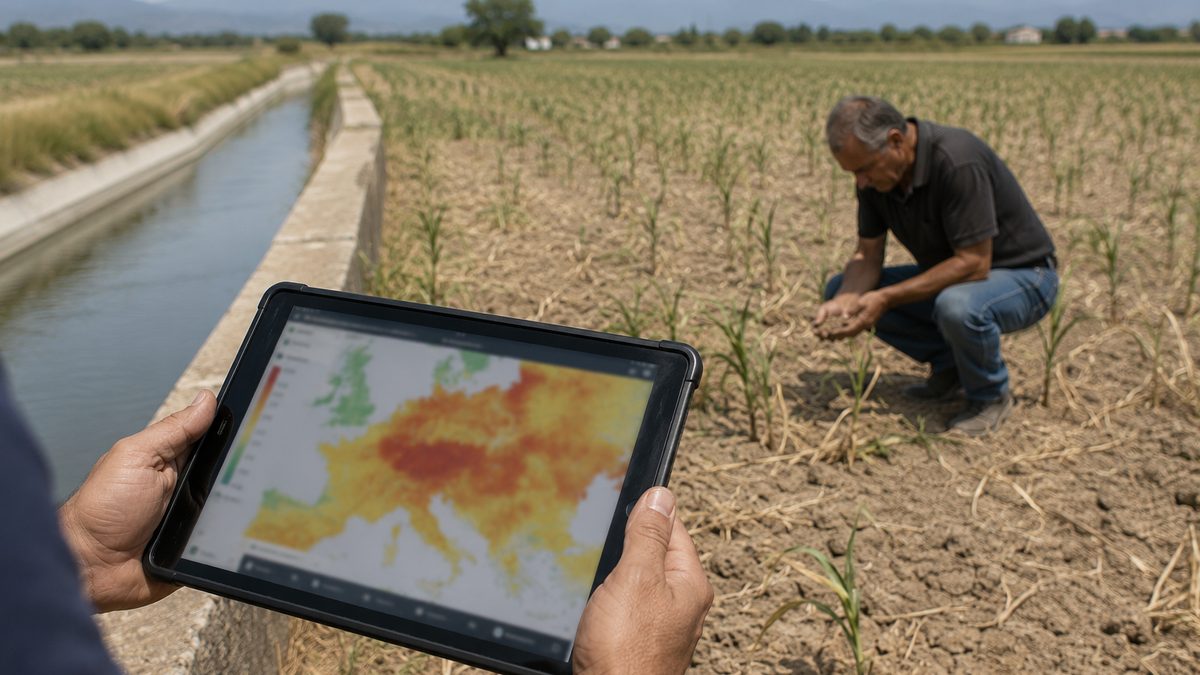
European drought monitoring is becoming part of farm planning, water management and climate adaptation. Editorial illustration by TheDailyGlobe.
Key Facts
- The European Drought Observatory reported watch drought conditions in parts of eastern and central-southern Europe, France, and the western Iberian Peninsula.
- The drought assessment was based on late-May data and analysis released June 12.
- A European Commission study released in May identified climate change as the main driver reshaping EU agriculture.
- The European Environment Agency lists drought, water scarcity, and flooding among Europe's major water-resilience challenges.
- Current drought watch conditions do not automatically mean crop losses or water restrictions have occurred.
Long before a drought becomes a headline, people are already making decisions around it. Farmers decide what to plant and when. Water managers track reservoir levels. Local officials look for signs that a dry season could create pressure later in the year.
That planning process is becoming increasingly important across parts of Europe, where officials are watching areas showing early drought conditions. The concern is not that a continent-wide crisis has arrived. Instead, it is that drought has become something governments and industries are trying to manage earlier and more systematically than in the past.
New monitoring updates and recent European studies suggest that water stress is becoming a long-term planning challenge for agriculture and public infrastructure, even when immediate impacts remain uncertain.
What the Latest Monitoring Shows
According to the European Drought Observatory, several regions across Europe were classified under drought watch conditions in the latest assessment. The monitoring system combines information about rainfall, soil moisture, and vegetation conditions to identify areas where dryness may become a concern.
A watch classification is an early warning signal rather than a declaration of damage. It indicates that conditions deserve attention, not that farms have already suffered major losses or that communities are facing immediate shortages.
That distinction matters because drought develops gradually. Unlike a storm or flood, the effects often emerge over weeks or months, making early monitoring a critical part of managing risk.
Why Farmers Are Paying Attention Earlier
For agriculture, timing can be as important as rainfall itself. Decisions about planting schedules, irrigation, crop selection, and water use often happen well before the most important growing periods arrive.
The European Commission recently highlighted findings from a study examining how climate change is reshaping farming across the European Union. The study identified adaptation measures that could help farms become more resilient to changing weather patterns, including periods of drought and water stress.
The broader message is that agriculture is increasingly treating drought as a planning issue rather than simply an emergency response issue. Farmers may not know exactly what weather conditions will look like months from now, but they can prepare for a wider range of possibilities.
Water Systems Face Similar Questions
The challenge extends beyond agriculture. Cities, reservoirs, rivers, and public water systems are all affected by prolonged dry conditions.
The European Environment Agency has identified drought and water scarcity among the major water-related challenges facing Europe. In some areas, officials must balance competing demands from households, industry, agriculture, and environmental conservation.
Planning ahead can involve everything from improving irrigation efficiency to investing in infrastructure that stores or distributes water more effectively. Many of these projects take years to implement, which is one reason officials closely track early warning indicators.
What Remains Uncertain This Summer
Despite the latest monitoring data, several important questions remain unanswered.
Weather conditions can change significantly during the summer. Additional rainfall could ease pressure in some regions, while extended dry periods could worsen conditions elsewhere. Europe is a large and diverse region, and drought impacts rarely develop evenly across multiple countries.
It is also unclear which farming sectors or local water systems could experience the greatest pressure if dry conditions persist. Current monitoring data cannot provide those answers on its own.
That uncertainty is why officials continue emphasizing the difference between monitoring conditions and confirmed impacts. A drought watch is a signal to pay attention, not a forecast of specific outcomes.
What Readers Should Watch Next
The next important indicators will come from updated drought assessments, seasonal rainfall patterns, and agricultural reports released throughout the summer.
Readers should watch for changes in European Drought Observatory classifications, announcements of local water restrictions, crop-condition reports, and new information about adaptation programs being supported by European governments.
For now, the story is less about immediate crisis and more about preparation. Across Europe, drought monitoring is increasingly becoming part of how farms and water systems plan ahead, long before shortages or crop damage become visible.
Reporting note: Reporting draws on European Commission materials, European Drought Observatory monitoring data, European Environment Agency information, and reviewed background materials. This article was produced with AI-assisted research and reviewed by an editor before publication.