Costa Rica’s New President Takes Office With Security and Continuity in Focus
Laura Fernández was sworn in as Costa Rica’s president Friday, beginning a new administration shaped by public concern over crime and by the continued formal role of outgoing President Rodrigo Chaves.
Save Article
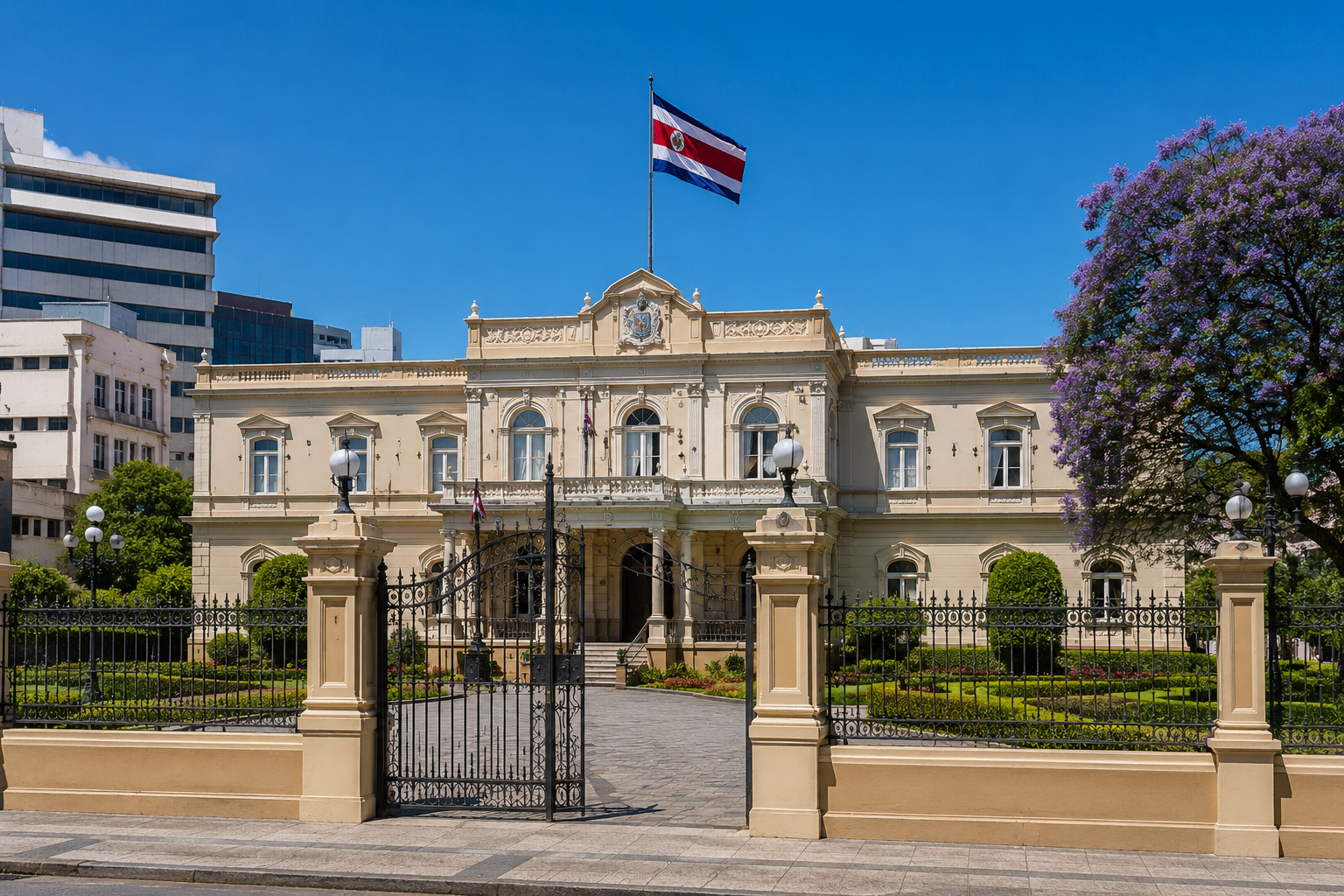
Laura Fernández was sworn in as Costa Rica’s president Friday, beginning a new administration shaped by public concern over crime and by the continued formal role of outgoing President Rodrigo Chaves. Editorial illustration by TheDailyGlobe.
Key Facts
- Laura Fernández was sworn in Friday as president of Costa Rica.
- She succeeds Rodrigo Chaves and is Costa Rica’s second female president.
- Chaves is serving in the new government as minister of the presidency and minister of finance.
- Fernández campaigned on continuity and a tougher approach to crime.
- Public security is expected to be one of the central issues early in her term.
Laura Fernández was sworn in Friday as president of Costa Rica, beginning a new term at a moment when the country is focused on crime, political continuity, and the role her predecessor will continue to play inside the new government.
Fernández succeeds Rodrigo Chaves and enters office as Costa Rica’s second female president. Her administration is expected to continue much of Chaves’ political direction, especially on public security. That promise of continuity helped define the campaign and will likely shape how her first months in office are judged.
The most closely watched part of the transition is Chaves’ continued place in government. He is serving in two senior posts: minister of the presidency and minister of finance. Those roles give the outgoing president a major formal position in Fernández’s administration and make the transition look less like a full break from the previous government.
Why This Matters
Costa Rica has long been viewed as one of Central America’s more stable democracies. It abolished its military decades ago, built respected public institutions, and developed a reputation as a country where civilian government and rule of law carried unusual weight in the region.
That reputation is now being tested by public concern over crime and drug trafficking. Many voters want a stronger response from the government. At the same time, Costa Rica’s identity is tied closely to democratic norms and institutional restraint.
Fernández now has to balance those pressures. Her government will be expected to act firmly on security while showing that tougher policy does not come at the expense of civil liberties, courts, press freedom, or public trust.
The Chaves Factor
Chaves remains one of the central figures in Costa Rican politics. His formal role inside the new government means he will not be watching from the sidelines. Supporters may see that as useful continuity. Critics may see it as a sign that Fernández will have limited independence from the leader she succeeds.
That question matters because leadership transitions are about more than who takes the oath of office. They also show how power is handed over, shared, or preserved. In this case, the new president begins her term with the former president still close to the center of decision-making.
The arrangement will likely shape public expectations. If the government moves smoothly, supporters can argue that continuity was part of the mandate. If controversy grows, opponents may argue that the administration never created enough distance from the previous one.
Crime and Public Security
Public security is likely to define the early part of Fernández’s presidency. Costa Rica has faced growing concern over violence and organized crime, and voters have shown more interest in leaders who promise a tougher response.
The challenge is that security policy can move quickly from popular to controversial. Stronger policing, tougher criminal penalties, and closer cooperation with foreign governments may be welcomed by people who feel unsafe. But those policies can also raise questions about oversight, rights, and the long-term health of democratic institutions.
For Fernández, the practical test will be whether her government can improve public safety while keeping Costa Rica’s democratic reputation intact. That means results will matter, but so will process.
What To Watch
The first major test will be how the new government turns campaign language into policy. Voters will be watching for changes in policing, prison policy, border and port security, drug enforcement, and cooperation with international partners.
The second test will be the relationship between Fernández and Chaves. His cabinet roles give him a clear place in the administration, but they also make it harder to separate the new government from the old one. That may be an advantage if voters want continuity. It may become a liability if voters expect a president to set her own course.
The third test will be institutional. Costa Rica’s political system has long depended on public trust in civilian government, courts, and democratic checks. A security-focused presidency will have to show that those institutions remain strong even as the government promises tougher action.
The Bigger Picture
Costa Rica’s transition fits a wider regional pattern. Across parts of Latin America, frustration with crime has created space for leaders who promise faster, harder security policies. The pressure from voters is real. So are the risks if governments treat institutional limits as obstacles instead of safeguards.
Fernández begins with a clear political message: continue the direction voters chose and put security near the center of the agenda. The harder task is proving that a tougher approach can work without weakening the democratic habits that have made Costa Rica stand apart.
For now, the new administration starts with both momentum and scrutiny. Fernández has taken office, Chaves remains inside the government, and Costa Rica’s next chapter will be judged by whether it can deliver safety while preserving the trust that has long been one of the country’s strongest assets.
Reporting note: Reporting draws on Associated Press coverage, public inauguration reporting, cabinet appointment details, election background materials, and reviewed regional context. This article was produced with AI-assisted research and reviewed by an editor before publication.