Honda Airbag Recall Gives Drivers a Practical Reason to Check Their VIN
A Honda and Acura recall tied to a passenger-seat sensor shows why drivers should check for open safety recalls before summer trips.
Save Article
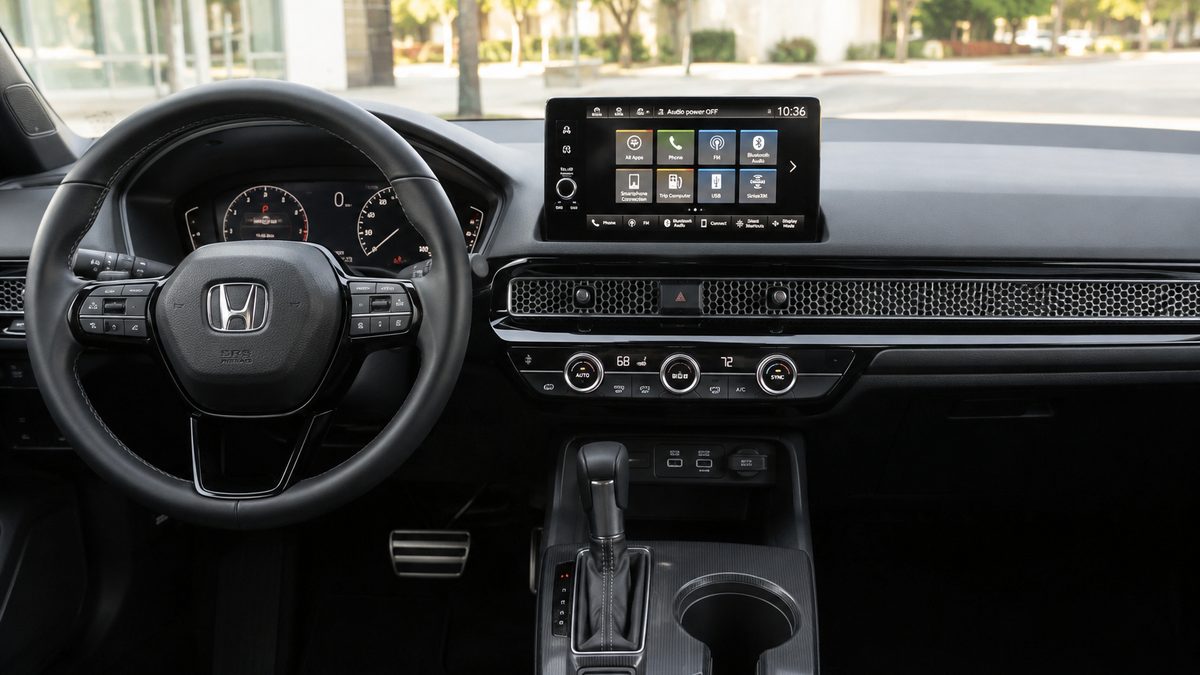
A VIN check can show whether a vehicle has an open safety recall before a family road trip. Editorial illustration by TheDailyGlobe.
Key Facts
- Honda recalled about 98,892 vehicles over a front passenger seat weight sensor issue.
- NHTSA recall documents say a capacitor in the sensor circuit board may crack and short-circuit from humidity exposure.
- The recall covers specific Honda and Acura vehicles, not every Honda or Acura model.
- Honda said dealers will replace the affected seat weight sensor with a non-defective part.
- Owner notification letters are scheduled for July 6, 2026, according to the recall schedule.
Before a long summer drive, many families check the tires, fill the tank, pack snacks and make sure the phone charger is in the console. A new Honda and Acura recall is a reminder that one more check belongs on that list: whether the vehicle has an open safety recall.
Honda has recalled about 98,892 vehicles over a front passenger seat weight sensor issue, according to a National Highway Traffic Safety Administration recall report. The defect involves a component in the sensor circuit board that may crack and short-circuit after exposure to environmental humidity. In a crash, the problem could allow the front passenger frontal and knee airbags to deploy when they should be suppressed for certain occupants, increasing injury risk.
Why This Recall Matters
The issue is technical, but the safety concern is easy to understand. Modern vehicles use sensors to help determine whether an airbag should deploy for the person sitting in a seat. If the front passenger seat weight sensor does not work as intended, the vehicle may make the wrong airbag decision during a crash.
The NHTSA report says the front passenger frontal and knee airbags may deploy even when deployment should be suppressed for an infant in a child seat, a child, or a person smaller than the federal adult female reference size. That is why this is not just a dashboard-light issue. It is a passenger-safety issue.
The report also says the SRS warning light may be illuminated, and the passenger airbag indicator may remain off. Drivers should not assume a vehicle is unaffected simply because it seems to drive normally. Many recalls involve parts or systems that are not obvious in ordinary driving.
Which Vehicles Are In The Recall
The recall applies to specific vehicles across several Honda and Acura model lines. The NHTSA filing lists affected Honda Accord, Accord Hybrid, Civic, Civic Coupe, Civic Hatchback, Civic Type R, CR-V, CR-V Hybrid, Fit, HR-V, Insight, Odyssey, Passport, Pilot and Ridgeline vehicles, along with Acura MDX, RDX and TLX vehicles.
That list should not be read as meaning every vehicle with one of those model names is affected. Recall eligibility depends on the specific vehicle, production details and VIN. Two vehicles with the same model name may not have the same recall status.
That is why the VIN matters more than a general model list. A driver may own a Honda Civic or Acura MDX and still need to check whether that specific vehicle is included. The safest next step is to use the VIN lookup rather than guessing based on make, model or year alone.
How Drivers Can Check
NHTSA provides a recall lookup tool that lets drivers search by VIN or license plate. The agency says a VIN search can show whether a specific vehicle needs to be repaired as part of a recall. It also explains that VINs are 17-character vehicle identification numbers that can usually be found on the lower left of the windshield, on a registration card, on an insurance card, or inside the vehicle door area.
The agency also notes an important limit: some recently announced safety recalls may not immediately show every VIN because the information is added over time. For drivers, that means one check is useful, but checking again later can also make sense, especially when a recall has just been announced or owner letters have not yet arrived.
For this recall, the NHTSA report says registered owners of affected vehicles will be contacted by mail and asked to take their vehicle to an authorized Honda or Acura dealer. Dealers are expected to replace the seat weight sensor with a non-defective part.
What Remains Unclear
The recall schedule says owner notification is planned for July 6, 2026. What is not clear yet is how quickly all affected vehicles will be repaired after those notices go out, how quickly owners will schedule appointments, or whether every affected driver will see and act on the notice before heavy summer travel.
Honda reported 228 warranty claims and no reports of injury or death related to the issue in the United States as of May 14, 2026. That does not remove the need for repair. Recalls are issued because a safety defect has been identified, not because every affected vehicle has already caused harm.
The practical takeaway is simple. If you own a Honda or Acura, especially one from the affected model lines, do not wait for a letter if you are preparing for a road trip. Check the VIN through NHTSA or with a dealer, watch for owner mail, and follow the repair instructions if your vehicle is included.
Reporting note: Reporting draws on National Highway Traffic Safety Administration recall documents, federal recall lookup guidance, automotive reporting, and reviewed public-safety context. This article was produced with AI-assisted research and reviewed by an editor before publication.