America’s Aging Dams Are Creating New Challenges for Small Communities
Many of the nation's dams were built decades ago and continue to serve important purposes. As those structures age, local governments are facing difficult decisions about maintenance, safety, and funding.
Save Article
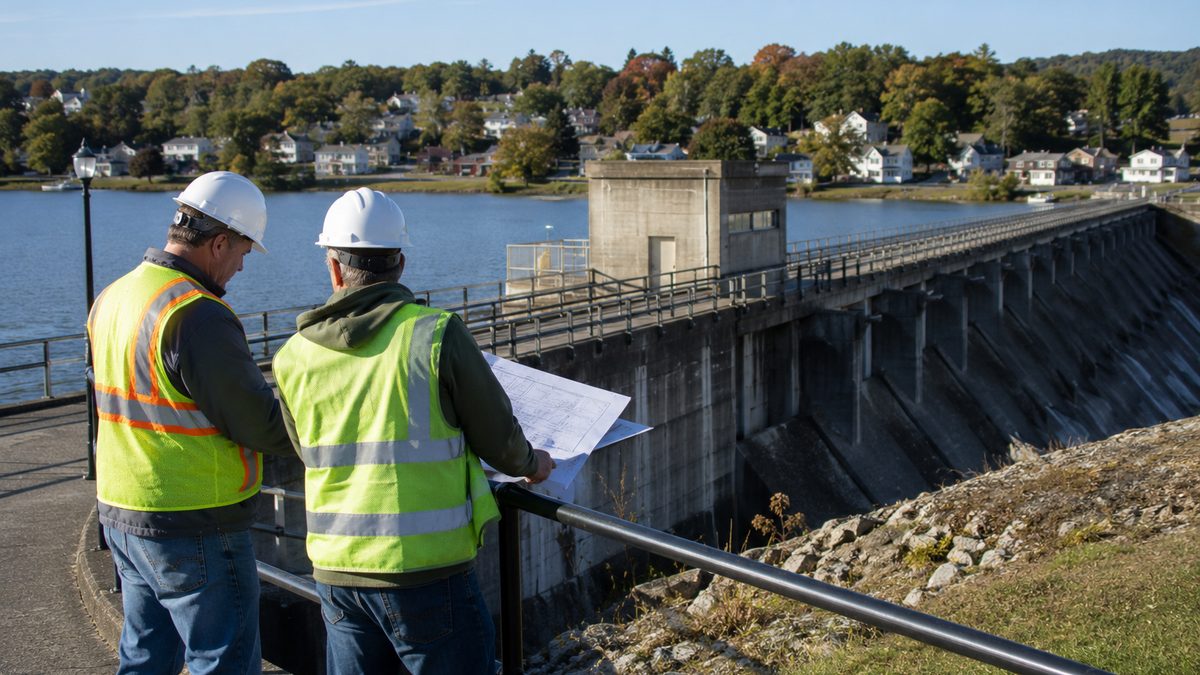
Many communities depend on dams built decades ago for flood control, water storage, recreation, and other local needs. Editorial illustration by TheDailyGlobe.
Key Facts
- Many dams in the United States were built decades ago and continue operating today.
- Federal and state agencies track dam conditions and safety risks.
- Dams are classified based on potential consequences if a failure occurs.
- Repair and maintenance projects can cost millions of dollars.
- Local governments often face difficult funding decisions when upgrades are needed.
Most Americans drive past dams without giving them much thought. They sit quietly behind lakes, reservoirs, and rivers, performing jobs that range from flood control to water storage and recreation. In many communities, these structures have become part of the landscape.
The challenge is that many of them are getting old. Across the country, local governments, utility districts, and private owners are confronting the reality that infrastructure built decades ago requires ongoing repairs, upgrades, and monitoring. For small communities in particular, those costs can be difficult to manage.
Why Dam Age Matters
Like roads, bridges, and water systems, dams are not designed to last forever without maintenance. Concrete can deteriorate, mechanical equipment can wear out, and engineering standards may change over time as experts learn more about flood risks and structural performance.
An aging dam is not automatically unsafe. Many older structures continue to operate effectively because owners invest in inspections, repairs, and upgrades. The concern is that deferred maintenance can gradually increase risks if problems are not addressed.
Engineers typically evaluate factors such as structural condition, water flow capacity, spillway performance, and surrounding environmental conditions when determining whether a dam requires attention.
How Dams Are Classified
One point that often causes confusion is how dams are classified. A high-hazard classification does not necessarily mean a dam is in poor condition. Instead, it generally refers to the potential consequences if the structure were to fail.
For example, a dam located upstream from homes, businesses, schools, or transportation routes may receive a higher hazard classification because more people and property could be affected in an emergency.
A lower-hazard classification may apply to structures where a failure would cause fewer impacts to populated areas. The classification system helps agencies prioritize inspections, emergency planning, and maintenance efforts.
Why Repairs Can Be Expensive
Repairing a dam often involves much more than patching visible damage. Projects may require engineering studies, environmental reviews, permitting, construction work, equipment replacement, and long-term monitoring.
Even relatively modest improvements can carry substantial costs. Larger rehabilitation projects may require years of planning and funding before construction begins. Small communities frequently struggle because they must balance infrastructure spending against other needs such as roads, schools, public safety services, and water systems.
Some communities pursue grants, loans, or state assistance programs to help cover expenses. Others face difficult decisions about whether to repair, modify, or in some cases remove aging structures that no longer serve their original purpose.
What Agencies Monitor
Dam oversight involves multiple levels of government. Federal agencies maintain databases and provide technical support, while state dam safety programs often conduct inspections, review engineering plans, and oversee compliance with safety requirements.
Inspection schedules can vary depending on a dam's classification, condition, and ownership. Agencies use these reviews to identify maintenance needs and evaluate whether additional safety measures are necessary.
The goal is not simply to respond when problems appear. Regular inspections are intended to identify concerns before they become larger and more expensive issues.
The Risks of Delaying Maintenance
Infrastructure funding decisions often involve tradeoffs. When budgets are tight, communities may postpone projects viewed as less urgent than immediate public needs. The challenge is that delaying maintenance can sometimes increase future costs.
Small issues that could be addressed through routine repairs may become larger engineering problems if left unresolved for extended periods. In some cases, the eventual cost of rehabilitation can exceed what earlier preventive work would have required.
Officials and engineers therefore focus not only on current conditions but also on long-term planning. The question is often less about whether maintenance is needed and more about when it can realistically be funded and completed.
What Communities Should Watch Next
For residents, the most important developments are often local rather than national. Public meetings, engineering studies, inspection reports, and funding proposals frequently provide the clearest picture of infrastructure conditions in a specific community.
The broader story is not one of imminent failure across the nation's dam system. Instead, it is a reminder that infrastructure requires ongoing attention long after construction crews leave the site. As dams continue to age, communities will face choices about maintenance, safety, spending priorities, and how much they are willing to invest in structures that are often noticed only when something goes wrong.
Reporting note: Reporting draws on federal infrastructure records, state agency materials, public safety information, engineering assessments, and reviewed background materials. This article was produced with AI-assisted research and reviewed by an editor before publication.