Grocery Prices Are Still Rising, but Not Everything Is Moving the Same Way
New USDA and BLS data show food-at-home costs are still rising, but the pressure is uneven across grocery categories.
Save Article
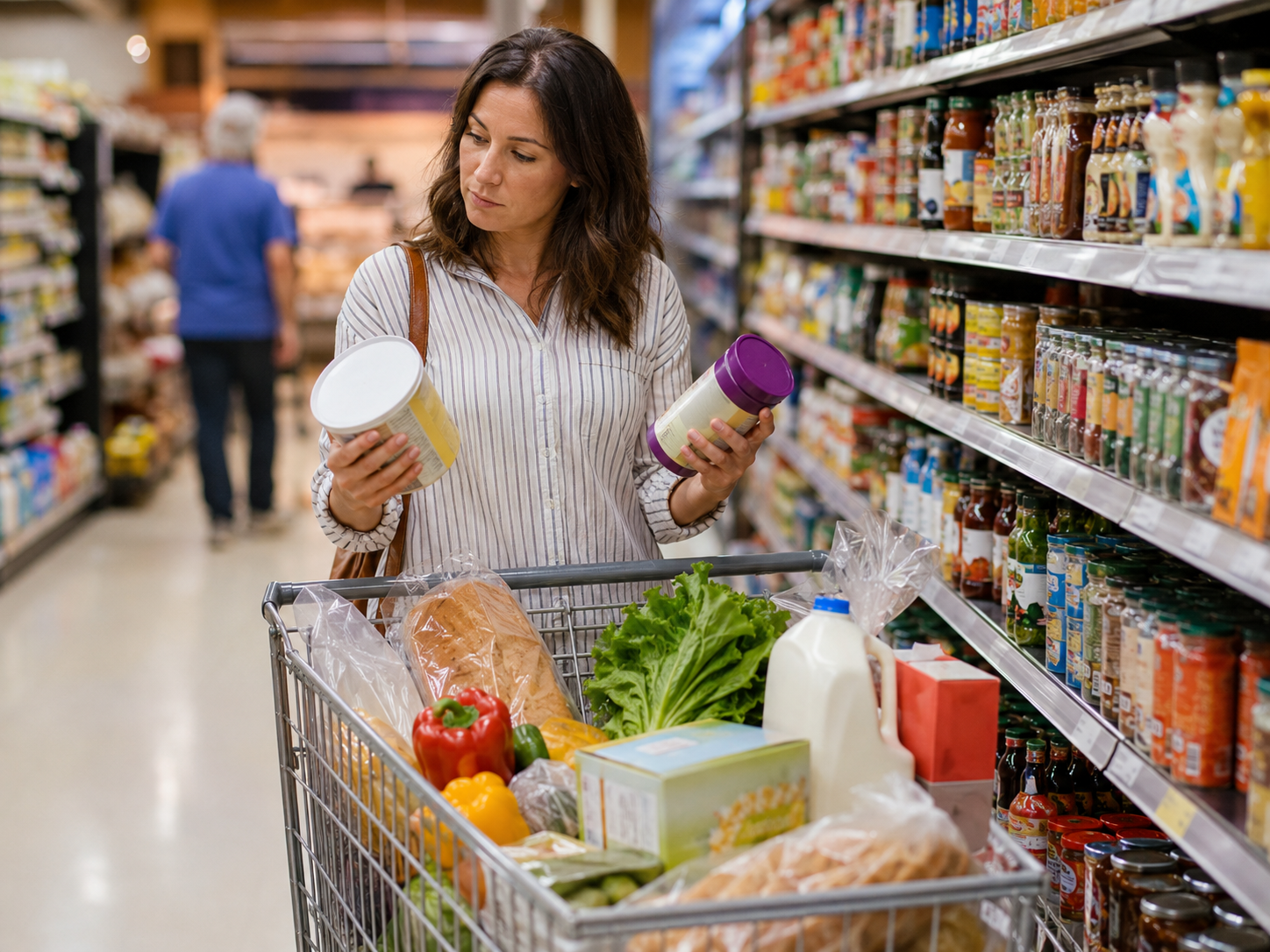
Food-at-home prices remain a pressure point for many household budgets. Editorial illustration by TheDailyGlobe.
Key Facts
- USDA ERS forecast food-at-home prices to rise 3.2% in 2026.
- USDA ERS said food-at-home prices rose 0.7% from March to April and were 2.9% higher than April 2025.
- BLS reported food prices rose 0.5% in April after being unchanged in March.
- BLS reported the food-at-home index increased 0.7% in April, with five of six major grocery store food groups increasing.
- USDA ERS said 9 of 15 food-at-home categories are predicted to grow faster than their 20-year historical average rate.
Grocery prices are still moving higher, but the pressure is not landing evenly across the cart.
The USDA Economic Research Service forecast food-at-home prices to rise 3.2% in 2026. The agency also said food-at-home prices rose 0.7% from March to April and were 2.9% higher than they were in April 2025.
That helps explain why many families still feel squeezed at the checkout lane even when broader inflation headlines sound mixed. A grocery bill is not one number. It is meat, eggs, cereal, produce, dairy, snacks, frozen food and household habits all moving at different speeds.
Why the Checkout Lane Still Feels Uneven
Food inflation can be confusing because people experience it item by item, not as a monthly index.
A family may see one staple settle down while another jumps. A shopper may switch brands, buy fewer snacks, avoid a higher-priced cut of meat or decide that a weekly grocery run now needs a tighter list. Those choices do not always show up clearly in a broad inflation headline.
The BLS April report helps explain the uneven feeling. The agency reported that food prices rose 0.5% in April after being unchanged in March. It also reported that the food-at-home index rose 0.7% in April, with five of six major grocery store food groups increasing.
That means the pressure was not limited to one isolated item. At the same time, it does not mean every grocery category moved the same way or will keep moving at the same pace.
Forecasts Are Warnings, Not Guarantees
USDA ERS forecast food-at-home prices to rise 3.2% in 2026, and said 9 of 15 food-at-home categories are predicted to grow faster than their 20-year historical average rate.
That forecast is useful because it tells readers that grocery pressure is not expected to disappear quickly. But it should not be read as a promise about every receipt for the rest of the year. Food prices can change with weather, supply conditions, transportation costs, fuel costs, tariffs, disease outbreaks, consumer demand and other pressures.
The available source material does not show whether May and summer food prices will continue the April trend. It also does not confirm how tariffs, fuel costs, weather or supply-chain issues will affect specific grocery categories in the months ahead.
What This Means for Household Budgets
For lower- and middle-income households, grocery inflation can feel especially sharp because food is a regular expense and harder to postpone than many other purchases.
A family can delay a new appliance or skip a vacation, but it still has to buy food. When prices rise across several grocery categories, the pressure shows up in smaller carts, cheaper substitutes, more careful meal planning or more stress around payday.
The source material does not show whether wage growth will offset rising food costs for lower- and middle-income households. That is one of the most important practical questions. A price increase feels different when pay is rising fast enough to absorb it. It feels heavier when wages, rent, utilities, insurance and debt payments are already fighting for the same paycheck.
What the Numbers Do Not Tell Us Yet
The latest data gives a clear snapshot, but not the full path ahead.
USDA and BLS data show grocery prices rose in April and are forecast to rise for the year. FRED and BLS food-at-home data provide a longer view of how the index has moved. What remains unclear is whether the next few months will bring the same kind of pressure, whether some categories will cool, and whether household paychecks will keep up.
That is why the practical takeaway should be careful. Grocery prices are still rising. The increases are not evenly spread. And for many families, the real story is not a national inflation debate. It is whether the same weekly list costs more than it did last month, and what has to be cut when it does.
Reporting note: Reporting draws on official economic data, federal food-price forecasts, inflation records, consumer price data, and reviewed background materials. This article was produced with AI-assisted research and reviewed by an editor before publication.