Farm-to-School Grants Put Local Food and School Meals Back in Focus
USDA’s latest farm-to-school grants will support projects connecting school meals, agriculture education and local food systems, though local results will vary.
Save Article
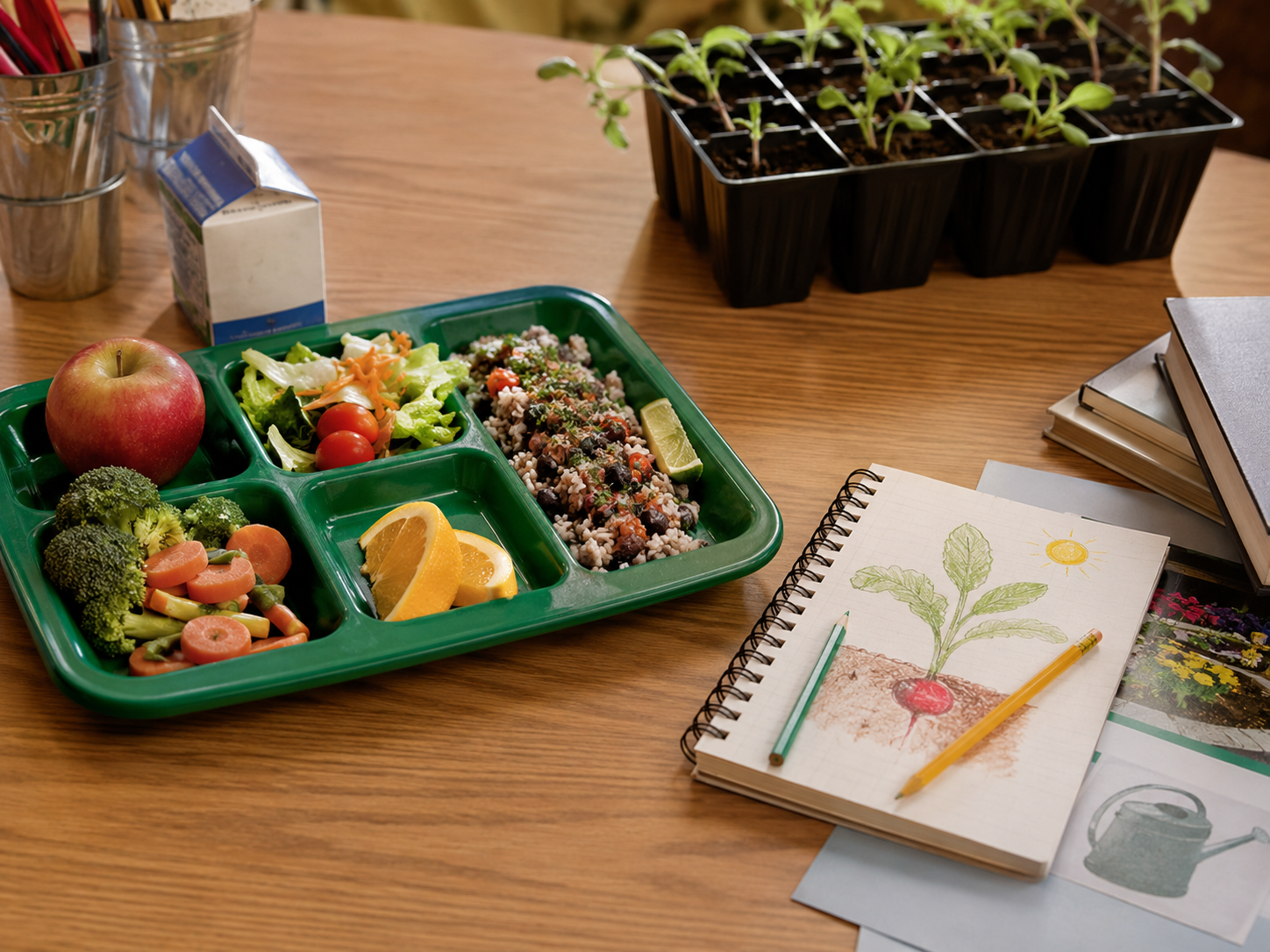
Farm-to-school programs connect school meals, agriculture education, and local food systems. Editorial illustration by TheDailyGlobe.
Key Facts
- USDA announced the first FY 2026 Farm to School Grant cohort on April 16, 2026.
- USDA says nearly $20 million will support projects bringing local food to schoolchildren while expanding opportunities for farmers and producers.
- USDA’s FY 2026 awardee list identifies the recipients.
- The program supports local sourcing, agriculture education and child nutrition program connections.
- How quickly individual grants change meals or classroom programming remains unclear.
In a school cafeteria, farm-to-school work can look simple: a tray with local fruit, a vegetable from a nearby grower, or a classroom lesson that connects lunch to the soil it came from. Behind that small moment is a chain of grants, vendors, school nutrition staff, farmers and local planning.
USDA’s Food and Nutrition Service announced the first FY 2026 Farm to School Grant cohort on April 16, saying nearly $20 million will support projects that bring local food to schoolchildren while expanding opportunities for farmers and producers.
The awards are not a guarantee that every cafeteria will change immediately. They are project grants, meaning local results will depend on the recipients, the type of work funded, school purchasing systems, farmer capacity and how quickly each project is carried out.
What the Grants Support
The Farm to School Grant Program is meant to connect children with local food and food education through schools and child nutrition programs. That can include local food purchasing, agriculture education, school gardens, training, planning and partnerships between schools and producers.
For school nutrition teams, grants can help with the practical work that makes local sourcing possible. A district may need to identify suppliers, adjust menus, train staff, create food safety processes, coordinate deliveries or build relationships with farmers who can meet school needs.
For farmers and producers, the program can open a path into school markets. Selling to schools is not always simple. Schools need reliable supply, predictable pricing, approved vendors and products that fit cafeteria operations. Grant-funded projects can help build those connections.
Why This Matters for Families and Schools
School meals reach children where they already are. When farm-to-school projects work well, they can make local food more visible in cafeterias and help students understand where food comes from. That does not mean every meal becomes local or every school sees the same changes, but it can make food policy feel less distant.
For families, the issue is not only nutrition. It is also whether schools have the resources and flexibility to build meal programs that fit their communities. A rural district, a large city school system and a child-care program may all face different challenges when trying to connect local food with daily meals.
For educators, farm-to-school projects can also support lessons outside the cafeteria. School gardens, farm visits, cooking lessons and agriculture education can give students a more concrete understanding of food, science, local economies and health.
The Local Food Connection
The program also matters to local agriculture. USDA says the grants are intended to support schoolchildren while expanding opportunities for farmers and producers. That connection is important because school food purchasing can become a steady local market when districts and producers are able to make the logistics work.
Still, grants should not be confused with guaranteed food purchases across the country. A grant may fund planning, training, equipment, outreach or a specific local project. The effect on actual cafeteria trays will vary by community.
That difference matters for expectations. A school district receiving support may need months to build supplier relationships or adjust procurement. A nonprofit working with schools may focus first on education or coordination. A farmer may benefit only if the project creates a workable purchasing path.
What Remains Unclear
The biggest open question is what these grants will produce at the local level. USDA’s awardee list identifies recipients, but project-level results will take time to measure.
It is also unclear how much local-food purchasing will increase in each community. Some projects may produce visible cafeteria changes. Others may focus on planning, education, training or building partnerships that show results later.
Access is another question. Farm-to-school advocates have raised concerns in recent program cycles about whether application changes or grant design can make it harder for smaller, newer or less-resourced applicants to compete. That issue will be worth watching as future grant rounds develop.
What to Watch Next
The next phase will happen locally. Families and communities should watch how school districts, nonprofits, farmers and child nutrition programs use the awards, whether projects lead to new food purchasing, and whether classroom or garden programs expand.
The broader lesson is straightforward: school meal policy is not only written in Washington. It shows up through local vendors, cafeteria staff, farmers, teachers and students. USDA’s latest grants put that connection back in focus, but the real measure will be what changes in schools and communities over time.
Reporting note: Reporting draws on USDA Food and Nutrition Service materials, federal grant records, awardee lists, farm-to-school program analysis, and reviewed background materials. This article was produced with AI-assisted research and reviewed by an editor before publication.