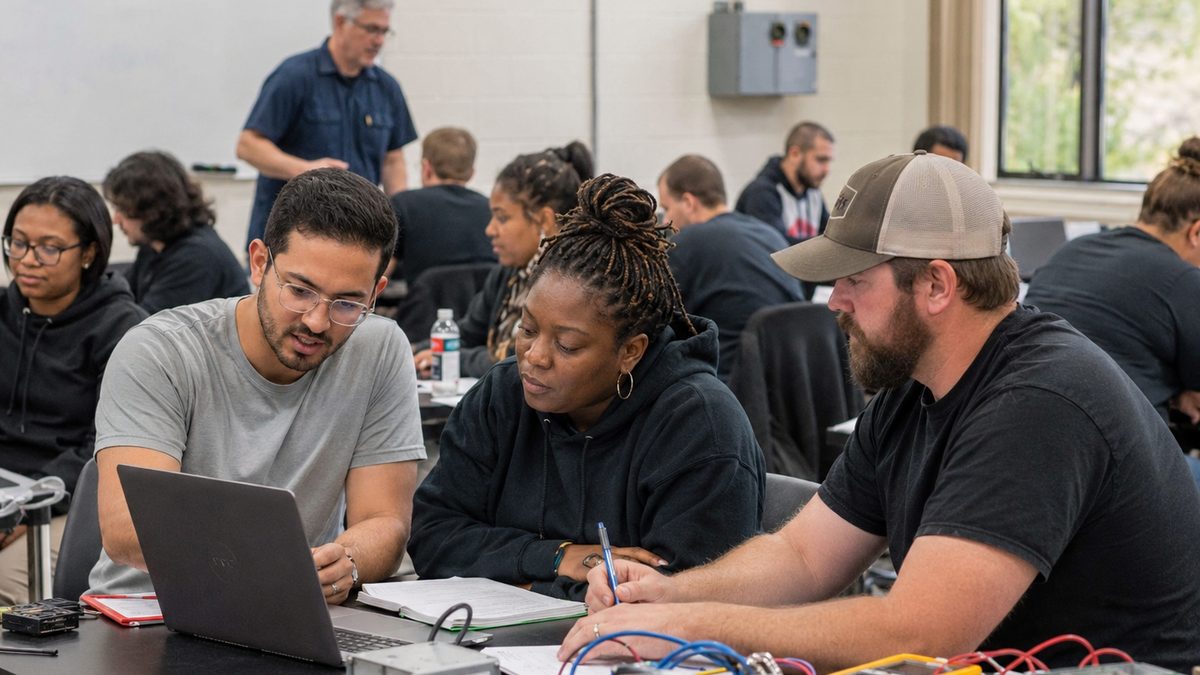
Community Colleges Are Quietly Becoming One of the Fastest-Growing Paths to High-Paying Jobs
As employers search for skilled workers and students look for lower-cost career paths, many community colleges are expanding programs tied directly to workforce demand.
Save Article
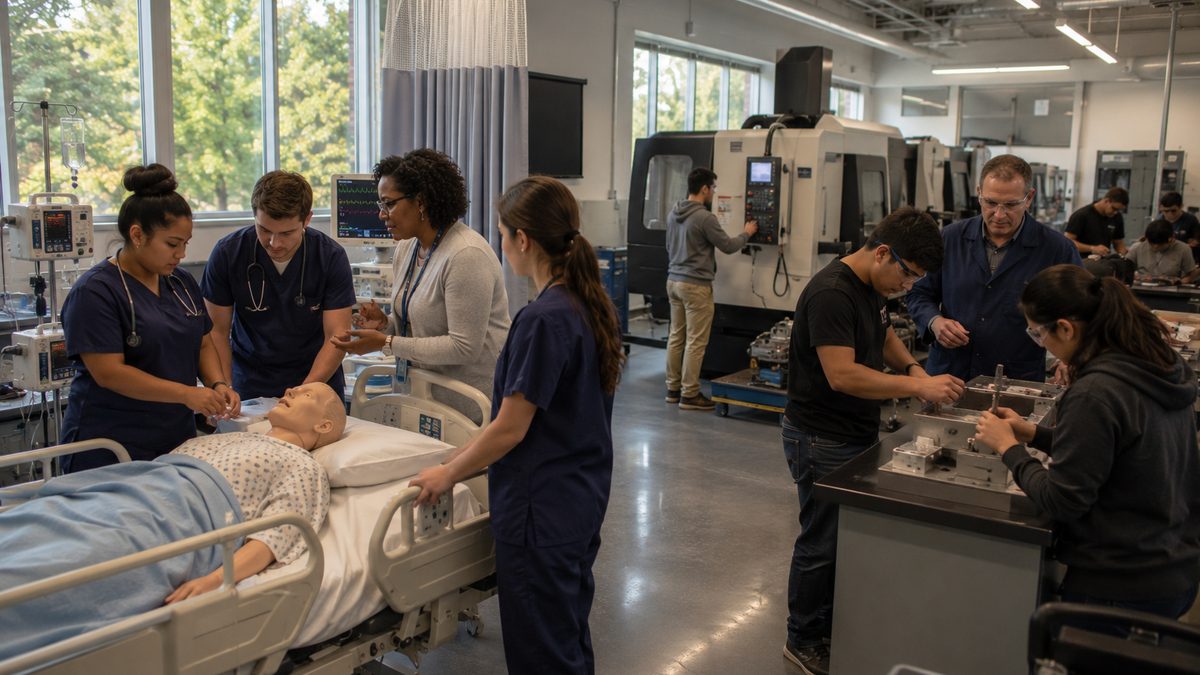
Many community colleges are expanding career-focused programs tied to local workforce needs and employer demand. Editorial illustration by TheDailyGlobe.
Key Facts
- Many community colleges have expanded career-focused workforce programs.
- Employers are partnering with colleges to help address labor shortages.
- Healthcare, manufacturing, technology, and skilled trades remain major areas of demand.
- Community college programs generally cost less than traditional four-year degrees.
- Student outcomes vary significantly depending on the field of study, local economy, and program quality.
For decades, the standard advice given to many high school students was simple: attend a four-year college, earn a degree, and build a career from there. That path still works for many people. But a growing number of students are taking a different route, one that often costs less, takes less time, and is increasingly connected to jobs employers are struggling to fill.
Community colleges are seeing renewed attention as workforce shortages continue in fields ranging from healthcare and advanced manufacturing to information technology and skilled trades. In many regions, these schools are becoming an important bridge between employers looking for trained workers and students looking for practical career opportunities.
Why Enrollment Trends Are Drawing Attention
Community colleges have experienced changing enrollment patterns over the past several years. While some institutions faced declines during and after the pandemic, many schools have recently reported increased interest in career-focused programs that lead directly to employment opportunities.
Part of the shift reflects changing economic realities. Students and families have become more sensitive to education costs, while employers continue searching for workers with specific technical skills. Community colleges sit at the intersection of those two trends.
Unlike many traditional academic programs, workforce-oriented community college tracks are often designed around local labor market needs. That means programs can evolve as employer demand changes within a region.
The Rise of Employer Partnerships
One of the biggest changes has been the growth of partnerships between community colleges and local employers. Hospitals, manufacturers, technology firms, utilities, and other businesses increasingly work with colleges to help shape training programs.
In some cases, employers provide equipment, internship opportunities, curriculum guidance, or direct hiring pathways. The goal is to ensure graduates leave with skills that match current workforce needs rather than training for positions that may have limited demand.
For employers, these partnerships can help address persistent hiring challenges. For students, they can provide clearer connections between classroom instruction and available jobs.
Fields Seeing Strong Demand
Healthcare remains one of the most visible areas of growth. Many community colleges offer programs that prepare students for careers in nursing, medical imaging, respiratory therapy, and other healthcare occupations that continue facing staffing shortages in parts of the country.
Advanced manufacturing has also become a major focus. Modern manufacturing facilities often require workers trained in automation, precision machining, robotics, and industrial maintenance. Those jobs can differ significantly from outdated stereotypes about factory work.
Technology-related programs are expanding as well, including cybersecurity, networking, software support, and data-focused fields. Skilled trades such as electrical work, welding, plumbing, and HVAC continue attracting attention in regions experiencing workforce shortages.
What Student Outcomes Can and Cannot Tell Us
Stories about successful graduates can make community college pathways appear straightforward. The reality is more complicated. Outcomes vary widely based on the program, local job market, student preparation, and individual circumstances.
Some programs lead to strong employment opportunities and competitive wages. Others may produce more modest earnings or require additional education and certifications before students reach their career goals.
That variation makes research important. Students evaluating programs often benefit from examining graduation rates, job placement information, credential requirements, transfer opportunities, and local employer demand before enrolling.
Why Communities Are Paying Attention
Community colleges play an economic role that extends beyond individual students. Local employers often depend on them to help develop future workers. Regional economic development efforts frequently include community colleges because workforce availability can influence whether businesses expand, relocate, or invest in an area.
For communities facing labor shortages, successful workforce programs can help fill critical positions while creating opportunities for residents. That connection has helped move community colleges into a larger conversation about economic growth and workforce development.
What Readers Should Watch Next
The biggest question is whether current momentum continues. Demand for skilled workers remains strong in many industries, but labor markets can change over time. Programs that align closely with employer needs today may need adjustments in the future.
Students considering career training options will likely continue comparing costs, completion times, and employment outcomes across different education pathways. Community colleges are unlikely to replace four-year institutions, but they are becoming an increasingly important option for people seeking practical, affordable routes into growing fields.
The broader lesson is not that one educational path works for everyone. It is that the range of viable career options is expanding. For many students and workers, community colleges are playing a larger role in that conversation than they did a generation ago.
Reporting note: Reporting draws on education enrollment data, workforce development materials, employer partnership programs, public education records, and reviewed background materials. This article was produced with AI-assisted research and reviewed by an editor before publication.