CDC Expands Ebola Screening at Major U.S. Airports
Enhanced screening now includes Atlanta and Washington-Dulles as officials monitor travelers connected to Ebola outbreaks in East and Central Africa.
Save Article
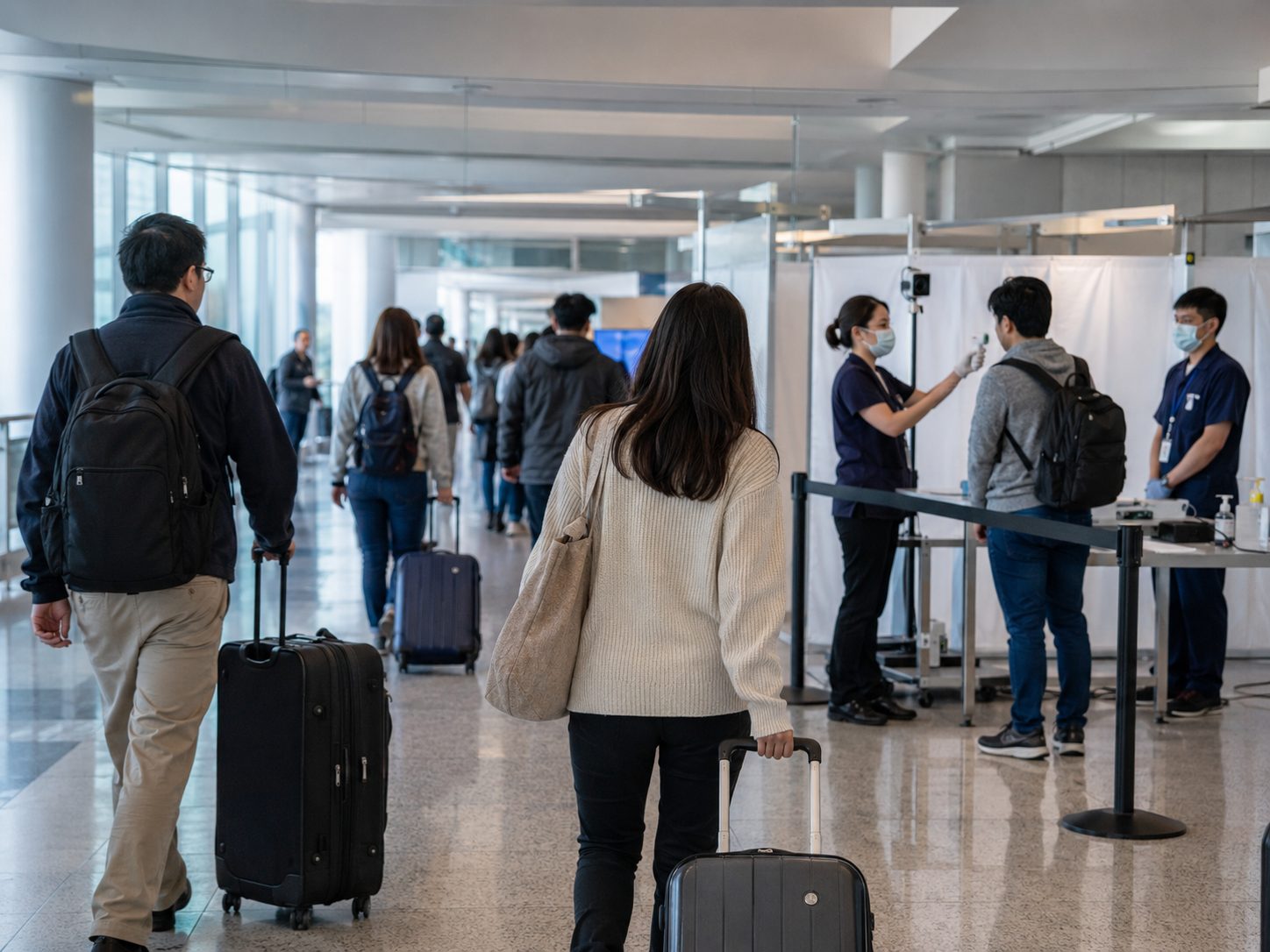
Public health screening can change travel routes while officials monitor risks from outbreaks abroad. Editorial illustration by TheDailyGlobe.
Some international travelers may now see additional health screening at two major U.S. airports as federal officials monitor Ebola outbreaks in East and Central Africa.
The CDC expanded enhanced Ebola entry screening to Hartsfield-Jackson Atlanta International Airport effective May 22 at 11:59 p.m. Eastern. Screening had already begun at Washington-Dulles International Airport at 11:59 p.m. Eastern on May 20.
Who the Screening Applies To
The screening is focused on affected travelers connected to the Democratic Republic of the Congo, Uganda or South Sudan. Federal arrival restrictions direct certain flights carrying people recently present in those countries to designated U.S. airports where public-health resources are concentrated.
CDC traveler guidance says U.S. citizens and nationals may still enter the United States, but those covered by the travel rules will undergo enhanced public-health screening. The State Department has also told Americans who were in DRC, Uganda or South Sudan within 21 days of arrival in the United States that they must enter through designated airports for enhanced screening.
Why Officials Are Using Airports
CDC describes the airport checks as one layer in a broader public-health response. That approach also includes overseas exit screening, airline illness reporting and post-arrival public-health monitoring.
The 21-day period matters because CDC guidance tells affected travelers to monitor for Ebola symptoms for 21 days after leaving affected countries. The agency’s Health Alert Network advisory said the risk of spread to the United States was considered low at the time of the advisory.
What Travelers Should Know
The change does not mean Ebola is spreading in the United States. CDC said in the cited screening notice that no suspected, probable or confirmed Ebola cases had been reported in the U.S.
For most travelers, the practical issue is routing and possible screening steps, not a broad change to ordinary domestic travel. Travelers affected by the rules should check current federal guidance, including CBP’s designated airport list, because routing requirements can change.
What Remains Unclear
Several details are still unresolved. Officials have not said how long the enhanced screening measures will remain in effect, whether more U.S. airports will be added or removed, or how many travelers are expected to be routed through each designated airport.
Reporting from ABC News said the CDC sought volunteer staff support for airport screenings. It remains unclear whether staffing needs will affect CDC operations beyond the screening effort. The next thing to watch is whether CDC updates airport guidance as outbreak conditions abroad change.
Reporting note: Reporting draws on CDC statements, federal travel guidance, public-health alerts, airport reporting, national reporting, and reviewed background materials. This article was produced with AI-assisted research and reviewed by an editor before publication.