CDC Expands Ebola Airport Screening as U.S. Tries to Keep Risk Low
CDC has expanded enhanced Ebola screening from Washington-Dulles to Atlanta, a precaution tied to outbreaks abroad, not evidence of a U.S. outbreak.
Save Article
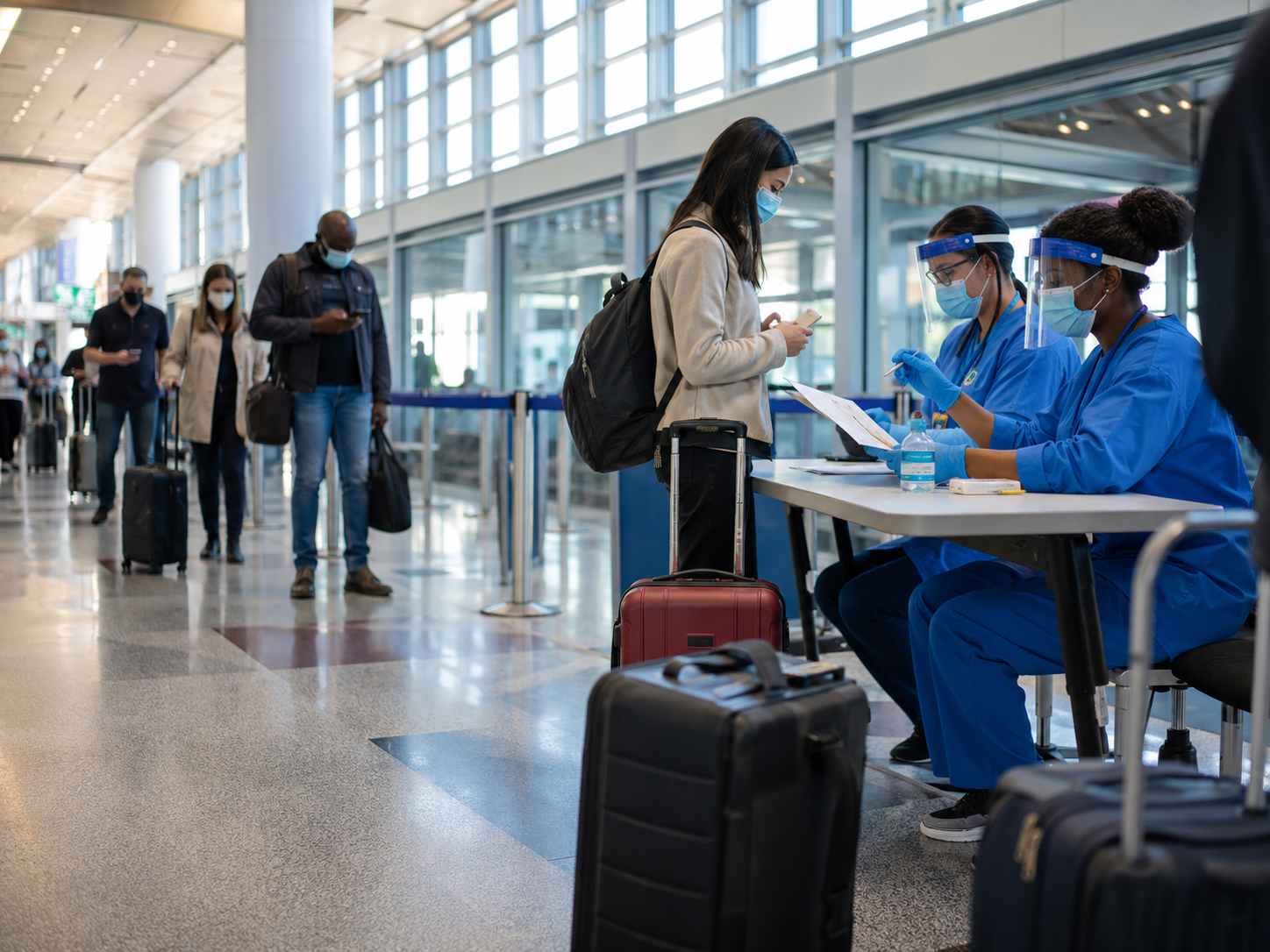
CDC has expanded enhanced Ebola screening from Washington-Dulles to Atlanta, a precaution tied to outbreaks abroad, not evidence of a U.S. outbreak. Editorial illustration by TheDailyGlobe.
Key Facts
- CDC announced enhanced Ebola screening at Washington-Dulles beginning May 20, 2026.
- CDC later announced screening expanded to Hartsfield-Jackson Atlanta International Airport.
- CDC says the measures are part of a layered approach that includes overseas exit screening, airline illness reporting and post-arrival monitoring.
- CDC says the risk of Ebola spreading to the United States is low at this time.
- The State Department said Americans who were in DRC, Uganda or South Sudan within 21 days of arrival must enter through designated airports for enhanced screening.
The Centers for Disease Control and Prevention has expanded enhanced Ebola airport screening to Atlanta, adding another U.S. port of entry to a precautionary response tied to outbreaks abroad.
CDC announced enhanced Ebola screening at Washington-Dulles International Airport beginning May 20, 2026. The agency later said the screening expanded to Hartsfield-Jackson Atlanta International Airport.
For travelers and families, the important point is restraint: this is not evidence that Ebola is spreading inside the United States. CDC says the risk of Ebola spreading to the United States is low at this time. The screening is meant to reduce risk by identifying travelers who may need monitoring after arriving from affected areas.
What Changed at U.S. Airports
The airport screening change affects travelers who have recently been in countries connected to the outbreak response. The State Department said Americans who were in the Democratic Republic of the Congo, Uganda or South Sudan within 21 days of arrival must enter the United States through designated airports for enhanced screening.
That does not mean every traveler at those airports is being treated as a health threat. It means certain travelers are routed through an added public-health process because Ebola symptoms can appear after exposure and because early identification matters in outbreak response.
Washington-Dulles was the first airport named in the enhanced screening announcement. Atlanta was added later, which matters because Hartsfield-Jackson is one of the country’s busiest airports and a major travel hub.
How Screening Fits the Bigger Response
CDC describes the screening as part of a layered approach. That includes overseas exit screening, airline illness reporting and post-arrival monitoring. In plain English, officials are not relying on one checkpoint to catch every possible concern.
Exit screening can help identify sick travelers before they board. Airline illness reporting can flag concerns during travel. Airport screening can collect information after arrival. Post-arrival monitoring can help health officials stay in contact with travelers during the period when symptoms could develop.
Those steps are designed to manage risk without treating a foreign outbreak as a domestic panic. Ebola is serious, but public-health response depends on careful monitoring, clear communication and local health departments knowing who may need follow-up.
Who Could Be Affected
The most direct effect is on travelers arriving from designated areas within the relevant 21-day window. They may have to enter through specific airports and go through added screening before continuing.
Local health departments and hospitals may also be part of the response if a traveler needs monitoring or evaluation. That does not mean a suspected case has been found. It means the system is being positioned to respond quickly if one is identified.
For the broader public, the main takeaway is that screening is a precaution. It is meant to keep the risk low, not to announce that the risk has become high.
What Remains Unclear
It remains unclear whether additional U.S. airports will be added to the enhanced screening list. It is also unclear how long the entry restrictions and screening measures will remain in place.
Another open question is whether any suspected cases will be identified through the screening process. The source material does not support saying that Ebola is spreading inside the United States.
For now, CDC’s airport screening expansion is best understood as a public-health guardrail. It is a visible step at U.S. entry points during an outbreak abroad, while federal officials continue to say the risk of spread in the United States remains low.
Reporting note: Reporting draws on CDC public health updates, State Department travel materials, local reporting, and reviewed outbreak-response context. This article was produced with AI-assisted research and reviewed by an editor before publication.