Backyard Poultry Salmonella Outbreak Reaches 31 States
CDC says three multistate Salmonella outbreaks linked to backyard poultry have sickened 184 people, including many young children.
Save Article
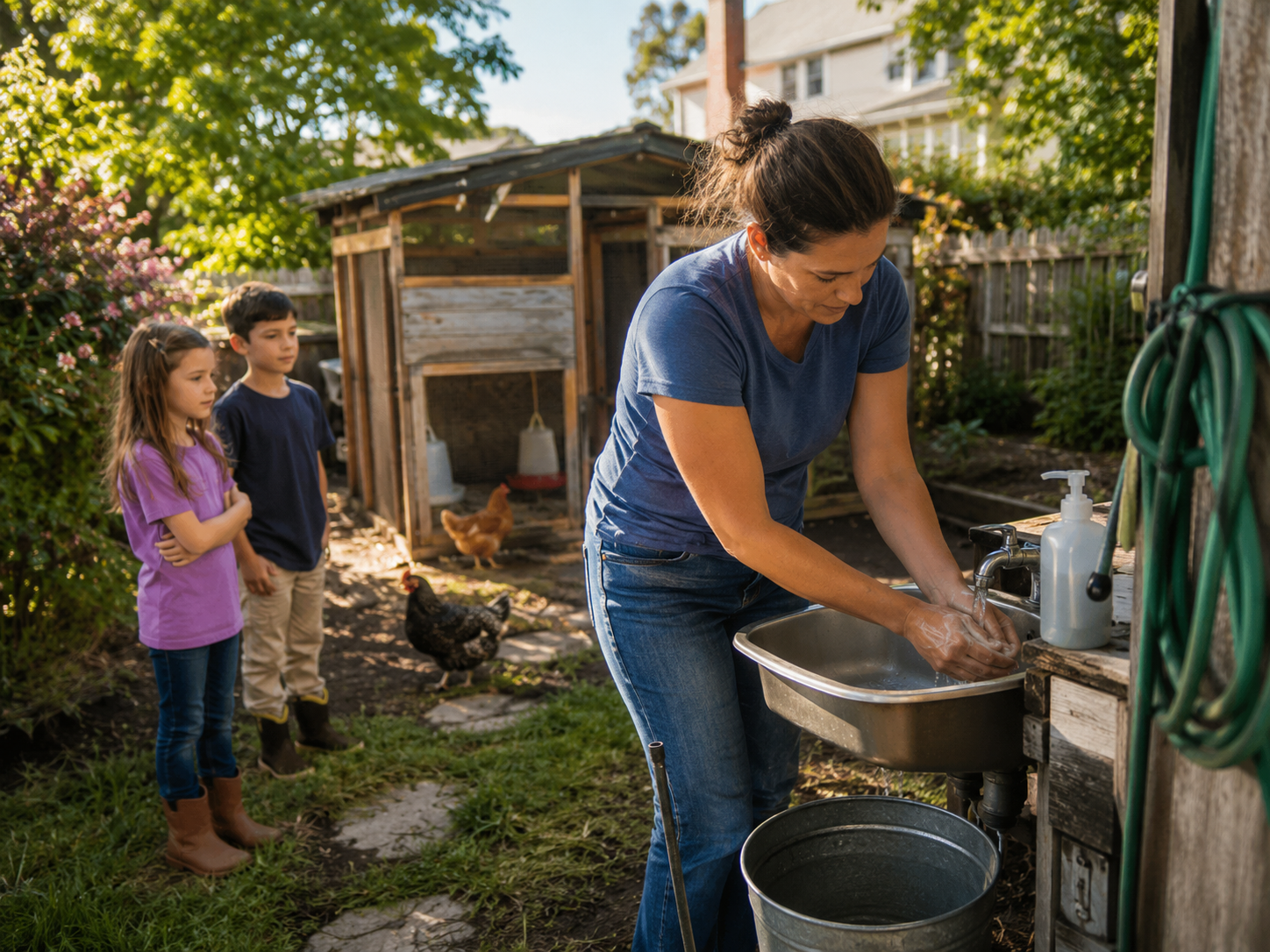
CDC says three multistate Salmonella outbreaks linked to backyard poultry have sickened 184 people, including many young children. Editorial illustration by TheDailyGlobe.
Key Facts
- CDC reported three multistate Salmonella outbreaks linked to backyard poultry.
- CDC reported 184 cases, 53 hospitalizations, one death and 31 affected states in its May 14 update.
- CDC said more than a quarter of sick people are children under 5.
- CDC said backyard poultry can carry Salmonella germs even when birds look healthy.
- CDC noted that the true number of sick people is likely higher than reported because many people recover without medical care or testing.
Federal health officials are investigating three multistate Salmonella outbreaks linked to backyard poultry, a reminder that chickens and ducks can spread illness even when they look healthy.
The Centers for Disease Control and Prevention reported 184 illnesses, 53 hospitalizations and one death across 31 states in its May 14 update. CDC also said more than a quarter of sick people are children under 5.
The warning is practical, not panic-driven. Many families keep backyard birds for eggs, education or hobby farming. The health concern is that close contact with poultry, coops, feeders, waterers or contaminated surfaces can expose people to Salmonella germs.
Why Healthy-Looking Birds Can Still Spread Germs
One of the hardest parts of backyard poultry safety is that appearance is not enough. CDC says backyard poultry can carry Salmonella germs even when birds look clean, healthy and active.
That means a family may not see any obvious warning sign in the birds. The germs can still be present on feathers, feet, droppings, bedding, cages, coops and equipment. People can get sick after touching birds or contaminated surfaces and then touching their mouth or food.
This is especially important for families with young children. Children may be more likely to touch birds, sit near coops, put fingers in their mouths or forget to wash their hands well after being outside. CDC said more than a quarter of the reported illnesses are among children under 5.
What the Numbers Show
The CDC update listed 184 reported cases across 31 states, including 53 hospitalizations and one death. Those numbers show that the outbreak is geographically broad and that some infections have been serious.
At the same time, the numbers do not mean every backyard flock is unsafe or that every poultry owner is likely to get sick. Salmonella risk depends on exposure, hygiene, household practices and whether people follow basic precautions around animals and equipment.
CDC also cautioned that the true number of illnesses is likely higher than the confirmed count. Many people recover without medical care, and some are never tested for Salmonella. Reporting delays can also mean newer cases are not yet reflected in public totals.
What Families Can Do
CDC's prevention message is straightforward: wash hands after touching backyard poultry, their eggs or anything in the area where they live. Handwashing is especially important before eating, drinking or preparing food.
Families should keep poultry and poultry supplies outside the home. Birds should not be allowed in kitchens, dining areas or other places where food is prepared or eaten. Shoes, tools and equipment used around coops can also carry germs into living spaces.
CDC also advises against kissing or snuggling backyard poultry. That may sound obvious to adults, but children often treat chicks and ducklings like pets. Young children should be supervised around birds, and adults should make handwashing part of the routine every time children leave the coop or poultry area.
When Illness Becomes a Concern
Salmonella infection can cause diarrhea, fever and stomach cramps. Most people recover without specific treatment, but illness can be more serious for young children, older adults, pregnant people and people with weakened immune systems.
This article is not medical advice. People who are concerned about symptoms, dehydration, severe illness or exposure should contact a medical professional or local health department for guidance.
For poultry owners, the main takeaway is not to get rid of backyard birds. It is to treat the birds, their eggs and their living areas as possible sources of germs, even when everything looks normal.
What Remains Unclear
It remains unclear whether case counts will rise after reporting delays. CDC updates often change as more people are interviewed, more lab results come in and state health departments report additional cases.
It is also unclear whether investigators will identify a specific hatchery, retail source or other common link. The source material provided points to backyard poultry contact broadly, not one confirmed supplier.
For readers, the useful lesson is simple: backyard poultry can be part of family life, but they are still animals that can carry germs. A few careful habits can lower the risk without turning a common backyard activity into a source of unnecessary fear.
Reporting note: Reporting draws on CDC outbreak notices, CDC investigation updates, state health department information, and Associated Press background reporting. This article was produced with AI-assisted research and reviewed by an editor before publication.