Alabama Voting Map Fight Returns To Supreme Court With Wider Stakes
Alabama is asking the Supreme Court to allow use of a congressional map a lower court found racially discriminatory, renewing a fight over representation and court oversight.
Save Article
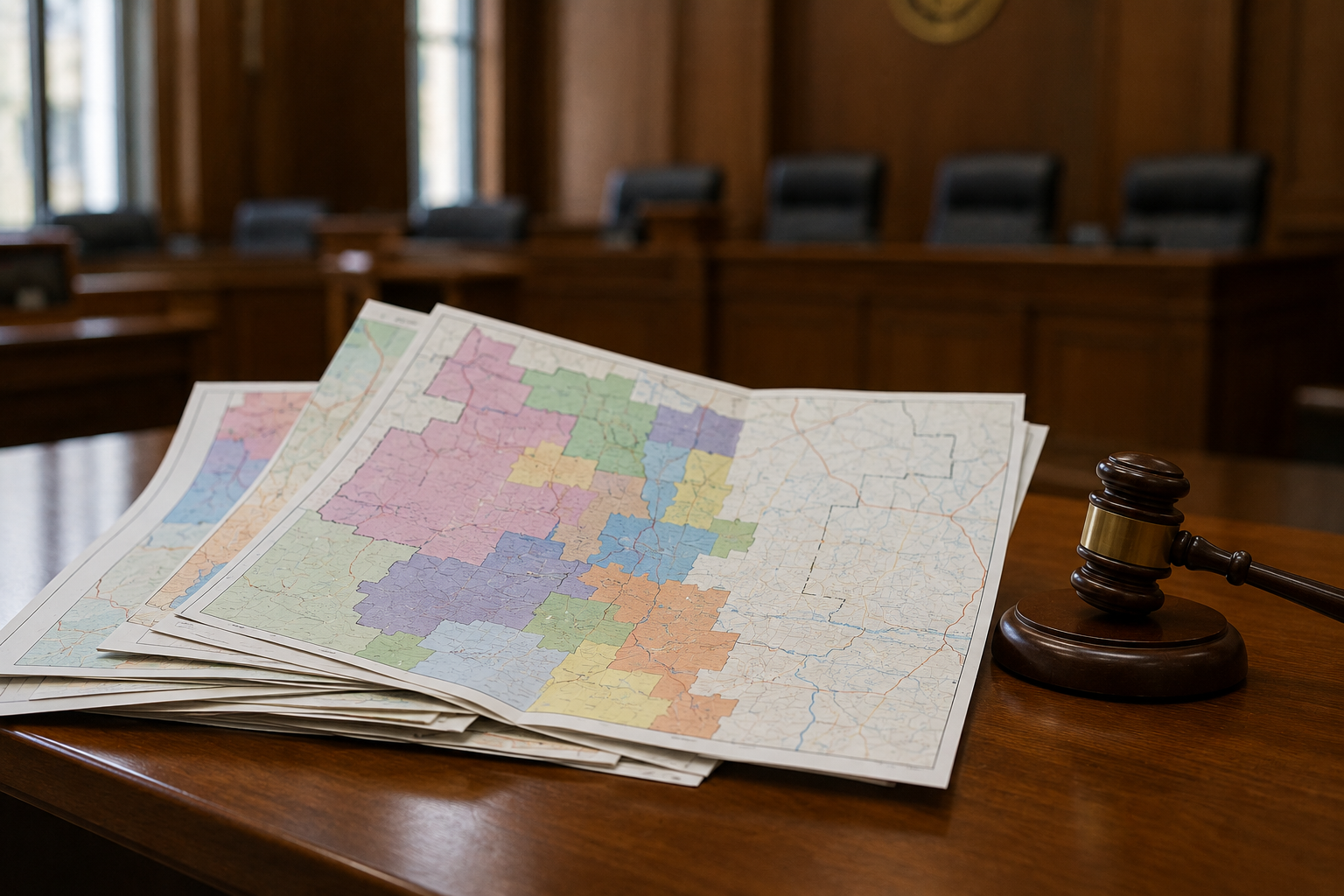
Voting-map cases can shape representation long before voters cast ballots. Editorial illustration by TheDailyGlobe.
Key Facts
- Alabama asked the U.S. Supreme Court to allow use of a congressional map that a lower court found racially discriminatory.
- The Associated Press reported that Alabama wants to use the state-backed map in upcoming elections.
- SCOTUSblog reported follow-up filings urging the Court not to allow Alabama to use the map.
- The dispute follows years of litigation over Alabama congressional districts and Black voter representation.
- It remains unclear whether the Supreme Court will allow the map, how quickly it will act or whether the decision will affect other redistricting fights.
Congressional district lines can shape political power before a single ballot is cast. They determine which voters are grouped together, which communities can elect candidates of their choice and how much room courts have to step in when a map is challenged.
That is why Alabama's latest request to the U.S. Supreme Court matters beyond one state. Alabama has asked the Court to allow use of a congressional map that a lower federal court found racially discriminatory, according to the Associated Press. The state wants to use the map in upcoming elections.
The dispute is part of a long-running fight over Alabama congressional districts and Black voter representation. It also gives the Supreme Court another chance to decide how quickly lower-court voting-rights rulings can affect election maps when deadlines are approaching.
Why The Map Fight Matters
Redistricting cases can sound technical, but the practical question is simple: do voters have a fair chance to elect representatives who reflect their communities and political choices?
In Alabama, the legal fight centers on whether the state's congressional map improperly weakens Black voters' representation. A lower court found the challenged map racially discriminatory. Alabama is asking the Supreme Court to let the state use its preferred map anyway while the legal process continues.
That request puts election timing and voting-rights enforcement in tension. Courts often have to weigh legal findings against the practical problem of changing maps close to election deadlines.
What Alabama Is Asking For
Alabama's request is an emergency move, not a final ruling on the entire redistricting dispute. The state is asking the Supreme Court to allow use of its preferred map while the case continues.
The state's arguments should be understood as legal claims made to the Court. The lower court's finding should also be stated precisely: it found the map racially discriminatory. The Supreme Court has not yet resolved the latest request.
SCOTUSblog reported that follow-up filings urged the Court not to allow Alabama to use the state-backed map. Those filings reflect the opposing side's position that the lower-court ruling should remain in effect.
The Stakes Beyond Alabama
The immediate effect is in Alabama, where candidates, voters and election officials need to know which congressional map will govern the next election. But the case could also matter for other states facing voting-rights challenges.
If the Supreme Court allows Alabama to use the disputed map, other states may pay close attention to how emergency timing affects redistricting litigation. If the Court refuses, lower-court findings may carry more immediate force even when election calendars are already moving.
The case also touches a broader question about the Voting Rights Act and federal court oversight. Courts can order states to change maps when they find legal violations, but states often argue that late changes can confuse voters and burden election administrators.
What Remains Unclear
The first unknown is whether the Supreme Court will allow Alabama to use the state-backed map. The second is how quickly the Court will act, since election deadlines can affect what remedies are practical.
It is also unclear whether the Court's handling of the emergency request will send a broader signal for other redistricting fights. Emergency orders can be narrow, but they can still influence how states and voting-rights plaintiffs approach future disputes.
The final legal outcome remains unresolved. A decision on whether a map can be used for an upcoming election is not always the same as a final ruling on every issue in the case.
What To Watch Next
The next step is a Supreme Court response to Alabama's request. The Court could grant the state temporary relief, deny the request or issue an order that leaves some questions for later.
Election-calendar deadlines will matter. If the Court acts quickly, Alabama voters and election officials may get a clearer answer before the next phase of the campaign calendar. If the order is narrow, more litigation may follow.
For readers, the point is not just which party benefits from one map. The larger issue is who gets represented, how courts enforce voting-rights protections and how late in the election cycle a map can still be changed.
Reporting note: Reporting draws on Associated Press reporting, SCOTUSblog court coverage, lower-court ruling context, public filings described in court reporting, and reviewed background materials. This article was produced with AI-assisted research and reviewed by an editor before publication.