The Airport Security Line Is Moving 25 Miles Away From the Airport
Boston Logan's new remote screening pilot lets some passengers clear TSA security before reaching the airport, raising a practical question for summer travelers.
Save Article
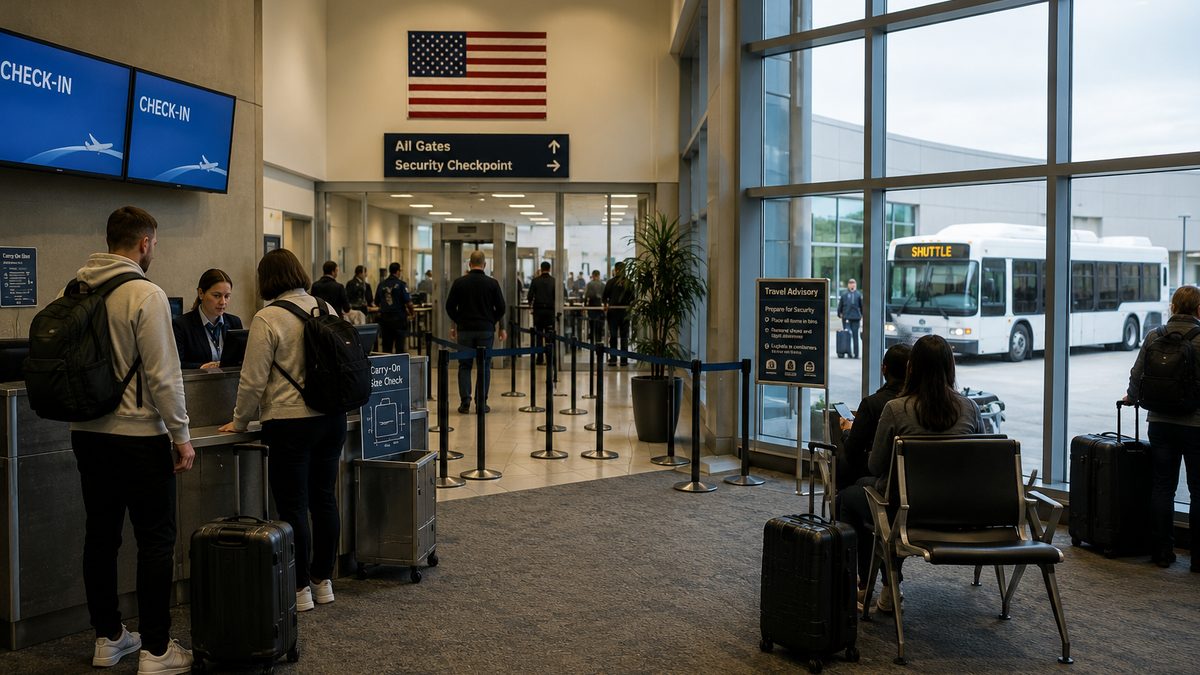
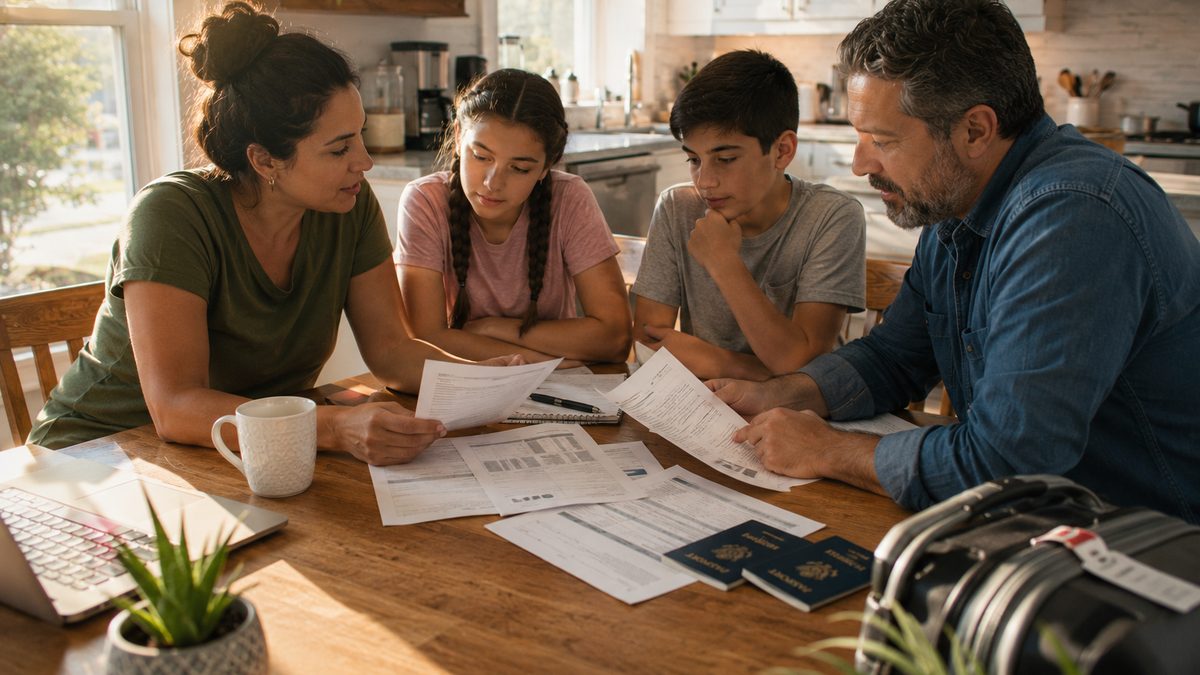
Airport security may not always have to start at the airport. Editorial illustration by TheDailyGlobe.
Key Facts
- Massport says the Logan Airport Remote Terminal at Framingham lets eligible Delta and JetBlue passengers complete airport security before arriving at Boston Logan.
- Massport describes the Framingham site as a pilot program that opened June 1.
- Travel reporting says screened passengers are brought to Boston Logan on a secure bus connection.
- The service is currently limited to eligible Delta and JetBlue passengers.
- It remains unclear whether the pilot will expand to more airlines or locations after the test period.
For a family trying to make a summer flight, the most stressful part of the trip often starts before the plane is even in sight: parking, bags, security lines and the fear that one slow checkpoint could throw off the whole morning.
Boston Logan is testing a different idea. Instead of waiting to clear security at the airport, some passengers can now do it in Framingham, about 25 miles away, then ride a secure shuttle directly to Logan after screening.
Massport describes the Logan Airport Remote Terminal at Framingham as a pilot program that opened June 1. For now, it is available to eligible Delta and JetBlue passengers, making it a limited test rather than a new airport-wide system.
How the Remote Terminal Works
The basic idea is simple: move part of the airport process away from the airport. Passengers using the Framingham site can complete airport-style steps before they reach Logan, including security screening. After that, they board a secure bus connection to the airport.
That secure bus link is the important piece. Once passengers have cleared screening, the system has to keep them inside a controlled travel path. The goal is not just to offer another shuttle. It is to let eligible travelers arrive at Logan beyond the usual pre-security process.
For travelers west of Boston, the pilot could change the start of a trip. Instead of driving into Logan and entering the same security flow as everyone else, they may be able to begin the airport process closer to home.
Who Can Use It Now
The pilot is not open to every Logan passenger. The confirmed eligibility is limited to certain Delta and JetBlue passengers. That matters because travelers should not assume the service is available for every airline, every flight time or every trip.
The service is also a pilot, not a permanent change to how Logan works. That means Massport and its partners are testing whether passengers use it, whether the operation runs smoothly and whether the model solves enough problems to justify expansion.
For now, the practical value is clearest for MetroWest-area travelers who would otherwise drive or ride into Logan before beginning the normal airport routine.
Why Airports Are Watching
Airport congestion is not only about airplanes. It is also about roads, curb space, ticket counters, baggage areas and security checkpoints. When more of that pressure hits at the same time, even a normal travel day can feel overloaded.
A remote terminal tries to spread out that pressure. If passengers can complete some steps before reaching the airport, the main terminal may face fewer people entering the same choke points at once. That could matter during peak summer travel periods, when families, business travelers and airport workers all feel the same bottlenecks.
The idea is also easy to understand because it fits how many people already think about airports. Travelers do not care where the line is in theory. They care whether the process is predictable, whether they can get through it safely, and whether it gives them a better chance of reaching the gate without panic.
What Remains Unclear
The biggest unknown is whether the pilot will work well enough to expand. Massport could keep it limited, add more airlines, bring it to other Logan Express locations or end the experiment after reviewing results.
It is also unclear whether similar remote screening models will spread to other airports. The Boston pilot may fit local geography especially well because Framingham already connects to Logan through regional transportation patterns. Other cities would have to answer their own questions about traffic, secure transportation, airport layout and passenger demand.
Passenger behavior may be the final test. A remote terminal can only help if enough travelers trust it, understand it and find it easier than going straight to the airport.
What Travelers Should Watch
The next signs to watch are whether Massport expands the program to more airlines, more flight times or other Logan Express locations. Travelers should also watch whether the pilot remains focused on suburban access or becomes a broader model for airport crowd management.
For now, the experiment is narrow but revealing. Boston Logan is testing whether the airport security line has to begin at the airport at all. If the answer is no, the future of busy travel days may start closer to home.
Reporting note: Reporting draws on Massport materials, TSA and travel-industry reporting, travel coverage, and reviewed background materials. This article was produced with AI-assisted research and reviewed by an editor before publication.