Spotify and Universal Deal Tests a New Model for AI Music Remixes
Spotify and Universal Music Group say a new paid add-on will let Premium users create AI-powered covers and remixes from participating artists and songwriters.
Save Article
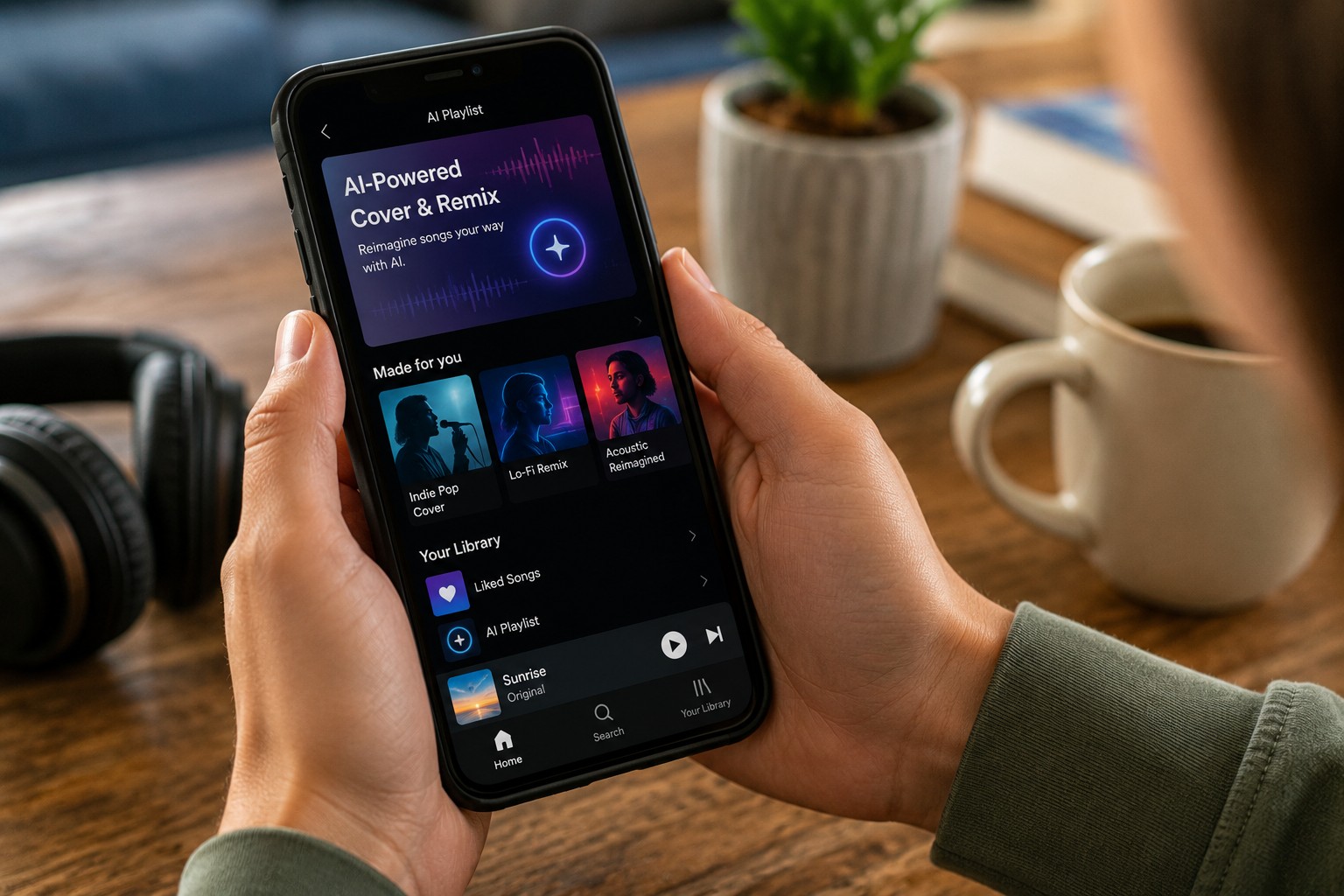
Spotify and Universal Music Group say a new paid add-on will let Premium users create AI-powered covers and remixes from participating artists and songwriters. Editorial illustration by TheDailyGlobe.
Key Facts
- Spotify and Universal Music Group announced licensing agreements for a paid Premium add-on involving AI-powered covers and remixes.
- Spotify said the tool is designed around participation by artists and songwriters, with consent, credit and compensation emphasized in company messaging.
- Guardian reporting said the deal would allow subscribers to generate AI-created song covers and remixes.
- Music Business Worldwide reported that the agreements span both recorded music and music publishing.
- Some details, including participating artists and final feature mechanics, remain limited.
Spotify and Universal Music Group are testing a new answer to one of the biggest questions in AI music: can fan-made AI covers and remixes become a licensed product instead of a copyright fight?
The companies announced licensing agreements that would allow Spotify to launch a paid add-on for Premium users to create AI-powered covers and remixes using music from participating artists and songwriters. Spotify described the approach as built around artist and songwriter participation, with consent, credit and compensation emphasized in its announcement.
For listeners, the feature could make AI remixing feel like a normal platform tool. For artists, songwriters and labels, the harder question is whether the system gives creators enough control over how their work is used, labeled and paid for.
What the Deal Is Supposed to Do
The planned tool would let Spotify Premium users pay for an add-on that supports AI-generated covers and remixes from participating artists and songwriters. The feature is not being described as a free-for-all across every Universal catalog song or artist.
That participation point matters. One of the central complaints around AI music has been that tools can imitate, transform or build from existing music without clear permission from the people whose work gives the output value. Spotify and Universal are presenting this agreement as a licensed path instead.
The source material does not show the final user interface, which artists will participate, how songs will be selected, or exactly how every remix or cover option will work. Those details will decide whether the feature feels like a respectful fan tool or another way for platforms to stretch music rights into a new product.
Why Consent Is the Center of the Story
AI music is not only a technology issue. It is a permission issue.
A remix tool can sound harmless to a casual listener. A fan changes the style of a song, creates a cover version, or experiments with a track in a way that used to require equipment, software and some musical skill. AI can make that much easier.
But ease is exactly why the rules matter. If a tool can quickly generate new versions of songs, artists and songwriters will want to know whether they can opt in or out, how their work is credited, whether uses are labeled clearly, and how money flows when fans create or share those versions.
Spotify's announcement emphasizes consent, credit and compensation. Those are company claims and should be judged by how the feature actually works once users, artists and rights holders can see the details.
Why Publishing Rights Matter Too
Music Business Worldwide reported that the agreements cover both recorded music and music publishing. That is an important detail because a song is not just a recording.
Recorded music rights can involve the specific sound recording people stream. Publishing rights involve the underlying composition, including the songwriters' work. A remix or AI cover can touch both sides, which makes a licensed product more complicated than simply letting users transform an audio file.
That complexity helps explain why major AI music products have been difficult to launch cleanly. A platform has to think about labels, publishers, artists, songwriters, user behavior, payment, takedowns, disclosure and the line between fan creativity and commercial exploitation.
What Artists May Still Want to Know
The announcement leaves several practical questions open. The biggest is participation: which artists and songwriters will opt in, and under what terms?
Another question is control. Artists may want to know whether they can limit which songs are eligible, restrict certain types of transformations, approve categories of uses, or remove their work later if the feature creates problems.
There is also the question of labeling. If a listener hears an AI-created cover or remix, the platform should make clear that it is AI-generated and not a new human-created release by the artist. That distinction matters for trust, attribution and creative identity.
Compensation is another open area. A licensed product can promise payment in principle, but artists and songwriters will care about how revenue is split, how usage is measured and whether the economics are meaningful or mostly symbolic.
A Shift From Lawsuit Risk to Platform Rules
The deal points to a possible next phase for AI music. Instead of treating fan-made AI tracks mainly as unauthorized uploads or legal problems to chase after the fact, platforms and rights holders may try to build controlled tools inside licensed systems.
That could make AI music easier to manage, but it also gives platforms more power over the rules. If remixing happens inside Spotify, then Spotify's design choices, disclosure rules, payment structure and recommendation systems become part of the creative economy.
The Verge raised skepticism about whether the tool is truly for superfans. That skepticism is worth noting without treating it as a settled verdict. The feature could serve fans, generate new revenue, test AI licensing, or do some combination of all three. The final product will show more than the announcement can.
What Remains Unclear
It remains unclear which artists and songwriters will participate, how users will access the tool, what kinds of covers and remixes will be allowed, and how the platform will label AI-created output.
It is also unclear how compensation will work in practice. Spotify and Universal have emphasized payment and participation, but the source material does not provide enough detail to judge whether artists and songwriters will see the arrangement as fair.
For readers, the clean takeaway is that AI music is moving from a question of what software can generate to a question of what platforms are allowed to commercialize. The technology matters, but the rules around permission, payment and control may matter even more.
Reporting note: Reporting draws on Spotify company materials, Universal Music Group licensing coverage, technology reporting, music business reporting, and reviewed AI music context. This article was produced with AI-assisted research and reviewed by an editor before publication.