Smarter Sensors Could Analyze What They See Before Sending Data Away
Researchers are exploring sensor designs that can process some information at the moment it is captured, potentially reducing the amount of data that must be transferred and analyzed elsewhere.
Save Article
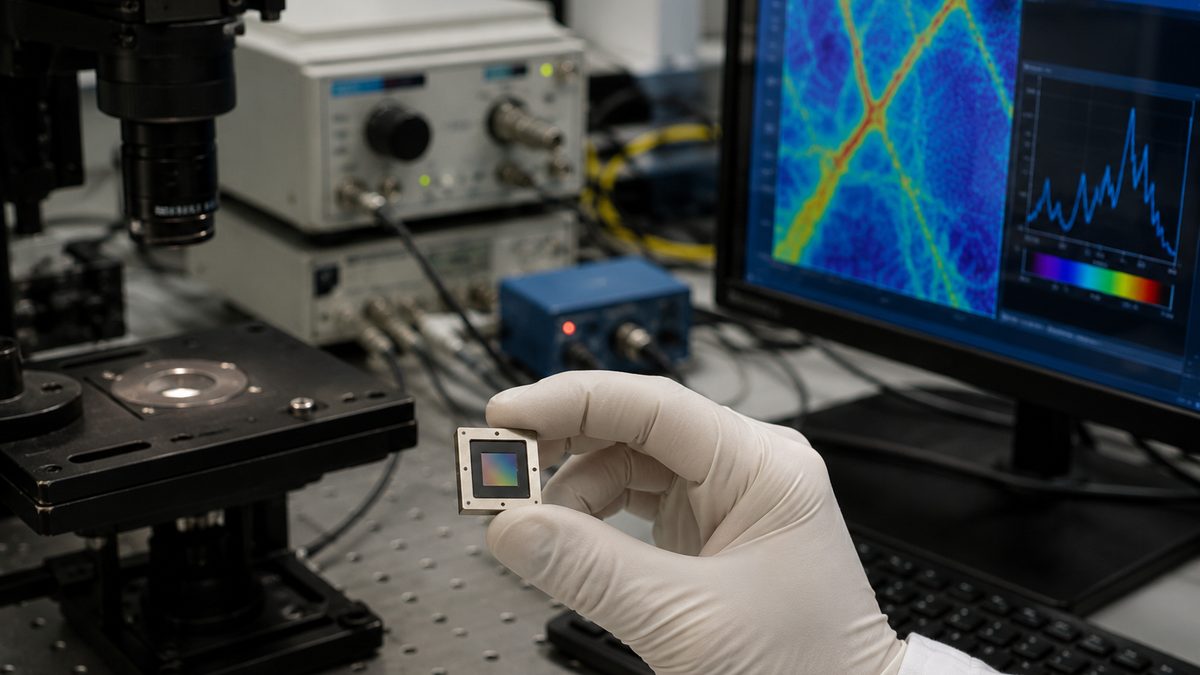
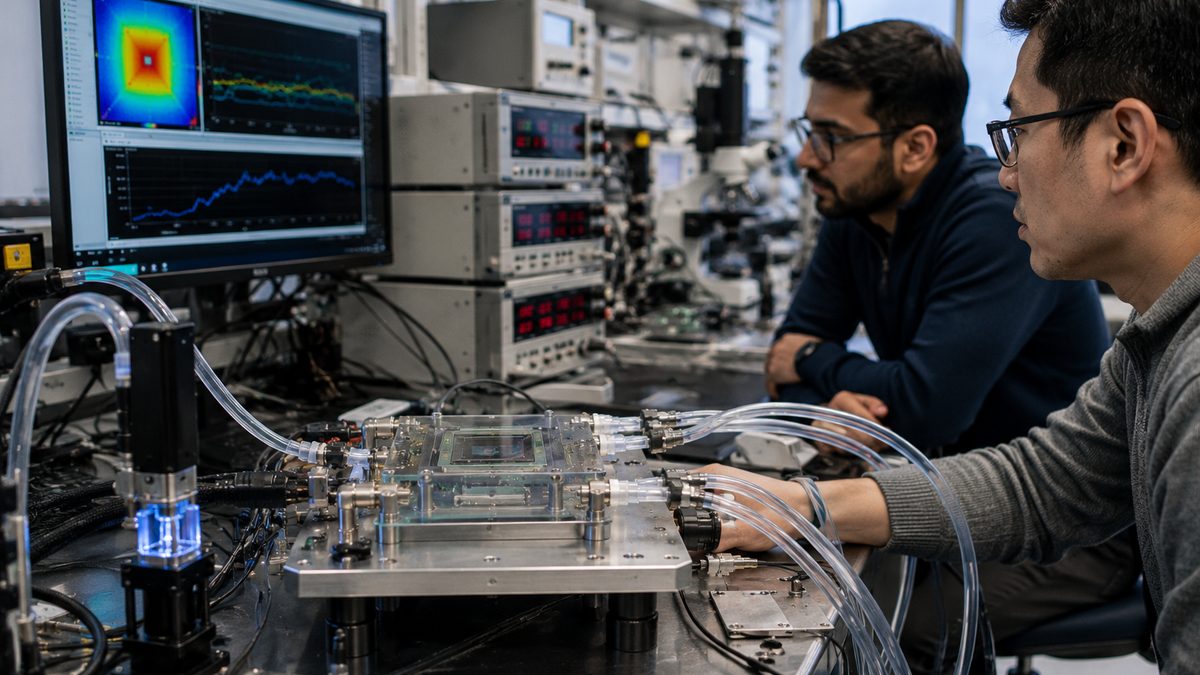
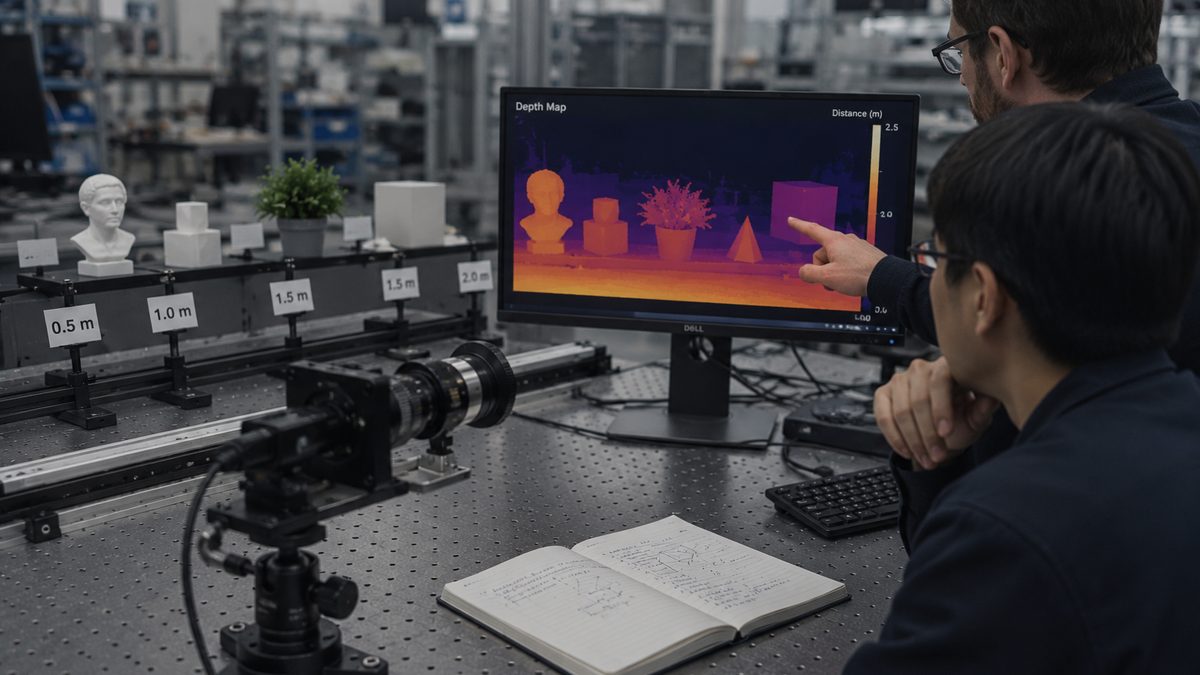
Researchers are exploring sensors that can analyze some data at the point of capture instead of sending everything elsewhere. Editorial illustration by TheDailyGlobe.
Key Facts
- Texas A&M researchers reported a sensing framework called electrochromic hyperspectral embedding, or ECHSE.
- The approach performs some data analysis inside the sensor rather than relying entirely on back-end processing.
- Researchers said the system could reduce data transfer while maintaining strong vision performance.
- Potential future applications discussed by researchers include surgical robotics and lunar exploration.
- Technical coverage described the framework as a form of in-sensor computing that compresses and analyzes information at the point of capture.
Modern cameras and sensors collect enormous amounts of information. Whether they are used in vehicles, factories, medical equipment, satellites, or consumer devices, many of them follow the same basic process: capture data first, then send it somewhere else for analysis.
That approach has helped fuel advances in computing and artificial intelligence, but it also creates challenges. Moving large amounts of data requires time, energy, storage capacity, and processing power. As devices become more capable, those demands can continue to grow.
Researchers at Texas A&M University are studying a different approach. Instead of treating sensors as passive collection tools, they are exploring ways for sensors to perform some analysis themselves before the information ever leaves the device.
Why Moving Data Can Be Expensive
Many modern sensing systems gather far more information than is ultimately needed. A camera may record every detail within its field of view even when only a small portion of the scene is relevant to a task. The same principle applies to many scientific, industrial, and imaging systems.
Once that information is collected, it often must be transmitted to another processor, server, or cloud platform where software determines what matters. That process can consume energy and introduce delays, particularly when data volumes become very large.
Engineers have increasingly focused on what is known as edge computing, where some processing happens closer to where information is created. The Texas A&M research fits within that broader effort.
How In-Sensor Computing Works
The framework developed by the researchers is called electrochromic hyperspectral embedding, or ECHSE. While the underlying engineering is complex, the basic idea is relatively straightforward: allow the sensor to perform part of the analytical work itself.
According to descriptions provided by the research team and technical publications covering the work, the system can compress and analyze portions of visual information within the sensor architecture. Instead of forwarding every piece of raw data for later examination, some filtering and interpretation happen at the point of capture.
In practical terms, that could reduce the amount of information that must be transferred while still preserving useful details for decision-making systems.
Why Researchers See Potential
One reason engineers are interested in this concept is that many devices operate under strict power and performance constraints. A remote sensor, a medical imaging device, or a spacecraft may not always have access to large computing resources or high-bandwidth connections.
If more analysis can occur inside the sensor itself, some systems could potentially respond faster while using less energy. Researchers have discussed possible future applications ranging from surgical robotics to lunar exploration, where efficient data handling could be especially valuable.
The idea does not require replacing cloud computing, powerful processors, or artificial intelligence systems. Instead, it shifts some work closer to the source of the information, potentially reducing the burden on downstream systems.
What Remains Uncertain
As promising as the concept may appear, important questions remain unanswered. The reported research describes a sensor architecture and engineering framework rather than a finished commercial product.
It remains unclear how the technology will perform in messy real-world environments outside laboratory conditions. Researchers and manufacturers would also need to determine whether the approach can be produced reliably and affordably at scale.
Other unknowns include long-term durability, compatibility with existing systems, and the size of any real-world gains in energy efficiency or processing speed. Those answers typically emerge only after years of additional testing and development.
What Readers Should Watch Next
The next phase will likely involve proving that in-sensor computing can deliver practical benefits beyond research settings. Engineers will be looking for opportunities to test these concepts in specialized hardware where power, bandwidth, or processing limitations are particularly important.
Areas such as robotics, medical imaging, industrial monitoring, scientific instruments, and space hardware may provide some of the earliest opportunities to evaluate the technology in real-world conditions.
For now, the research highlights a broader shift in computing design. Rather than collecting every possible piece of information and analyzing it later, future systems may increasingly decide what matters closer to the moment data is created. Whether ECHSE becomes part of that future remains uncertain, but the idea reflects a growing effort to make sensors themselves a more active part of the computing process.
Reporting note: Reporting draws on university research materials, engineering publications, technical reporting, and reviewed background materials. This article was produced with AI-assisted research and reviewed by an editor before publication.