New Life Sciences AI Tool Shows How Specialized Software Could Help Researchers
OpenAI’s GPT-Rosalind update points to a shift from general AI chat tools toward research-focused systems built for chemistry, genomics and lab workflows.
Save Article
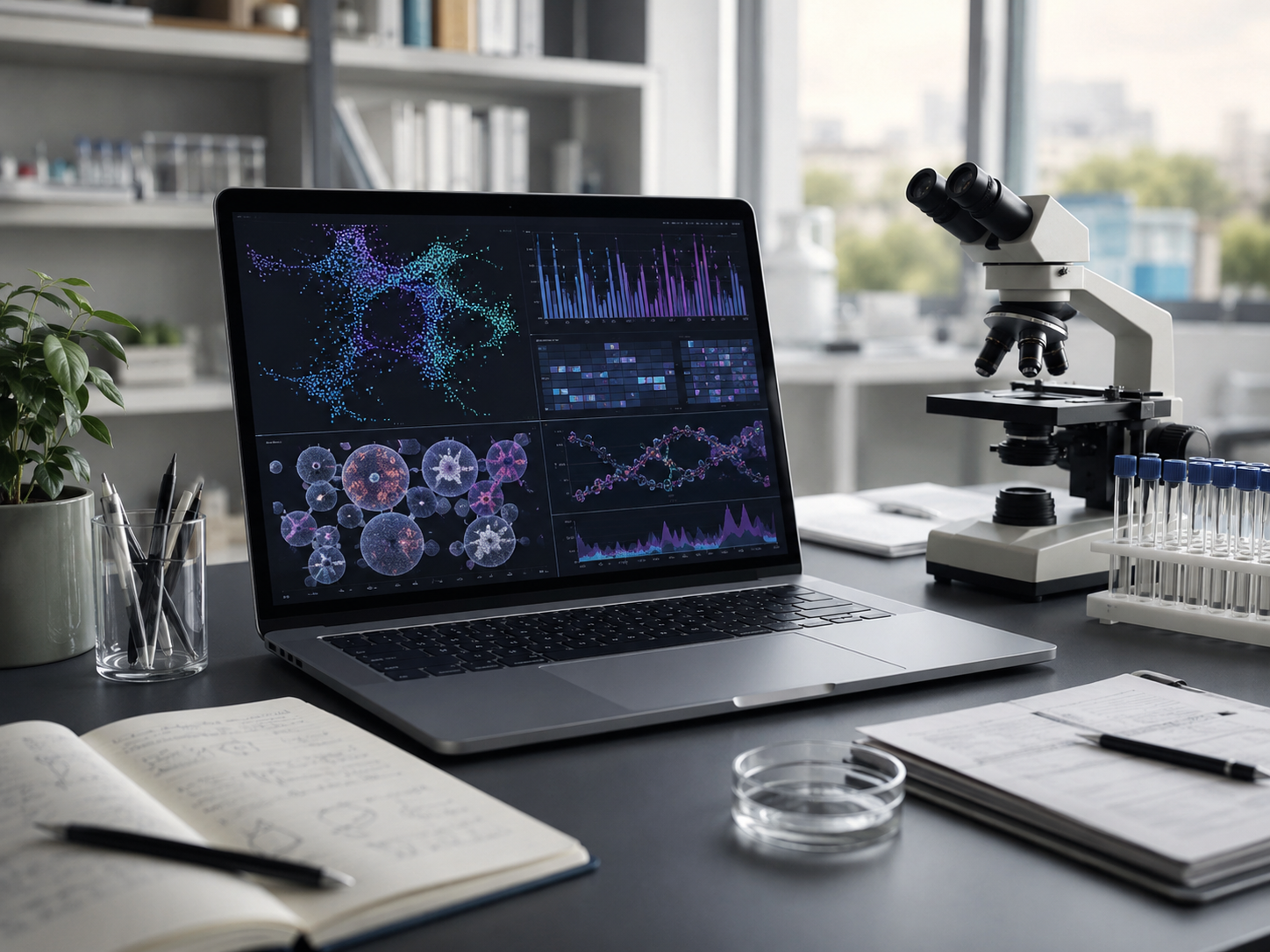
Specialized AI tools are moving into scientific research workflows, though their real-world impact still needs careful evaluation. Editorial illustration by TheDailyGlobe.
Key Facts
- OpenAI announced new GPT-Rosalind capabilities on June 3, 2026.
- The company describes GPT-Rosalind as a life sciences model for research workflows including medicinal chemistry, genomics, evidence handling and experimental planning.
- OpenAI says GPT-Rosalind is available through a trusted-access structure for eligible organizations.
- Reuters previously reported that GPT-Rosalind is designed to support research across biochemistry, drug discovery and translational medicine.
- The real-world impact of the tool still depends on independent testing, responsible deployment and evidence from actual research use.
Modern life sciences research can involve mountains of papers, genetic data, chemistry records, experimental notes and specialized databases. Even before a new treatment reaches patients, researchers may spend years trying to connect evidence, test ideas and decide which paths are worth pursuing.
That is the kind of work OpenAI says it wants GPT-Rosalind to support. The company announced new capabilities for the life sciences model on June 3, describing it as a research tool built for qualified organizations working across areas such as medicinal chemistry, genomics, evidence handling and experimental workflow support.
The update is not a consumer health product, and it does not mean AI has suddenly shortened the path from lab idea to approved medicine. But it does show where part of the AI industry is moving: away from one-size-fits-all chat tools and toward specialized systems designed for technical fields where the information load is heavy and the cost of mistakes is high.
What GPT-Rosalind Is Meant To Do
OpenAI describes GPT-Rosalind as a model built for life sciences work rather than everyday consumer tasks. In plain terms, that means the tool is aimed at researchers who need help moving through specialized scientific information, not at patients looking for medical advice.
The company says the model is designed to help with scientific workflows that can involve reading evidence, working with biological data, reasoning through chemistry questions and supporting experimental planning. Reuters reported in April that the model is part of OpenAI’s push into life sciences research, a field where pharmaceutical companies, academic institutions and biotech firms are increasingly looking at AI-powered tools.
For readers, the important distinction is this: GPT-Rosalind is not being presented as an AI doctor. It is being positioned as a tool for qualified research organizations that already work inside scientific, medical and regulatory systems.
Why Specialized AI Matters
A general chatbot can answer broad questions, summarize documents or help write text. Specialized AI is different. It is built around narrower tasks, deeper subject matter and the tools used by people working in a specific field.
In life sciences, that difference matters because the work is not just about finding information. Researchers need to judge whether evidence is strong, whether a biological idea makes sense, whether a chemical approach is worth testing and whether an experiment could answer the right question. A useful AI tool in that setting would need to help organize complexity without pretending uncertainty has disappeared.
That is why the GPT-Rosalind announcement is worth watching even for people who do not work in a lab. If tools like this become useful, they could eventually affect how research teams move through early scientific questions. That may matter for drug discovery, public health research and the way institutions manage large volumes of technical evidence.
The Limits Are Just As Important
The cautious part is essential. Company benchmarks and product demonstrations can show what a system is designed to do, but they do not prove that it has improved medical outcomes, produced faster approved treatments or made research safer in real-world settings.
OpenAI’s own claims should be read as company claims unless independent researchers confirm them. That does not make the update unimportant. It means the strongest version of the story is not that AI has solved drug discovery. The stronger, more accurate point is that AI companies are now building tools aimed at specific scientific workflows where speed, accuracy and oversight all matter.
Access is another key issue. OpenAI says GPT-Rosalind is available through a trusted-access deployment structure for eligible organizations. The details of who qualifies, how use is monitored and how safety oversight is evaluated will matter as the tool moves beyond announcement language and into practical research environments.
What To Watch Next
The next useful test will not be whether GPT-Rosalind sounds impressive in a launch post. It will be whether researchers can show clear examples of the tool improving real work: helping teams sort evidence more efficiently, identify better research questions, reduce wasted effort or support stronger experimental planning.
Independent testing will also matter. Life sciences research is too important to judge only by a company’s confidence in its own model. Outside researchers, qualified institutions and regulators will all have roles to play in determining whether specialized AI systems are reliable enough for sensitive scientific work.
For now, GPT-Rosalind is best understood as a signpost. AI is moving deeper into specialized professional work, including fields where the results may eventually touch public health. The promise is faster, better-organized research. The proof still has to come from careful use, outside evaluation and results that hold up beyond the announcement.
Reporting note: Reporting draws on OpenAI company materials, Reuters technology reporting, life sciences research context, and reviewed background materials. This article was produced with AI-assisted research and reviewed by an editor before publication.