Microsoft Says AI's Workplace Test Is Moving From Pilots to Execution
Microsoft's latest Work Trend Index argues that companies are moving past AI experiments and into the harder work of redesigning jobs, workflows and measurement.
Save Article

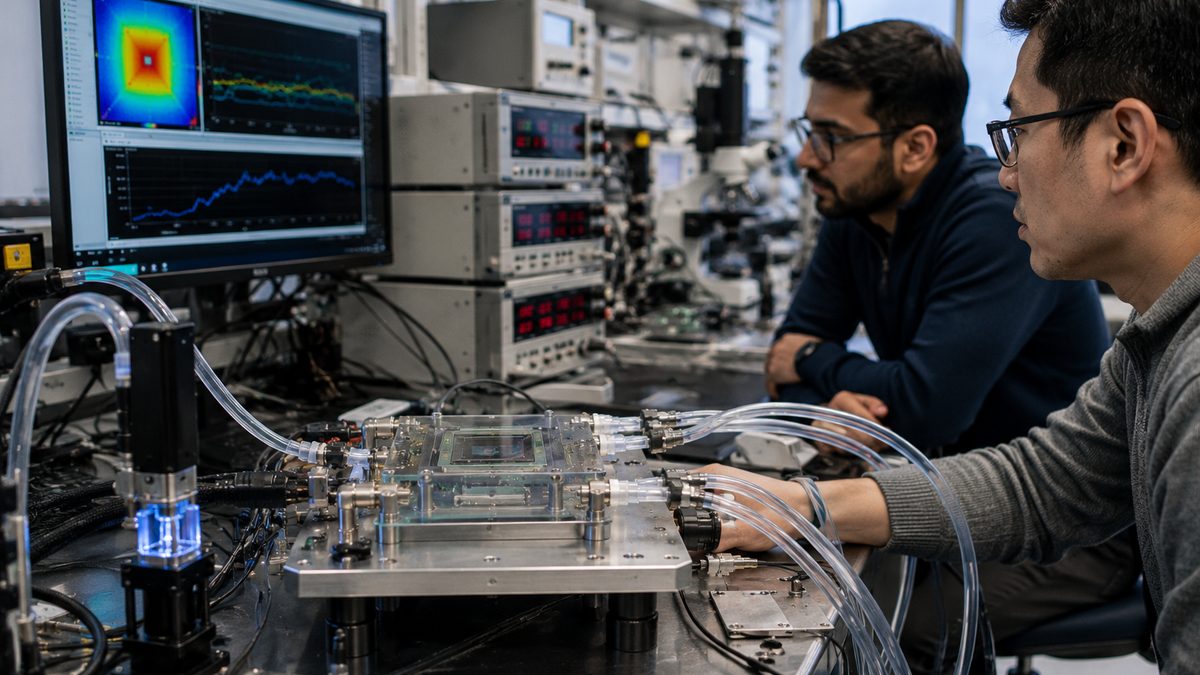
Microsoft's latest Work Trend Index argues that companies are moving past AI experiments and into the harder work of redesigning jobs, workflows and measurement. Editorial illustration by TheDailyGlobe.
Key Facts
- Microsoft published a May 21 blog arguing that organizations are moving from AI experimentation toward enterprise-scale transformation.
- Microsoft's 2026 Work Trend Index says it is a report on the state of AI at work.
- Microsoft's report materials say the research analyzed anonymized Microsoft 365 productivity signals and surveyed 20,000 workers using AI across 10 countries.
- Forbes analysis said the report suggests productivity gains alone are not enough without organizational redesign.
- Technology Record reported Microsoft’s 2026 Work Trend Index highlights AI-powered Frontier Firms.
Microsoft is arguing that the workplace AI conversation is moving into a harder phase: not whether companies can try AI tools, but whether they can redesign work well enough to get lasting value from them.
In a May 21 blog post, Microsoft said organizations are moving from AI experimentation toward enterprise-scale transformation. The company's 2026 Work Trend Index describes itself as a report on the state of AI at work, drawing on Microsoft materials that say the research analyzed anonymized Microsoft 365 productivity signals and surveyed 20,000 workers using AI across 10 countries.
The useful question for workers and managers is not whether AI can write, summarize or automate pieces of a job. It is whether companies know what problem they are solving, how work should change, who is accountable and how success will be measured.
Why Pilots Are the Easy Part
Many companies have already tested AI tools in limited ways. A team may use AI to summarize meetings, draft emails, search internal files or speed up routine writing. Those pilots can be useful, but they do not automatically change how a business works.
That is the gap Microsoft is trying to highlight. A company can give workers access to AI and still fail to change workflows, responsibilities, approval steps or training. In that case, AI becomes another tool layered onto the old process instead of a reason to improve the process.
Microsoft is a major AI vendor, so its claims should be read with that context in mind. The company has a business reason to encourage enterprise AI adoption. Still, the execution problem is real: technology can be available before organizations are ready to use it well.
The Redesign Problem
Forbes analysis of Microsoft's Work Trend Index said productivity gains alone are not enough without organizational redesign. That is a plain but important point.
If AI helps an employee finish a task faster, what happens next? Does the worker get more tasks? Does the team reduce busywork? Does the company change how decisions are made? Does anyone check whether the AI output is accurate, fair or safe to use?
Those are management questions, not model questions. AI may change the speed of work, but leaders still have to decide what work should be done, what should be automated, what needs human judgment and where mistakes would create real harm.
Workers Need More Than Access
The workplace impact also depends on whether employees understand how AI is supposed to fit into their jobs. A vague instruction to use AI more can create confusion instead of productivity.
Workers need clear guidance on when AI is appropriate, when human review is required, what data should not be entered into tools and how AI-assisted work will be judged. Without that, employees may either avoid the tools or use them in risky ways.
Training matters because AI changes more than software habits. It changes judgment calls. Workers may need to learn how to check outputs, spot weak reasoning, protect confidential information and decide when a human should stay fully in control.
Governance Is Part of the Product
A company that adopts workplace AI also needs rules. Governance may sound like a boardroom word, but for regular workers it can mean something simple: clear boundaries.
Those boundaries can cover privacy, security, accuracy, bias, employee monitoring, customer-facing use and legal review. They can also decide whether AI is used to support workers or quietly increase pressure on them.
That is why the shift from pilots to execution can feel different inside a workplace. A pilot asks whether the tool is interesting. Execution asks whether the organization can use it responsibly, repeatedly and at scale.
What the Report Cannot Prove
Microsoft's survey and productivity-signal findings should not be treated as universal proof for every workplace. The report materials reflect Microsoft's data sources and research design, and the results may not apply evenly across industries, job types or company cultures.
Technology Record reported that Microsoft's 2026 Work Trend Index highlights AI-powered Frontier Firms. That framing may be useful for describing companies Microsoft sees as more advanced, but readers should be careful not to treat it as a guarantee that every business can or should follow the same path.
Some workplaces may benefit quickly from AI. Others may find the savings smaller, the training harder or the risks greater than expected. The point is not that AI is magic or useless. The point is that results depend on how work is actually organized.
What to Watch Next
The next test for workplace AI is measurement. Companies will need to show more than tool adoption or employee usage. They will need to explain whether AI is improving customer service, reducing repetitive work, helping workers make better decisions or creating new problems.
Workers should watch for whether employers provide real training, clear policies and honest explanations of how AI will affect roles. Managers should watch whether AI projects are tied to actual workflows instead of vague pressure to keep up.
For readers, the clean takeaway is that workplace AI is entering its less flashy phase. The question is no longer just what the software can do. It is whether organizations can change the way work happens without leaving workers guessing, risks unmanaged and results unmeasured.
Reporting note: Reporting draws on Microsoft company materials, Work Trend Index materials, enterprise technology reporting, business technology analysis, and reviewed AI workplace context. This article was produced with AI-assisted research and reviewed by an editor before publication.