Google's AI Search Update Moves the Search Box Closer to an Assistant
Google's latest AI Search changes show how the search box is moving beyond keywords toward conversation, images, tasks and more assistant-like answers.
Save Article
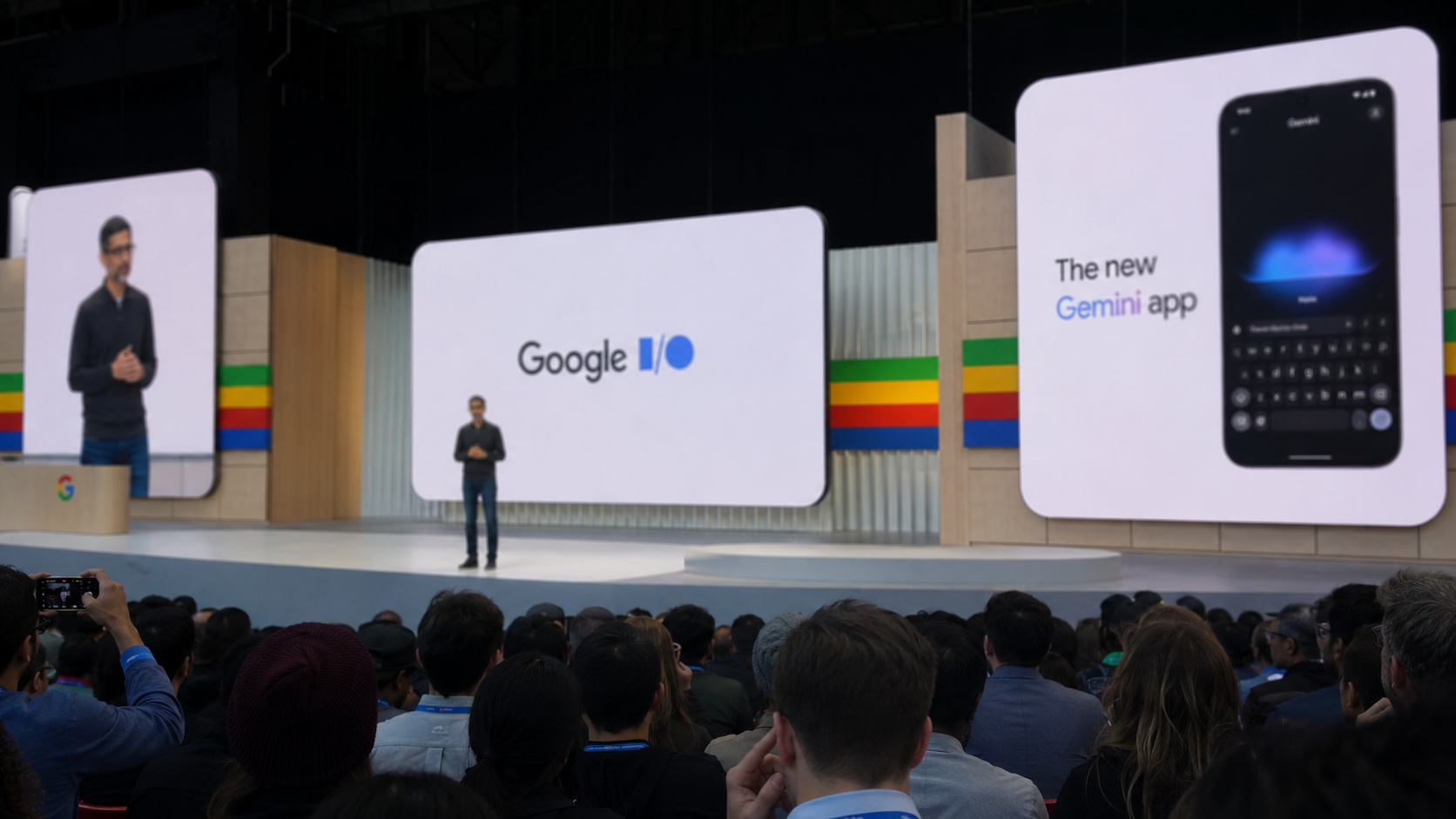
Google's latest AI Search changes show how the search box is moving beyond keywords toward conversation, images, tasks and more assistant-like answers. Editorial illustration by TheDailyGlobe.
Key Facts
- Google announced new AI Search features at I/O 2026.
- Google said AI Mode has surpassed 1 billion monthly users.
- Google said Gemini 3.5 Flash is becoming the default model in AI Mode globally.
- Google described the update as its biggest Search box change in more than 25 years.
- Independent coverage framed the announcements as part of Google's wider push to place Gemini across its products.
Google's latest Search update is another step away from the old idea of typing a few words into a box and getting a list of links.
At Google I/O 2026, the company announced new AI Search features that make AI Mode more central to how people can search. Google said AI Mode has surpassed 1 billion monthly users and that Gemini 3.5 Flash is becoming the default model in AI Mode globally. The company also described the update as its biggest change to the Search box in more than 25 years.
For regular users, the shift is easy to understand: Google wants Search to act less like a keyword machine and more like an assistant that can handle longer questions, different kinds of input and more task-oriented requests.
What Is Changing in Search
Traditional web search was built around short phrases. A user typed a few words, scanned the results page and clicked through to different sites. That model is still part of Search, but Google's AI updates point toward a different habit: asking longer questions and expecting the system to organize more of the answer.
AI Mode is the clearest example. Instead of treating every search as a short query, it is designed for more conversational searches. Users can ask more detailed questions, follow up and use different kinds of input, including visual prompts, depending on the feature and rollout.
That does not mean every user will immediately see every feature. Google product rollouts often vary by country, account, language, device and whether a feature is still being tested. The confirmed point is that Google is moving the Search experience further toward AI-assisted interaction.
Why the Search Box Matters
The search box is one of the most familiar tools on the internet. For years, it trained people to think in keywords: restaurant near me, weather tomorrow, best laptop, mortgage calculator, election results. If that box becomes more conversational and more task-focused, it could change how people look for information.
The everyday impact could be subtle at first. A user planning a trip, comparing products, trying to understand a health topic or researching a local service may ask Search a fuller question instead of opening several tabs. Google wants AI Mode to help with that kind of search behavior.
The caution is that convenience is not the same thing as accuracy or completeness. AI-generated answers can make search feel smoother, but users still need to know where information comes from, whether sources are reliable and when a topic deserves deeper checking.
The Publisher Question
Google's AI Search shift also matters for publishers, including news organizations, how-to sites, review sites and smaller independent websites that depend on search traffic.
If more answers appear directly inside AI-powered search experiences, some users may click fewer links. That could affect how publishers reach readers and how advertising-supported sites measure their audience. The source material does not prove exactly how large that effect will be, and the answer may differ by topic.
For readers, the concern is not only whether publishers get traffic. It is whether the open web remains easy to explore. A strong search experience should help people find original reporting, expert sources and useful context, not only summarize material inside a single interface.
What Remains Unclear
Google's adoption numbers show scale, but they should not be treated as independent proof that users prefer every AI Search feature or that the experience works equally well across all subjects. Monthly use can show reach. It does not, by itself, answer whether people trust the results, whether publishers are helped or hurt, or whether users are finding better information.
It also remains unclear how ordinary search behavior will change over time. Some users may embrace longer, assistant-style searches. Others may continue using Search the old way, especially for simple facts, navigation or local information.
Advertisers and publishers will be watching for practical changes: where links appear, how often users click through, what kinds of queries shift into AI Mode and how Google balances direct answers with the broader web.
The Bigger Shift for Users
The real story is not that Google added another AI feature. It is that one of the web's most basic habits is being redesigned around AI.
Search used to begin with the user's keywords and end with a list of places to go next. Google's new direction points toward a search experience that can interpret a bigger request, respond in a more conversational way and possibly help carry out tasks. That may be useful. It also puts more pressure on Google to show sources clearly, handle uncertainty carefully and avoid making the web feel smaller.
For now, the clean takeaway is this: the search box is becoming more assistant-like. That could make finding information easier, but it also raises new questions about trust, traffic and how much of the open web users will still see along the way.
Reporting note: Reporting draws on Google product announcements, independent technology reporting, and reviewed background materials. This article was produced with AI-assisted research and reviewed by an editor before publication.