Claude Coding Tools Show AI Agents Moving Toward Longer Work Sessions
Anthropic says Claude Opus 4.7 and Claude Code are built for longer coding tasks, showing how AI agents are moving deeper into supervised work.
Save Article
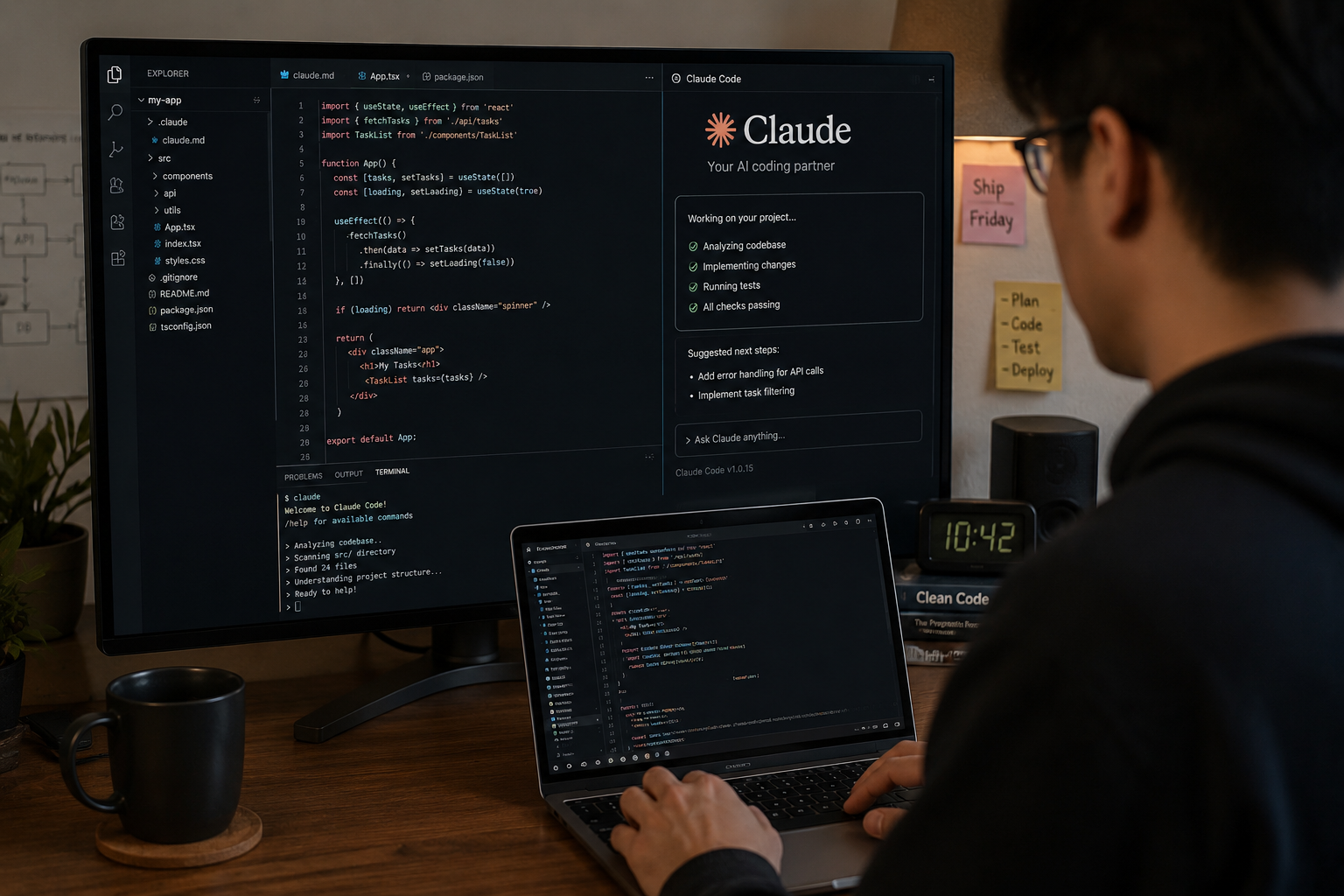
As AI agents take on longer digital tasks, the practical question becomes how people supervise the work. Editorial illustration by TheDailyGlobe.
The next step for workplace AI is not only answering faster. It is taking on longer digital tasks while people decide how closely to supervise the work.
That is the practical issue behind Anthropic's latest Claude updates. The company announced Claude Opus 4.7 in April 2026 and says the model improves advanced software-engineering performance. Anthropic also says Claude Code can run in the background for long-running coding tasks.
What Anthropic Announced
Anthropic is positioning Opus 4.7 as a stronger model for software work, including coding tasks that may take more time and context than a short chat response. Those are company claims and should be treated that way until broader independent testing and real-world use provide a clearer picture.
The company also announced higher Claude usage limits and a compute partnership with SpaceX. Those updates matter because longer-running AI tools need more computing capacity and higher limits if users are going to rely on them for extended tasks.
Why Longer AI Tasks Matter
For developers and software teams, a background coding agent could help with repetitive fixes, tests, refactoring or other work that takes time to complete. For non-developers, the larger idea is easier to understand: AI tools are being built to keep working after the first prompt.
That can be useful, but it also changes the supervision problem. A tool that works for several minutes or hours needs clear instructions, visible progress, review checkpoints and a person responsible for the final result. Background work should not mean unchecked work.
What Remains Unclear
It remains unclear how reliable these longer-running tasks will be across ordinary workplaces, messy codebases and changing user instructions. Cost, safety controls, user permissions and review habits will also shape whether businesses trust AI agents for more complex work.
The next things to watch are business adoption, independent evaluations, safety reporting and user controls. Claude's updates point toward a future where AI agents do more work in the background, but accountability still has to stay with the people and organizations using them.
Reporting note: Reporting draws on Anthropic product announcements, official Claude materials, company usage-limit updates, and reviewed AI software context. This article was produced with AI-assisted research and reviewed by an editor before publication.