Apple’s WWDC Puts AI and iPhone Software Back in Front of Users
Apple’s June developer conference will preview platform updates, AI advancements and software tools, but the consumer details remain for the keynote.
Save Article
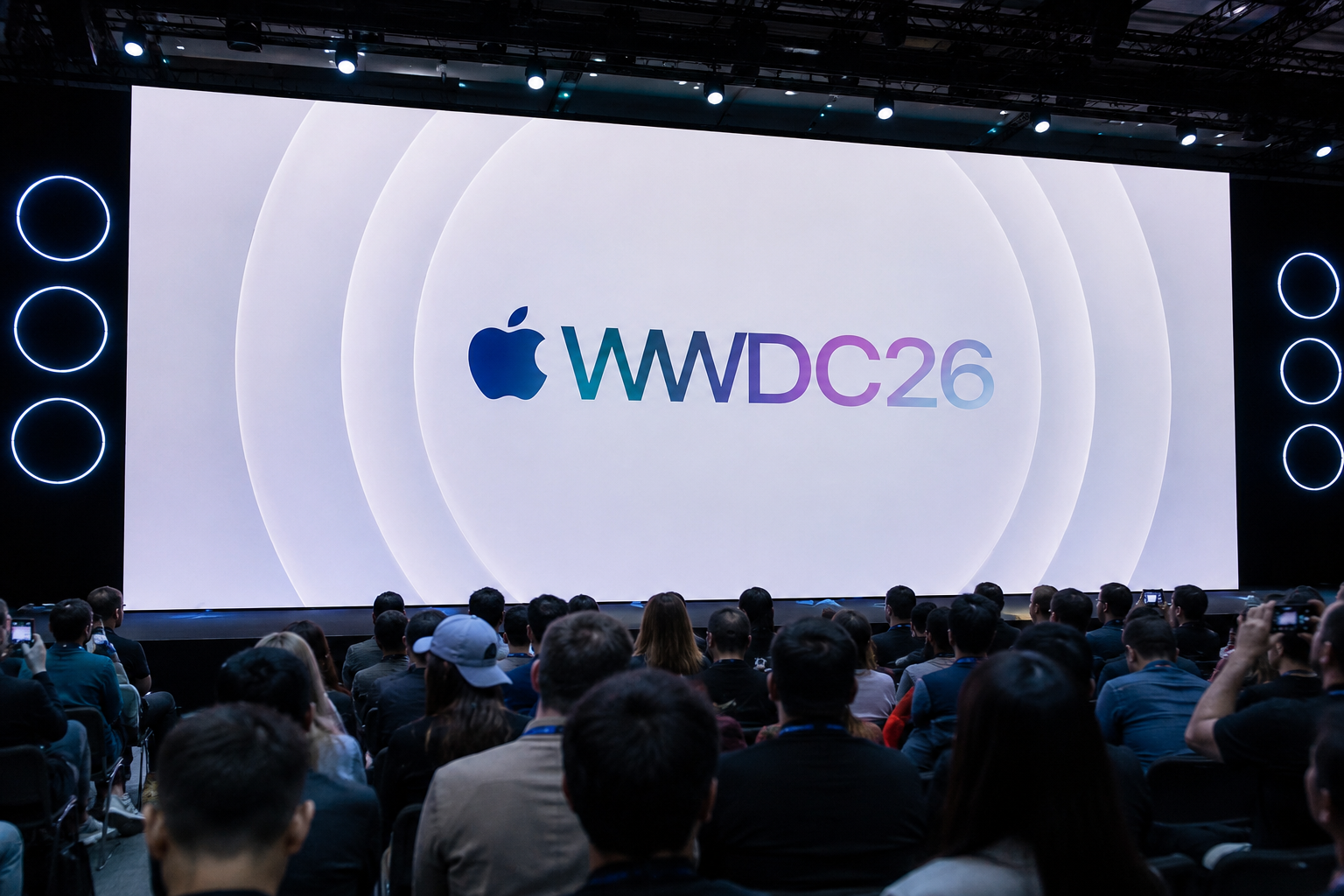
Apple’s developer conference often previews software changes that later reach everyday devices. Editorial illustration by TheDailyGlobe.
Key Facts
- Apple says WWDC26 takes place June 8-12.
- Apple says the keynote begins June 8 at 10 a.m. PDT.
- Apple says the event will introduce updates across Apple platforms, including AI advancements and new software and developer tools.
- Apple says more than 100 video sessions will be available during the week.
- Specific consumer-facing features remain unannounced until Apple presents them.
For most people, Apple’s developer conference matters only when it eventually changes the device in their hand. A new iPhone feature, a privacy setting, a smarter app tool or a shift in how AI appears on-screen can turn a developer event into something ordinary users notice months later.
Apple says WWDC26 will take place June 8 through June 12, with the keynote scheduled for June 8 at 10 a.m. PDT. The company says the event will include updates across Apple platforms, AI advancements and new software and developer tools.
That gives users a reason to pay attention, but not a reason to assume too much yet. Apple has confirmed the event and its broad focus. It has not announced the specific consumer features that will come out of the keynote.
Why iPhone Users Should Care
WWDC is aimed at developers, but its effects usually reach consumers through software updates. The tools Apple gives developers can shape how apps work. The platform changes Apple announces can affect iPhones, Macs, iPads, Apple Watches and other parts of the company’s ecosystem.
That is especially true when Apple talks about AI. The most important question for everyday users is not whether the company uses the phrase. It is where those features show up, what they can actually do, how much control users have, and what happens to personal data.
Those details matter because phones now hold messages, photos, family calendars, health information, payment tools and work accounts. Any AI or software change that touches those areas will need to be judged not just by convenience, but by privacy, reliability and user control.
What Apple Has Confirmed
Apple’s announcement confirms the timing of the conference, the keynote and the broad event focus. The company says WWDC26 will include platform updates, AI advancements and new tools for developers.
The company also says more than 100 video sessions will be available during the week. Those sessions are usually where developers get more detailed guidance on building apps, using new frameworks and adapting to changes Apple announces.
For consumers, that means the keynote is only the first step. Some changes may be easy to understand right away. Others may show up later through app updates, operating system releases or developer adoption.
What Not to Assume Yet
The biggest caution is simple: Apple has not yet announced specific iOS features tied to WWDC26. Until the keynote, claims about exact iPhone tools, AI functions, app changes or privacy settings should be treated as speculation unless Apple confirms them.
Developer tools also should not be treated as immediate consumer features. A tool introduced for app makers may take time to reach users, and some developer features may never become visible in a way most people recognize.
That distinction is important in technology coverage. A company event can be meaningful without every announcement becoming an instant change for users. The value is in understanding what Apple is building toward and what questions remain open.
The AI and Privacy Questions
Apple’s reference to AI advancements puts privacy and user control near the center of what to watch. Many users want smarter features, but they also want to know whether the work happens on the device, in the cloud, through third-party services or through some mix of systems.
Those details can affect how people feel about using AI in personal apps. A writing tool, photo feature, search function or assistant upgrade may be useful, but the trust question will depend on how Apple explains data handling, permissions and limits.
Families may also want to know whether new tools affect parental controls, screen time, app safety or privacy settings. Apple has not announced those details for WWDC26, but they are the kinds of consumer questions that often matter once software updates move from stage presentation to daily use.
What to Watch on June 8
The clearest next step is Apple’s June 8 keynote. Watch for which platforms receive major attention, how Apple describes AI features, whether privacy protections are explained in plain terms and which changes appear likely to reach users in the next major software cycle.
After the keynote, the developer sessions may help clarify how much of the announcement is ready for users and how much is aimed at app makers. For now, WWDC26 is best understood as a preview of where Apple wants its software to go, not a complete list of what every iPhone user will experience right away.
Reporting note: Reporting draws on Apple Newsroom announcements, company event materials, and reviewed background materials. This article was produced with AI-assisted research and reviewed by an editor before publication.