AMD's Taiwan Chip Push Shows AI Is Becoming a Hardware Race
AMD's Taiwan investment and new EPYC production ramp show how the AI boom is moving beyond software into chip manufacturing, packaging and supply-chain capacity.
Save Article
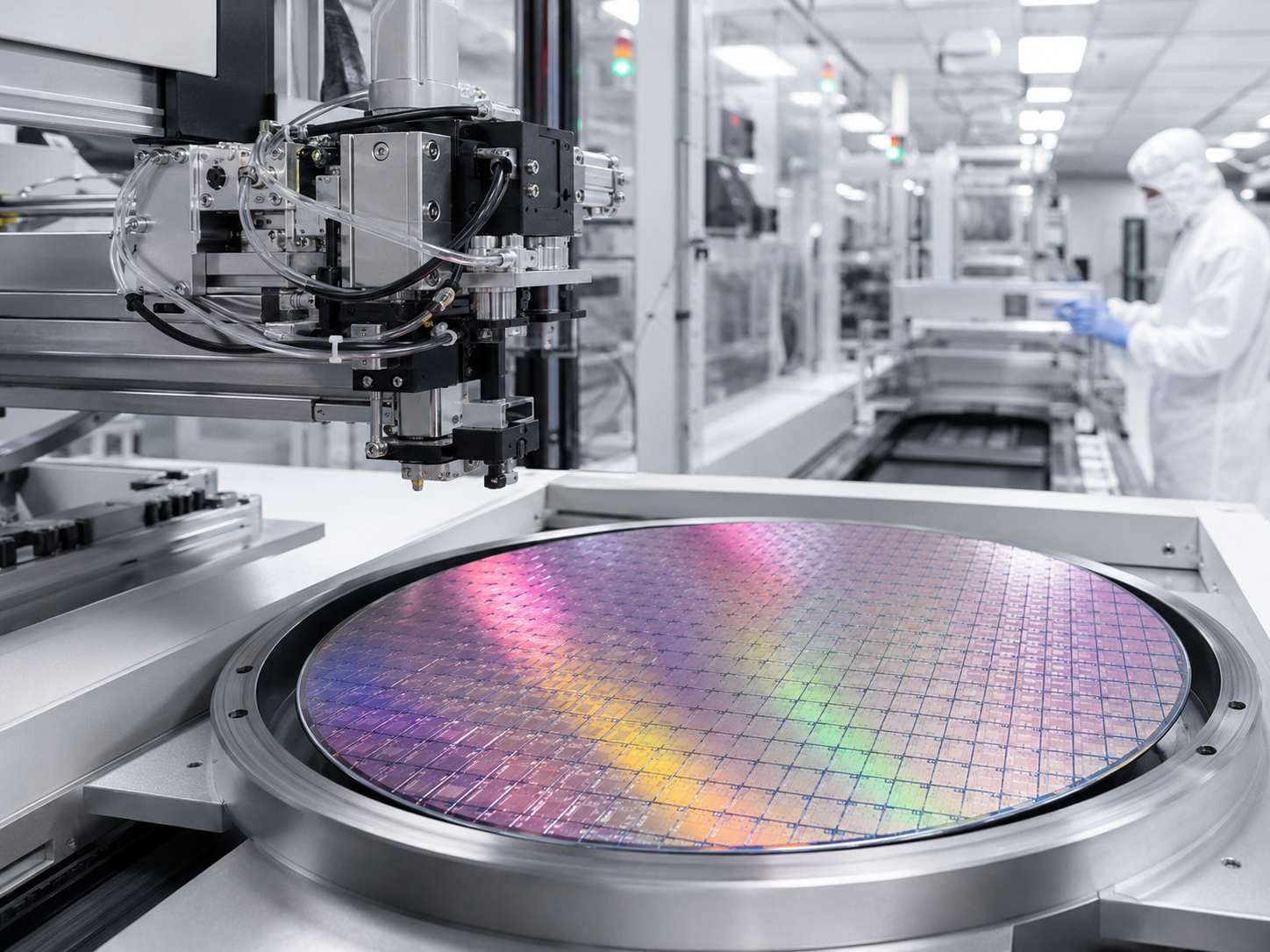
AMD's Taiwan investment and new EPYC production ramp show how the AI boom is moving beyond software into chip manufacturing, packaging and supply-chain capacity. Editorial illustration by TheDailyGlobe.
Key Facts
- AMD announced more than $10 billion in investments across Taiwan's AI infrastructure ecosystem.
- The company said the investments are meant to expand strategic partnerships and scale advanced packaging capacity.
- AMD also announced the production ramp of its 6th Gen EPYC processor, codenamed Venice, on TSMC's 2nm process technology.
- Independent coverage framed the move as part of stronger demand for AI infrastructure and advanced semiconductor packaging.
- AMD has not shown that these moves alone solve broader AI infrastructure bottlenecks.
AMD announced more than $10 billion in Taiwan ecosystem investments on May 21, tying the move directly to rising demand for artificial intelligence infrastructure.
The company also said it has begun the production ramp for its next-generation 6th Gen AMD EPYC processor, codenamed Venice, using TSMC's 2nm process technology. Together, the announcements show a practical side of the AI boom that regular readers may not see in chatbot headlines: the race depends on chips, advanced packaging, manufacturing capacity and the companies that can pull those pieces together.
Why This Is About More Than One Chip
AI is often discussed as software: models, apps, assistants and tools that answer questions or generate images. But those systems run on physical infrastructure. They need data centers, specialized chips, fast memory, networking equipment and packaging techniques that allow different parts of a computing system to move information quickly.
That is why AMD's Taiwan announcement matters beyond one company press release. The company is not only talking about a processor. It is pointing to the manufacturing and packaging ecosystem needed to support larger AI systems.
Advanced packaging is an especially important part of that story. As chips become more powerful and more specialized, companies increasingly need ways to connect chip components efficiently. The packaging work can affect speed, power use and how much computing capacity can be packed into systems designed for data centers.
What AMD Says It Is Building Around Taiwan
AMD said its Taiwan investments are intended to expand strategic partnerships and advanced packaging capacity for AI infrastructure. The announcement places Taiwan's semiconductor ecosystem at the center of AMD's plans for next-generation computing systems.
That does not mean every part of the plan is already proven at full scale. The investment amount and production ramp are confirmed company announcements. Performance claims, deployment timelines and the final market impact should still be treated as company statements unless they are independently verified.
The Venice processor is part of AMD's EPYC server-chip line, used in data-center computing. AMD said Venice is being ramped on TSMC's 2nm process technology, a manufacturing node aimed at more advanced chips. In plain English, this is about making smaller, more efficient chip features so more computing power can fit into the systems that run heavy workloads.
Why AI Demand Is Pressuring the Hardware Supply Chain
The larger shift is straightforward: if companies want bigger AI systems, they need more than better code. They need enough hardware to train, run and serve those systems. That puts pressure on chip design, manufacturing capacity, packaging, data-center planning and the suppliers that support all of it.
For readers, this helps explain why AI news often turns into semiconductor news. The apps people see on their phones and laptops depend on computing systems that are expensive, power-hungry and difficult to build. When a chipmaker commits money to packaging and manufacturing partnerships, it is trying to secure part of the infrastructure behind those tools.
This is also why Taiwan keeps appearing in technology stories. Taiwan's chip industry, including TSMC and related suppliers, plays a major role in advanced semiconductor production. AMD's announcement does not change that overnight, but it adds another example of how major technology companies are building plans around Taiwan's chip ecosystem.
What Readers Should Not Overread
The announcement should not be read as proof that AMD has solved the AI hardware race or closed any competitive gap with other chipmakers. The source material supports a narrower conclusion: AMD is committing more money to Taiwan's AI infrastructure ecosystem, expanding packaging-related partnerships and ramping a next-generation EPYC processor on TSMC's 2nm technology.
It is also not a stock story by itself. The investment may matter to investors, but the clearest public value is the supply-chain signal. AMD is showing that AI competition is being fought not only through model performance or software features, but through access to manufacturing, packaging and data-center hardware.
The announcement also leaves open practical questions. AMD did not, in the provided source material, prove how quickly the investments will translate into finished systems, how much added packaging capacity will come online, or how customers will adopt Venice-based infrastructure. Those details will matter as the company moves from announcement to execution.
What Happens Next
The next phase is less about the headline investment number and more about delivery. Readers should watch for whether AMD provides clearer timelines, customer commitments, capacity updates or independent evidence that the Venice ramp is translating into deployed AI infrastructure.
For now, the important takeaway is simpler: the AI race is not only taking place inside software labs. It is also happening in chip plants, packaging facilities and supply chains that most consumers never see. AMD's Taiwan push is one more sign that the future of AI depends as much on manufacturing capacity as it does on model design.
Reporting note: Reporting draws on AMD announcements, company materials, independent technology reporting, and reviewed background materials from the selected story handoff. This article was produced with AI-assisted research and reviewed by an editor before publication.